On Oct 29, Malaysian politics produced a twist few saw coming.
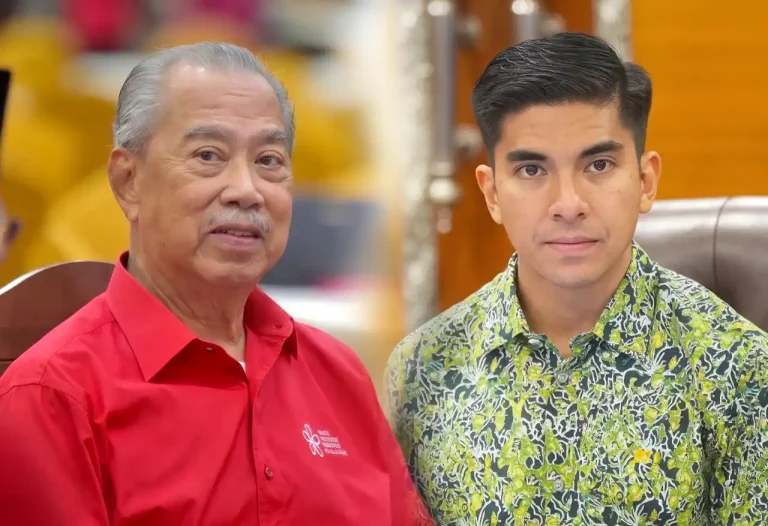
Prime Minister Datuk Seri Anwar Ibrahim’s Madani government signed a confidence-and-supply agreement (CSA) with 13 opposition and independent MPs, including former prime minister Tan Sri Muhyiddin Yassin and Muar MP Syed Saddiq Syed Abdul Rahman.
Ostensibly, the agreement is intended to secure the passage of Budget 2027 through Parliament. In practice, it alters the federal parliamentary arithmetic, revives a stalled constitutional reform agenda and exposes the extent of the opposition’s fragmentation.
The paradox is striking. Muhyiddin, the architect of the 2020 Sheraton Move that brought down the first Pakatan Harapan (PH) government, is now supporting a PH-led administration in Putrajaya, even as his party prepares to contest PH candidates in Melaka, which goes to the polls on Nov 14.
The signatories comprise three groups: six Bersatu MPs led by Muhyiddin, six former Bersatu MPs expelled in 2024 for backing Anwar, and Syed Saddiq.
In return for supporting the budget and confidence motions, they will receive constituency development allocations on a par with government backbenchers once the budget is passed.
The government, in turn, has committed to institutional reforms, including limiting a prime minister’s tenure to two terms or 10 years and separating the roles of Attorney-General and Public Prosecutor.
Muhyiddin said Bersatu’s “Bumiputera agenda” had been accepted during negotiations and that the agreement included clear provisions for breaches. Syed Saddiq, however, wants more, arguing that equal allocations should eventually be guaranteed by law rather than through political bargains.
History has a sense of irony.
In 2021, a weakened Muhyiddin administration offered PH a similar deal, but Anwar refused to legitimise a government that had lost its majority. Five years later, the roles are reversed, with one crucial difference: Anwar does not need Muhyiddin to remain in power. He needs him to govern more ambitiously.
That is why the reform provisions matter most.
On March 2, a constitutional amendment to limit a prime minister’s tenure secured 146 votes, two short of the 148 required for a two-thirds majority. Thirty-two MPs were absent, including eight from the ruling coalition. A companion bill on prosecutorial independence was referred to a parliamentary select committee, while a promised June re-tabling of the term-limit bill never materialised.
On paper, the CSA bridges the gap. Six Bersatu votes and Syed Saddiq’s vote comfortably cover the two-vote shortfall. But the March defeat owed less to opposition hostility than to the government’s own absences. No agreement with the opposition can ensure that government backbenchers turn up. Nor does endorsing a principle guarantee support when a bill comes to a vote.
Muhyiddin’s own government withdrew a similar term-limit amendment in 2020. His signature on the current agreement marks a striking reversal, but the real test will come when the bill is tabled and MPs have to vote on it.
The CSA also reshapes Anwar’s relationship with Barisan Nasional (BN) and Umno president Datuk Seri Ahmad Zahid Hamidi.
Throughout 2026, BN has visibly moved closer to Pas. In Negeri Sembilan on Aug 1, an informal BN-Perikatan Nasional (PN) alliance won 25 of 36 seats and ousted the PH state government.
In September, Zahid challenged PH to seek a fresh mandate or face a no-confidence motion if it no longer valued BN.
The CSA is Anwar’s response. The additional 13 votes on budget and confidence motions reduce his dependence on any single partner and weaken BN’s ability to force an early general election.
Yet BN remains far from dispensable. Its 30 seats are more than twice the size of the CSA bloc, and the government continues to rely on it for legislative stability, ministerial representation and Malay political legitimacy. The pact provides insurance, not independence – a signal to Umno that Anwar has alternatives.
For Muhyiddin, the agreement is a product of political isolation. Bersatu has splintered over the past 10 months. Deputy president Datuk Seri Hamzah Zainudin was sacked in February after claiming the backing of 18 MPs, vice-president Datuk Seri Ronald Kiandee was suspended in March, and Pas severed formal ties with Bersatu in June.
Pas has since taken over the PN chairmanship under Datuk Seri Ahmad Samsuri Mokhtar and backed Hamzah, now leading Parti Wawasan Negara, as Opposition Leader.
PN is now effectively a Pas-led bloc comprising Wawasan and Gerakan, with Bersatu nominally still part of the coalition but increasingly isolated from its working core.
The CSA gives Muhyiddin what he had lost: political relevance, allocations for his remaining MPs and a place at the negotiating table. It also puts him in an awkward position, sharing a pro-government agreement with the very MPs he expelled in 2024.
For Syed Saddiq, the agreement offers an opportunity to position Muda as a broker of institutional reform. But the influence of a lone MP will ultimately be measured by whether the proposed bills become law.
Melaka will test whether federal cooperation can survive local rivalry, as political alignments there reflect those in Putrajaya.
BN has named Pas its “strategic partner” and is campaigning on a joint manifesto, while Bersatu, despite backing Anwar in Parliament, is contesting against PH on the ground. Nominations closed on Oct 31, with 79 candidates contesting 28 seats. A party or coalition needs 15 seats to form the state government.
After “PH Plus” talks collapsed, PH decided to contest alone, setting up direct contests against Bersatu in Klebang, Gadek, Ayer Keroh and Pengkalan Batu. Adding another dimension to the contest is Parti Bersama Malaysia, led by former PKR figures Rafizi Ramli and Nik Nazmi Nik Ahmad. It is fielding 16 candidates to appeal to disillusioned reformist voters.
The BN-Pas alliance, meanwhile, brings together its rural Malay political machinery. However, tensions over seat allocations remain, as does uncertainty over whether Pas supporters will turn out for Umno candidates.
Each signatory has something to gain. Anwar gets a potential path towards a two-thirds majority for his reform agenda and a buffer against BN. Muhyiddin regains political relevance and secures allocations for his remaining MPs after losing Pas’s support.
Syed Saddiq gets to play the role of reform broker. But the risks are equally clear: allocations could fail to materialise, while the reform bills could suffer a second defeat.
Melaka is the first real test. A strong BN-Pas showing would embolden Umno to push for an early general election and reinforce the alliance as PH’s most serious threat. A resilient PH showing would vindicate Anwar’s two-track strategy of broadening his parliamentary support while fighting hard on the ground.
Either way, Melaka will reveal whether this new cross-party pragmatism can endure or is merely a transaction timed to the next budget and general election.
The views expressed here are the personal opinion of the writer and do not represent those of Twentytwo13.