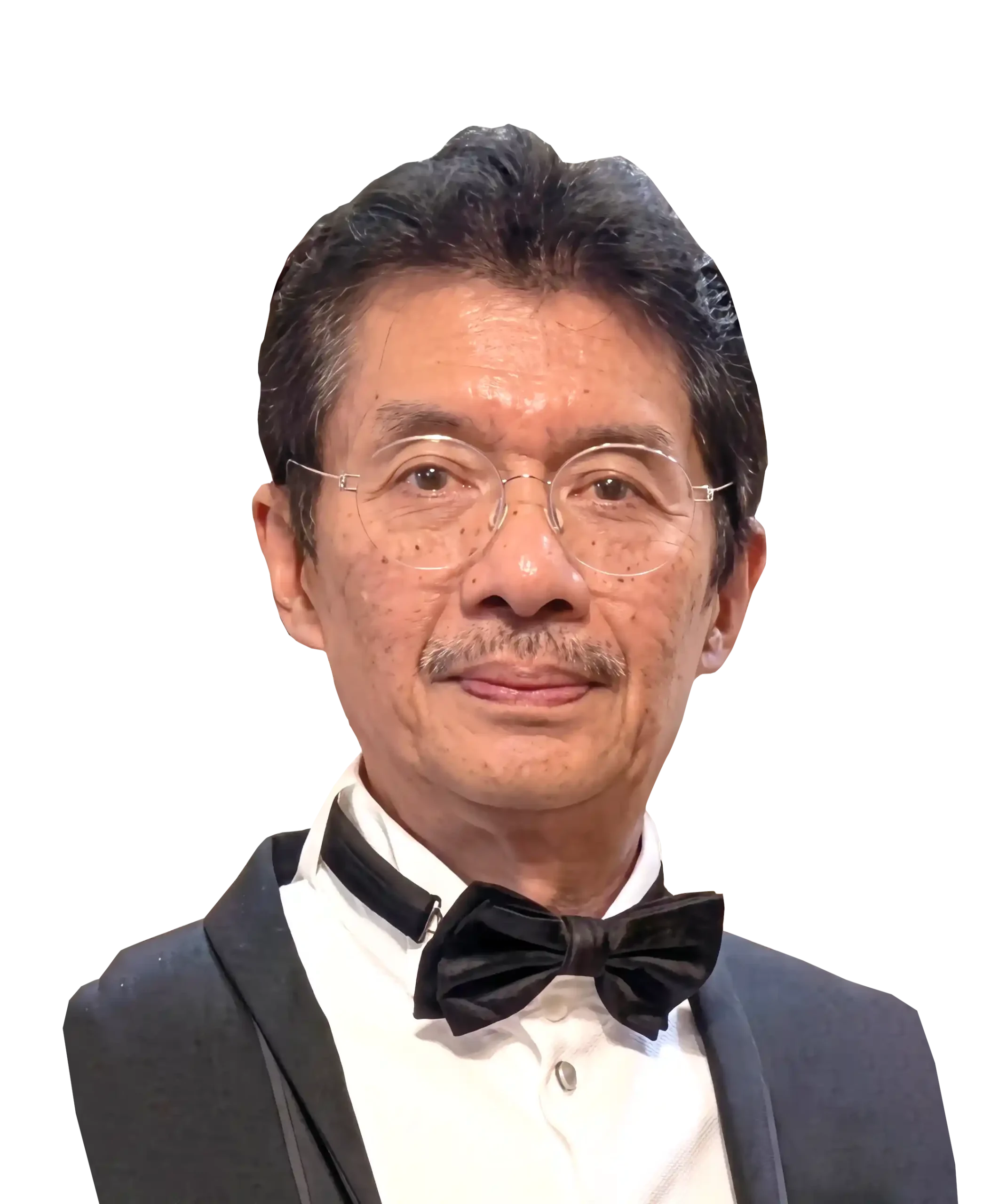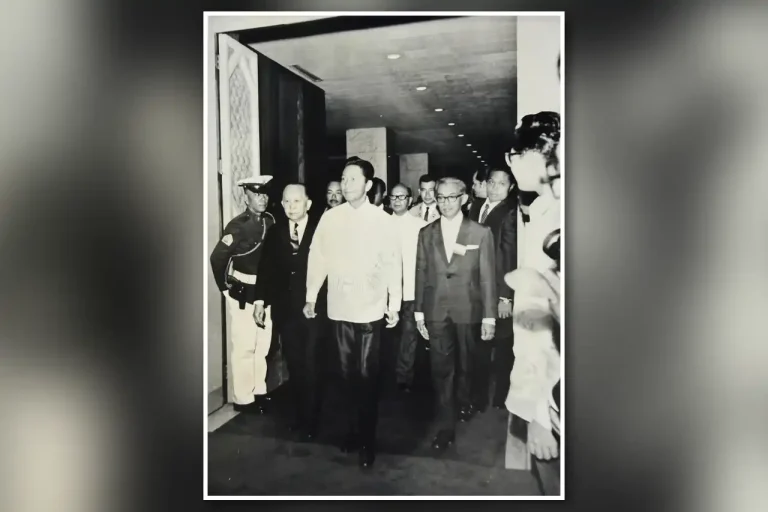
Today, Nov 4, 2026, my father, Tun Dr Ismail Abdul Rahman, would have turned 111.
He lived only 57 of those years. I had him for just 13 of them. The nation remembers him by his offices. Historians call him the “third man”, beside Tunku Abdul Rahman Putra Al-Haj and Tun Abdul Razak Hussein. To the younger generation, he is mostly the name of a township between Kuala Lumpur and Petaling Jaya.
On his birthday, I want to ask a different question: not what he was, but what he would ask of Malaysia now.
I believe he left no monument. He left a standard for how power is held, used, and given back.
A doctor first
My father was born in Johor Bahru in 1915, into a family of public servants. He trained in medicine in Singapore and then in Melbourne, becoming the first Malay to study medicine there.
He qualified in 1945. I have come to believe that this explains much of him. He had a profession and a life that did not depend on politics.
Ooi Kee Beng was right to title his biography ‘The Reluctant Politician’. My father entered public life in 1951 as a vice-president of Umno under the Tunku Abdul Rahman, out of conviction rather than ambition. A man who can walk away from office can afford to tell the truth while he holds it. My father could always walk away.
A bargain among citizens
My father helped shape Umno’s independence struggle and won his seat in the first federal election in 1955. He believed in the Tunku Abdul Rahman’s model: communities settling their differences inside one government, not on the street. That Alliance formula became the basis of the 1957 Federal Constitution.
As I understand his view, it was a bargain among people equal in citizenship, not a ranking of them.
Our family history made that natural for him. We have Chinese ancestry, and his parents raised adopted Chinese daughters. His friendships crossed every community. Lee Kuan Yew often said my father was the Malay leader he trusted most.
Introducing Malaya to the world
At independence, Tunku Abdul Rahman asked my father to be Malaya’s first ambassador to the United States and first permanent representative to the United Nations. He served from 1957 to 1959. His confidential reports home, later published, show an envoy determined that a small, new country be taken seriously.
He came home as external affairs minister, then took internal security in 1960 and home affairs in 1962. Through Konfrontasi, the formation of Malaysia, and Singapore’s separation, he carried the burden of keeping the state safe.
The idea I am proudest of came later. In January 1968, as a backbencher, he proposed in the Dewan Rakyat that Southeast Asia be neutralised, guaranteed by the great powers, China included. For a committed anti-communist, it was a brave change of mind. He also saw it as a way to free money for social needs.
Abdul Razak carried it into Asean, and on Nov 27, 1971, the five founding members adopted the Zone of Peace, Freedom and Neutrality in Kuala Lumpur. Malaysia’s non-alignment today, and its faith in Asean, began with that speech.
The man who came back
In 1967, unwell, my father left the Cabinet and returned to private life. Two years later, the country broke. After the violence of May 13, 1969, Parliament was suspended, and Malaysia was run by the National Operations Council.
His doctors told him to rest. He went back anyway, as Home Minister and as Abdul Razak’s deputy on the Council. Our family was not happy about it. He went because he believed the country needed someone every community could trust. Some have since called him “the man who saved Malaysia”.
Restoring order was only half the task. The harder half was making sure emergency rule did not become permanent. He backed the National Consultative Council, which brought communities to one table, and the Rukun Negara, proclaimed in 1970. Parliament reconvened in February 1971.
He insisted the New Economic Policy (NEP) be temporary. He compared it to a golf handicap: there to help a player compete, not to keep him winning forever. He wanted it to run for 20 years and then stop.
At home, I saw what this cost him. I remember a tired man, often unwell, who rarely complained and never spoke of power as if it belonged to him.
The last day
In public, he was known for firmness, discipline, and incorruptibility. He did not court popularity, and people who hoped to bend him learned quickly that they could not. He was respected, and feared for the right reasons.
He became Deputy Prime Minister on Sept 22, 1970. On Aug 2, 1973, as acting Prime Minister while Abdul Razak was abroad, he attended a Malay students’ silver jubilee in Kampung Baru. It was his last public event. He died of a heart attack later that day, aged 57. I was 13. He left my mother, Toh Puan Norashikin, and six of us children.
Abdul Razak made sure he was the first to be laid to rest at Makam Pahlawan (Heroes’ Mausoleum), beside the National Mosque.
People still ask what Malaysia might have become had he lived to be its third Prime Minister. I have stopped asking. I would rather ask what we do with what he left.
The building blocks he left
When I list the institutions and policies my father helped create or steady, I am struck by how much of today’s Malaysia still stands on them. Most were not his alone. Each, though, carries something of his hand and his intent.

Together, these became the frame of the nation state: a constitution, a foreign policy, a security apparatus, a social compact, and an economic programme. Malaysia has never had to rebuild any of them from scratch.
Where intent and outcome parted
A son’s tribute that only praises is not worth much. Several of these institutions did not stay true to the purpose for which they were built. My father believed institutions have no life of their own; it is the people entrusted with them who must run them with duty and care. Where they failed, it was usually the stewards, not the design.
The NEP outlived its end date. It was set for 20 years, to 1990. Its record on poverty is real. Official Economic Planning Unit data, compiled by the United Nations Development Programme (UNDP), show households below the poverty line falling from 49.3 per cent in 1970 (Peninsular Malaysia) to 16.5 per cent in 1990. But its preferences carried on under successor policies, and its targets were revived in the Ninth Malaysia Plan in 2006.
Supporters argue the gaps it was meant to close remain. Critics argue the benefits gathered among the well-connected while the poor of every community waited. Either way, the handicap became a habit, which is what he warned against.
Security powers drifted from their purpose. The Internal Security Act (ISA) was passed in 1960 to fight an armed insurgency. That insurgency ended in 1989, yet the Act was used against politicians, activists, and academics, most notoriously in Operasi Lalang in October 1987, when around 106 people were detained.
I do not exempt my father; he signed detention orders too. The lesson I draw is that a power trusted to one minister will one day be held by another. The ISA was repealed in 2012, though critics say Security Offences (Special Measures) Act 2012 (SOSMA) and other laws kept preventive detention alive.
The Rukun Negara’s own principles were tested. Its third and fourth principles are the supremacy of the Constitution and the rule of law. The 1988 judicial crisis, which removed the Lord President and two Supreme Court judges, shook both. The 1Malaysia Development Berhad (1MDB) scandal later showed how boards, auditors, and regulators can fail when they defer to power rather than check it.
Parliament came back, but weaker than it should have been. Emergency rule ended in 1971 as he hoped. Over the decades that followed, though, power gathered in the executive, and Parliament’s role in scrutiny shrank.
There is a hopeful side. Malaysia has shown it can correct itself. The ISA is gone. Power has changed hands peacefully at the federal level since 2018. In 2026, a constitutional amendment to separate the Attorney General from the Public Prosecutor was tabled, aimed at making prosecutions independent of the executive. These are the right instincts. He would want them finished, not announced.
What I believe he would ask of us now
Fifty-three years on, Malaysia faces questions he would recognise. How do we keep a diverse nation together? How do we help those left behind without creating permanent privilege? How do we stay free in a region pulled between great powers?
I think he would answer in five ways:
i. Treat every Malaysian as a citizen first. He served in a Malay party and acted for the whole country. That is still the surest defence against division.
ii. Give help an end date. Support should be based on need, measured by results, and built to expire. Otherwise, it stops building capability and starts protecting advantage.
iii. Return emergency powers to institutions. He helped bring back Parliament within 21 months. Every use of special laws since should be held to that standard.
iv. Stay non-aligned. As rivalry between the United States and China sharpens, his 1968 idea of a neutral, Asean-centred region is more useful than ever.
v. Hold office as a trust, on loan. He left when his health required it and came back when the country did. He never treated power as his own.
In my own work, I see these principles tested daily—in government-linked companies, statutory bodies, and boardrooms. Strong institutions depend on the people chosen to lead them. His standard applies there as much as in Cabinet.
The foundation, and the debt
Tunku Abdul Rahman gave Malaysia its independence and Abdul Razak its development agenda. My father gave it something harder to see: proof that the state could survive its worst moment and return to its constitution. Without that, neither of the others would have held.
A nation state is not only borders, flags, and five-year plans. It rests on trust: that power will be used fairly, and that it will be given back. He built that trust when it was most at risk. We have not always kept it.
So, on his 111th birthday, I do not ask for another road or building in his name. I ask that we hold today’s leaders—in government and in business—to the standard he set. That is the only memorial he would have wanted.
Al-Fatihah.