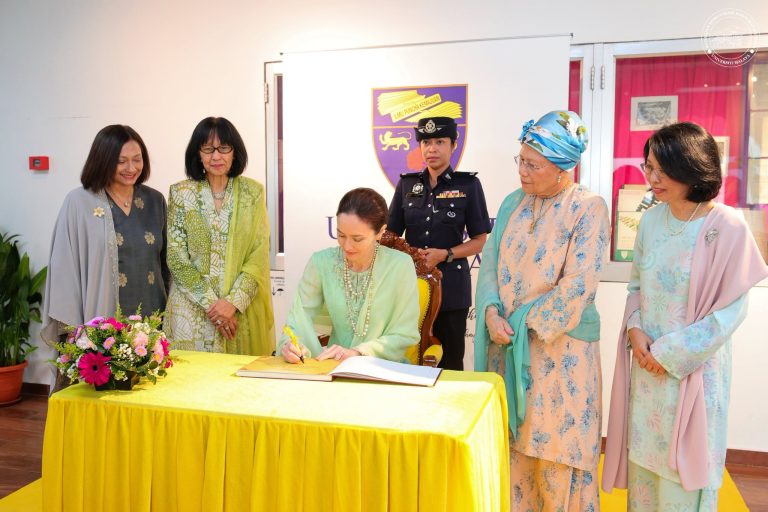
KUALA LUMPUR: Raja Permaisuri Perak Tuanku Zara Salim launched the Elderly Caregiver Educational Standards and Qualification Framework Book at the T.J. Danaraj Medical Library, Faculty of Medicine, Universiti Malaya (UM) on Oct 30.
The launch marks a significant effort to strengthen the elderly caregiver education and training system in Malaysia through the introduction of a more systematic, structured, and competency-based qualification framework and educational standards.
The publication of this book is the result of a collaboration between UM’s Faculty of Medicine and Faculty of Nursing, alongside the National Council of Women’s Organisations Malaysia (NCWO).
NCWO president Professor Emerita Tan Sri Datuk Seri Dr Sharifah Hapsah Syed Hasan Shahabudin said that developing a trained elderly caregiver workforce is not only vital for ensuring quality care, but also carries broader implications for women’s participation in the job market.
“Caregiving responsibilities, which often fall on women, can cause some of them to leave the workforce to care for their children or elderly parents. With a trained and professional caregiving workforce, the care burden can be lightened while creating more employment opportunities in the expanding care sector,” she said.
She also stressed that elderly caregiver educational standards must take into account the well-being of caregivers, including their mental health and the provision of adequate skills to reduce the risk of burnout among them.
“Efforts to enhance the quality of life for the elderly require joint involvement from the government, families, non-governmental organisations, industry, and academic institutions to build a more sustainable care ecosystem,” she added.
The development of the book received support and involvement from various parties, including the Malaysian Qualifications Agency (MQA), the Ministry of Women, Family and Community Development (KPWKM), and care industry players.
The book introduces a comprehensive educational framework spanning eight qualification levels, from Level 1 to Level 8, based on the principles of the Malaysian Qualifications Framework (MQF). This framework enables elderly caregiver educational programmes to be developed systematically, ranging from foundational to advanced levels of study.
It also provides guidance for higher education institutions, Technical and Vocational Education and Training (TVET) providers, the industry, and relevant agencies to develop structured, competency-based educational programmes, thereby establishing clearer career progression pathways for caregivers.
This initiative is highly significant in facing the country’s demographic shift, which sees a growing elderly population. In 2025, 8.0 per cent of Malaysia’s population was aged 65 and above, driving up the need for a trained, competent, and professional caregiving workforce to ensure the elderly receive safe, quality, and dignified care.
The collaboration with UM further reinforces efforts to build a quality care industry through the development of a skilled and professional workforce. UM’s expertise in elderly care extends beyond medicine, supported by a multidisciplinary approach involving engineering, architecture, law, and economics.
The development of these standards also supports the Malaysia Care Strategic Framework and Action Plan 2026–2030, specifically Strategic Thrust 2: Competency and Career Pathways, led by KPWKM.
This publication is the outcome of discussions and consultations with diverse stakeholders across the government, academia, industry, and civil society. The book is funded by UM and published by Universiti Malaya Press.