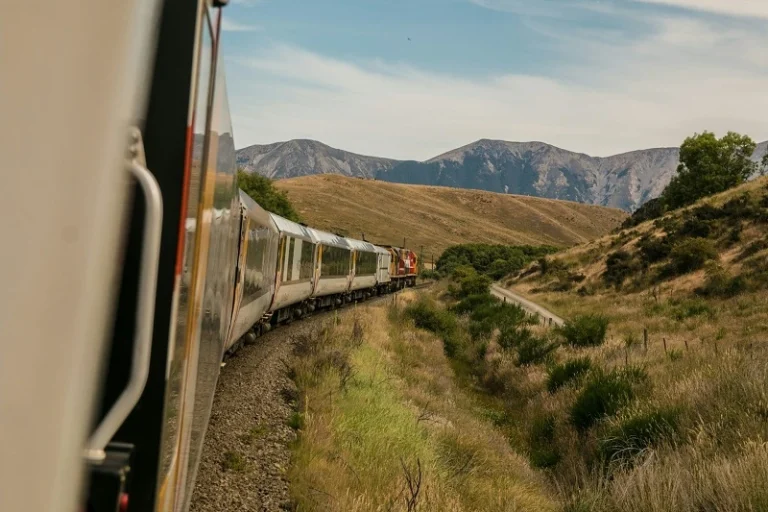
I’ve always been fascinated by trains. There’s a certain romance to them – the steady rhythm on the tracks, the changing landscape outside the window, the sense of inevitable progress towards a destination.
We step on, we find our seat, and we trust that the journey will take us where we intend to go.
But what if, somewhere along the line, you realise you’re on the wrong train? Not just a detour, not just a delayed service, but a train heading in a direction you never truly wanted to go?
The social pressure, the momentum, the sheer inertia of staying seated can be immense. Everyone else seems to be on board – smiling, checking their watches, convinced they’re on the “right” track. And so, you tell yourself, “It’s okay. Things will turn out okay. Trains always go back to the terminal.”
But here’s the often-unspoken truth – sometimes, trains don’t go back to the terminal you started from. Sometimes, they end at an entirely different station, and the cost to get back to where you truly needed to be is far, far greater. Not just in money, but in time, energy, and the quiet erosion of your spirit.
We live in a world that glorifies persistence. From childhood, we’re taught to “finish what you started”, to “never give up.” While grit and endurance are undeniably virtues – I’ve personally run marathons, even ultramarathons, purely on the strength of not giving up – there’s a crucial distinction. Are we persisting towards a meaningful goal, or are we simply clinging to a predetermined path that no longer serves us?
I remember my own “wrong train” moment quite vividly. My SPM results came out in 1992, 33 years ago. Like many bright-eyed teenagers, I had a childhood ambition – to become a doctor. It sounded noble, respectable, and certainly had the approval of society. I even got a scholarship to study medicine in Australia. All systems seemed to be go.
Until they weren’t. I failed my first year. Not just barely, but properly failed. It was embarrassing, painful, confusing. I pushed through, repeated the year, but then failed again in my third. The Public Service Department told me, “Come home.” The train had stopped. I was off.
Was it the wrong choice? Maybe. Was it the right thing to happen? Maybe.
In hindsight, perhaps medicine wasn’t my true path. Or maybe it was – and I just took the scenic route into academia. I’m now a professor of biomedical engineering at the top university in Malaysia, teaching, researching, and involved in community work.
That journey, which felt like a series of “failures” at the time, was actually a profound course correction. The cost of remaining on that “wrong train” – the medical path – would have been far higher than the temporary sting of stepping off.
The Stoic philosopher Seneca knew this. He famously wrote, “If one does not know to which port one is sailing, no wind is favourable.” In other words, no matter how fast you move, if you don’t know where you are – or where you’re going – you’re just drifting. It’s like climbing a ladder as fast as possible, only to realise it’s been leaning against the wrong wall all along. That’s the real cost – misplaced effort, squandered time, and a deepening sense of emptiness.
This isn’t about giving up because things are hard, or because you’re scared. That’s a different kind of “quitting.” This is about the wisdom of discerning when your path is fundamentally misaligned – when the effort to continue is actively pulling you away from where you’re meant to be. Rumi, the poet, offers a gentle guide: “Try not to resist the changes that come your way. Instead, let life live through you.” He also challenges us to “unfold your own myth.” It’s about listening to that quiet internal compass, not just the loud external demands.
So, how do you know if you’re on the wrong train? Pause. Reflect. Take stock of your surroundings. Are you constantly feeling drained, disengaged, or like you’re performing a role that isn’t truly yours? Are you always comparing yourself to others’ highlight reels, or finding joy only in small, trivial distractions rather than in the purpose of your work? These are often subtle signs that the “cost” of staying on board is accumulating.
The brave thing isn’t always to stay – sometimes, it’s to step off. It requires acknowledging that your earlier choice, however well-intentioned, might have been a “wrong train”, and that’s okay. It’s okay to grieve if you need to. But don’t let that grief, or the fear of what others might think, keep you trapped. As James Clear reminds us, “Every action you take is a vote for the type of person you wish to become.” Casting a vote for a different path, even if it feels like starting over, is a vote for your authentic self.
Life may not be a one-way street – it’s more like a roundabout, full of exits, re-entries, and unexpected turns. You’ll find your way, even if it takes a few extra loops. The most courageous thing you can do for your future self is to check if you’re on the right track now. And if you’re not, gather your bags.
Don’t wait for the wrong terminal.
The views expressed here are the personal opinion of the writer and do not necessarily represent that of Twentytwo13.