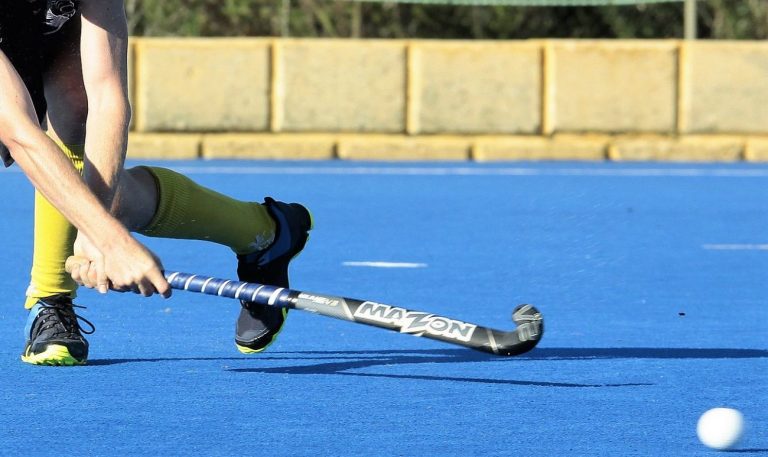
In 1975, in a stadium still new enough to feel like a national achievement, Malaysia’s men’s national hockey team beat the Netherlands 2-1.
The match was part of the Hockey World Cup that Malaysia hosted that year, and the team would go on to finish fourth – our best-ever World Cup performance to this day.
Most Malaysians of a certain age remember that match as a sporting contest. Diplomats remembered it as something else.
Think about what we achieved that year. A young Southeast Asian nation, barely two decades old, organised an international hockey tournament at a level the global federation had not quite expected from this part of the world.
Players from across Europe, South Asia and Oceania came to Kuala Lumpur. They were housed, fed, transported and applauded. Hospitality became the headline. The Dutch went home with a defeat, but the tournament generated decades of goodwill between the two countries.
Half a century on, that goodwill is still paying dividends. Between 2018 and 2020, our men’s national team was led by former World Cup-winning Dutch coach Roelant Oltmans. He came to Malaysia because the establishment respected his methodology.
Then, in November last year, Belgium arrived in Ipoh and won the Sultan Azlan Shah Cup outright – its first title at the tournament. Another European hockey nation, another quiet entry into Malaysia’s circle of sporting respect. No communiques. No ribbon-cutting ceremonies.
This is what sport diplomacy looks like when we do it well. Frankly, it is what it looks like even when we do not realise we are doing it.
It does not need a ministerial photo opportunity. It does not need a joint statement. It does not even require both sides to be fully conscious of what is happening.
It only needs the sustained presence, year after year, of a national institution that takes hosting seriously. The Sultan Azlan Shah Cup remains our gold standard. It also needs generations of athletes, coaches and administrators who, simply by doing their jobs well, accumulate diplomatic capital that no foreign ministry budget could ever buy.
The reason sport diplomacy remains the most underused tool in our foreign policy kit is that it does not show up on a spreadsheet. A delegation to Brussels has line items. A bilateral defence dialogue has minutes. A trade mission has deliverables. A hockey tournament has none of these things, and so it is consistently underfunded relative to its actual value.
That is a mistake. And the time to correct it is now.
Three developments have made 2026 the year sport diplomacy matters more than it has in a generation.
The first is fragmentation. As major powers harden their positions on technology, trade and security, middle powers that maintain working relationships across geopolitical lines derive disproportionate benefits. Sport remains one of the few channels that survives such hardening because nobody cancels a tournament over a tariff dispute.
The second is the European Union (EU)-Asean reset. Both blocs are actively repositioning towards each other in a year shaped by trade realignment and supply-chain reordering. Sport is one of the few platforms where Asean nations and EU countries have already built decades of institutional relationships through hockey, sailing, badminton, cycling and equestrian events. The infrastructure already exists. We simply have not factored it into our broader bilateral strategy.
The third is the youth dividend. Asean is one of the youngest regions in the world, with a median age in the early thirties. Malaysia falls within that demographic profile. The audiences drawn to sport are precisely the audiences whose bilateral instincts will shape the next 30 years of regional relationships. Wisma Putra does not reach them. The Investment, Trade and Industry Ministry (MITI) does not reach them. Sports federations do, every weekend.
So what would deliberate sport diplomacy actually look like?
It would begin by treating major hosting opportunities – such as the 2027 SEA Games, the Sultan Azlan Shah Cup, the Tun Abdul Razak Cup and Le Tour de Langkawi – as foreign policy assets. It would allocate a small portion of development budgets across Wisma Putra, MITI and the Youth and Sports Ministry into a single bilateral-capital fund with a clear mandate.
It would treat coaching exchanges, whether incoming or outgoing, as soft-power transfers rather than purely technical ones. And it would resist the temptation, which arrives every electoral cycle, to treat sport as a domestic prestige project when its greatest returns are international.
This is not an argument for spending more on sport. It is an argument for being more conscious of what sport already does.
Fifty years ago, a hockey match in a Kuala Lumpur stadium quietly generated diplomatic capital that helped underpin coaching exchanges, tournament circuits and half a century of warm bilateral instincts between Malaysia and a small but consequential European partner.
Wisma Putra did not set out to create it. Yet with Belgium adding its own chapter to the same story last November, the European hockey corridor through Malaysia has quietly widened, as these things often do, without anyone in Putrajaya paying much attention.
As Malaysia looks ahead, it will need every gram of bilateral capital it can find – across Asean, across the EU and across an increasingly fragmented world. Through it all, the pitches, courts and pools will continue doing their work. Quietly. Without communiques.
We would do well to notice.
Ts. Dr. Manju Appathurai holds dual PhDs in Artificial Intelligence (2026) and Crisis Economics, is a licensed clinical psychologist and a Licensed Technologist (Ts.). She is the founding principal at Mahat Advisory and a strategic adviser to the Dutch Coalition for Defence and Security (Malaysia).
The views expressed here are the personal opinion of the writer and do not represent that of Twentytwo13.