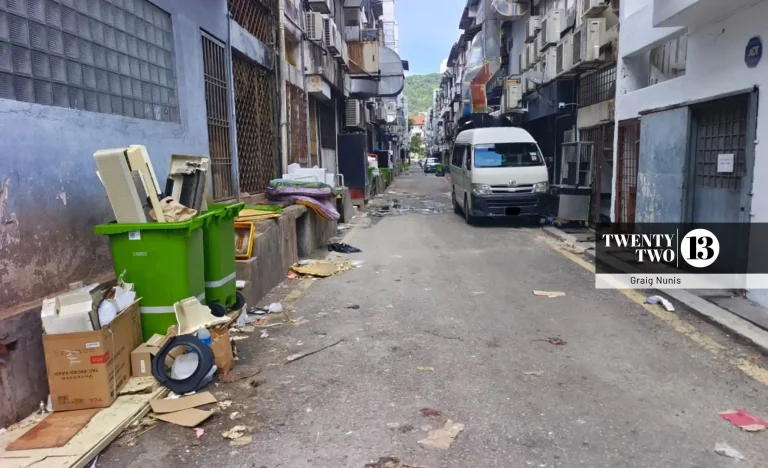
Walk through any commercial hub in Kuala Lumpur today – from the bustling tourist corridors of Petaling Street to the backlanes of suburban shop lots in areas such as Medan Tuanku, Sentul, Setapak and Tiong Nam – and you will encounter urban decay.
Shop owners do not just contend with ordinary foot traffic. They stare through their back windows at open drug use, discarded paraphernalia and accumulating waste right outside their business premises.
There are also many homeless people and beggars occupying our pavements. In most cases, they are predominantly local residents.
Drugs and other forms of misconduct can easily become part of life for the homeless when they are left without proper support.
Having heard numerous accounts from homeless people around Petaling Street who said they ended up on the streets because of family fall-outs, it is evident that the root of the problem often begins at home.
Many depend entirely on uncoordinated handouts from well-intentioned people and organisations, ranging from food and clothing to other essential items. In return, many leave behind waste – from food packaging to other discarded items – that attracts pests and exposes the public to health hazards.
Yet what frustrates business owners and residents far more than the physical degradation of the city is the institutional paralysis surrounding homelessness whenever they lodge complaints with the authorities.
A familiar script plays out after reports are filed – agencies hide behind the excuse that they have no “punca kuasa”, or legal authority, to act.
The Department of Social Welfare claims it lacks the mandate, or that those on the streets fail to meet the criteria for action.
Meanwhile, the police say their hands are tied unless an outright crime, such as active drug distribution, is detected, while Kuala Lumpur City Hall insists it has no statutory power to remove or evict homeless people occupying shopfronts.
When dealing with family-induced homelessness, the Welfare Department should proactively explore a formal mediation framework to bridge differences and safely reintegrate people into their families wherever possible.
Take Medan Tuanku as a glaring case study. There is a centre for the homeless, Pusat Khidmat Gelandangan Medan Tuanku, while another government-backed shelter – Anjung Singgah under Yayasan Kebajikan Negara – is located just over 2km away in Jalan Hang Lekiu. Yet both centres operate strictly on a walk-in basis, with no proactive outreach because active street intervention falls outside their jurisdiction. Consequently, communities are left feeling helpless, frustrated and vulnerable.
During my tenure as a Kuala Lumpur City Hall advisory board member, I raised these systemic bottlenecks directly at committee meetings with the mayor. For Medan Tuanku, our team drafted a comprehensive intervention plan. That momentum evaporated overnight following a sudden change in leadership as subsequent administrations shifted priorities.
While current Kuala Lumpur Mayor Datuk Seri Fadlun Mak Ujud deserves praise for launching a high-profile enforcement blitz against beggars and street vagrancy, a sudden sweep is merely political theatre if it remains an isolated event.
When enforcement is absent or inconsistent, people feel they can do as they please without accountability. Without sustained enforcement and a structured transition programme, temporary clearances achieve little.
Police interventions currently go no further than increasing patrols and dispersing people, who simply return to the same locations by nightfall.
What is needed is a coordinated, cross-agency approach.
Minister in the Prime Minister’s Department (Federal Territories) Hannah Yeoh should take the lead. Having previously served as deputy minister in the Women, Family and Community Development Ministry and later as Youth and Sports Minister, she has the experience and exposure to address issues involving social welfare and drug rehabilitation.
As Kuala Lumpur welcomes visitors from around the world during Visit Malaysia Year, our international image will continue to suffer if long-standing street-level decay remains unaddressed.
Cosmetic clean-ups designed to impress tourists will fail if the underlying problem of narcotics-driven vagrancy is ignored.
Resolving this crisis demands an uncompromising and practical operational framework. We must empower a single lead task force under a unified command and synchronised standard operating procedure, building on initiatives such as the KL Strike Force to eliminate the “this does not come under my department” attitude.
Intervention cannot simply mean rounding people up. Welfare laws should mandate medical treatment, discipline and practical skills training so people living on the streets have a genuine pathway to rebuild their lives.
Law enforcement must also, through intelligence-led policing by the Royal Malaysia Police and the National Anti-Drugs Agency, identify and dismantle syndicates exploiting vulnerable people.
We must also rethink how philanthropy is carried out through strategic partnerships with civil society and non-governmental organisations to help those in need rebuild their lives. We should move away from unstructured street-side feeding that inadvertently fuels addiction and instead support centralised, hygienic community kitchens and structured recovery centres.
True leadership means taking collective ownership of urban governance rather than deflecting responsibility. The government must take the initiative to enforce meaningful reforms. It is time to walk the talk.
Instead of silencing critics or brushing aside alternative views, the authorities should work hand in hand with civil society, former board members and grassroots groups to find practical solutions.
Kuala Lumpur’s backlanes are a direct reflection of our institutional maturity. By replacing bureaucratic buck-passing with a courageous, synchronised strategy, we can protect our commercial hubs, restore our city’s dignity and salvage the lives of those trapped in the shadows.
The views expressed here are the personal opinion of the writer and do not represent those of Twentytwo13.