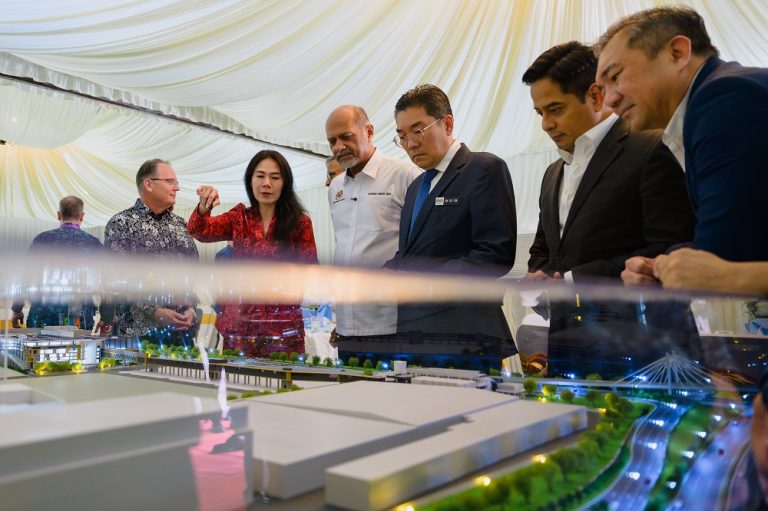
PETALING JAYA: Semiconductor giant NXP is deepening its presence in Selangor, modernising and expanding its operations in one of Malaysia’s long-standing microelectronics manufacturing hubs.
Digital Minister Gobind Singh Deo said the move highlights growing investor confidence in Malaysia’s workforce, manufacturing ecosystem, and capacity to support increasingly complex, technology-intensive operations.
“Malaysia is at a crucial juncture in its economic transformation. In the first quarter of 2026, the country attracted RM92.8bn in approved investments, with Selangor capturing the highest share of any state. Foreign direct investment made up 60.5% of the total, reflecting international confidence in the nation’s strategic position, robust infrastructure and business-friendly environment,” said Gobind.
“The investment influx aligns with broader global trends, particularly the rapid evolution of the semiconductor industry. Malaysia is actively moving up the value chain into integrated circuit design, advanced packaging and artificial intelligence (AI) hardware. Through combined public and private initiatives, the country is strengthening research capabilities and upgrading production facilities to solidify its standing as a premier global microelectronics hub.”
He said this at the NXP Malaysia’s groundbreaking ceremony today. The new project is an expansion of NXP’s existing assets in the state.
Analysis from BMI, a unit of Fitch Solutions, notes that Malaysia is prioritising high-value, AI-focused data centre investments, with approximately 4.6 gigawatts of capacity currently planned or under construction.
“This rapid buildout underpins the country’s Malaysia Digital 2030 blueprint, which aims to drive AI integration and increase the digital economy’s contribution to national gross domestic product (GDP) to 30% by 2030,” Gobind said.
“Beyond expanding the industrial base, the strategy aims to position Malaysia not merely as a consumer of emerging technologies, but as a nation capable of developing, producing, testing and supporting critical components. Authorities are focusing on attracting investments that introduce advanced systems, generate high-value technical positions, and offer local workers access to next-generation manufacturing technologies.”
To address the demand for high-skilled tech workers, NXP is collaborating with leading academic institutions, including Universiti Malaya, Universiti Putra Malaysia and Monash University Malaysia. Industry leaders are encouraging further expansion of these academic partnerships to create pathways for students, graduates and existing workers to build expertise in automation, AI, semiconductor engineering and smart manufacturing.
Gobind said that the landmark expansion also highlights the enduring economic relationship between Malaysia and the Netherlands.
He added such international partnerships are becoming increasingly vital as global businesses seek more resilient, diversified semiconductor supply chains, with Malaysia continuing to position itself as a reliable partner for global technology firms.