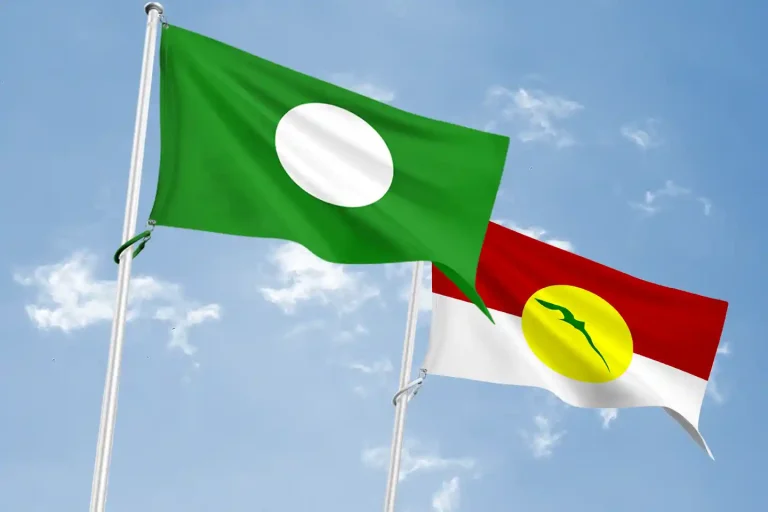
Malaysia may be on the cusp of another major political realignment, and at its centre stands Pas, once dismissed as a regional actor, now a decisive federal force.
The question is no longer whether Pas can shape national politics, but whether it can translate electoral strength into federal power, and whether Umno will help open that door. Increasingly, the possibility is becoming highly likely for Pas.
The 15th General Election confirmed Pas’ ascent. It emerged as the largest single party with 43 seats, while its coalition, Perikatan Nasional (PN), secured 74. This was no fleeting wave.
Pas has built a durable base through grassroots machinery, religious networks and disciplined organisation. Its strongholds in Kelantan, Terengganu and Kedah now extend to conservative Malay-Muslim voters nationwide. Pas is no longer knocking on federal power’s door; it is now a principal force in deciding who enters.
An old rivalry, new calculus
Ironically, Pas’ path to Putrajaya may run through Umno, its oldest rival. Their relationship has swung between cooperation and conflict: from Pas joining the federal government in the 1970s, to its expulsion from Barisan Nasional (BN) in 1977, to decades of competition over the same Malay electorate.
The 2018 election upheaval briefly revived cooperation through Muafakat Nasional (2019), built on penyatuan ummah (Malay-Muslim unity). That pact dissolved as Pas moved closer to Bersatu within PN, while Umno joined Datuk Seri Anwar Ibrahim’s unity government with Pakatan Harapan (PH).
Yet the electoral logic behind Umno-Pas cooperation remains potent – and may grow stronger as the next contest looms.
The Mathematics is hard to ignore
When Umno and Pas compete, the Malay vote splits, benefiting PH and others. When they coordinate, the equation shifts. GE15 made this painfully clear for Umno: Pas, allied with Bersatu, captured scores of Malay-majority seats while Umno suffered historic losses. Cooperation reduces vote-splitting and creates a formidable Malay-Muslim bloc; competition risks mutual destruction. The temptation to cooperate will persist, regardless of historical distrust.
This cooperation has proved mutually beneficial in the past, as was clearly demonstrated in the recent state assembly elections in Johor and Negeri Sembilan. Unsurprisingly, at Pas’ 72nd annual congress last week, Umno was conspicuously welcomed as a guest. In a reciprocal gesture, Umno chief Datuk Seri Ahmad Zahid Hamidi confirmed that Pas would be invited to Umno’s general assembly this week, while pointedly excluding PKR and PH from the invitation list. The Umno-Pas axis is not merely a fleeting tactical alignment, but an increasingly entrenched political reality.
No simple alliance
Electoral maths alone cannot sustain a lasting partnership. Leadership is the deeper fault line. Both parties want to lead the Malay-Muslim agenda, making permanent equality elusive. Pas brings grassroots energy, ideological clarity and momentum. Umno offers historical legitimacy, federal experience and institutional reach. Each needs what the other has, yet each fears being subordinated. Cooperation thus remains tactical unless strategic interests genuinely converge.
Any Umno-Pas rapprochement must contend with Bersatu, Pas’ current PN partner. A serious realignment could destabilise PN and threaten Bersatu’s position, which it would fiercely resist. Pas is assessing which configuration offers the clearest route to Putrajaya, not acting on sentiment.
For Anwar, a stronger Umno-Pas axis would compound existing pressures. His unity government, born of a hung parliament, benefits from incumbency, but electoral incentives linger. Umno must weigh its role in the coalition against Pas’ narrative that it has compromised Malay identity by cooperating with PH and DAP. Anwar faces a delicate balancing act: lean too conservative, and he risks PH’s multiracial base; lean too plural, and Pas paints him as detached from Malay-Muslim concerns.
Return of identity politics
Intensified Umno-Pas dynamics, whether cooperative or competitive, risk squeezing the political centre. Cooperation could rally politics explicitly around Malay-Muslim solidarity; competition could trigger bidding wars on Malay and Islamic issues. Either way, identity politics – Islam’s role, Malay rights, vernacular schools and social values – gains salience, simplifying complex questions into stark choices and making compromise harder. Economic and governance concerns risk being sidelined, a trade-off Malaysia can ill afford.
PH cannot, and should not, compete with Pas on religious conservatism. Its strength lies elsewhere: demonstrating that clean, competent, inclusive governance can coexist with respect for Malay interests and Islam.
That means delivering tangible gains in incomes, living costs, institutional integrity and opportunity. Anwar’s identity as a Malay-Muslim reformist is a valuable asset; if he can show that reform and pluralism align with Malay identity, PH can claim ground Pas cannot easily dominate. If he fails, Pas will increasingly write the narrative.
Real battle royale within Malay electorate
The defining contest in Malaysian politics today is not between coalitions, but within the Malay electorate itself. Pas aims to become the undisputed voice of Malay-Muslim conservatism; Umno fights to reverse its decline; Bersatu seeks to block either from achieving hegemony; and Pakatan Harapan needs enough Malay support to remain a genuine national coalition.
Yet this is no simple free-for-all. Like any battle royale, it involves both cooperation and conflict, shifting tactical pacts, quiet tolerances and strategic overlaps that defy rigid party lines. Rivals may coordinate against a common threat even as they compete fiercely for the same voters.
Pas offers a clear, resonant message of faith, rights and tradition. Its opponents face a harder task: they must present a compelling alternative that addresses Malay-Muslim concerns, economic anxiety, dignity and identity without falling back on the same perpetual identity politics. The winner will be the party that best navigates this paradox of competing and cooperating, holding firm to its vision while knowing when to forge temporary alliances.
Pas’ ultimate test: Governing
Electoral success is not federal legitimacy. Winning seats is one thing; governing a diverse, complex federation is another. Pas must eventually answer hard questions on economic policy, minority confidence, investment, federal-state relations and plural governance. Opposition parties can critique; governments must deliver.
If Pas aspires to lead, it must prove it can offer not just identity and representation, but prosperity, stability and competent administration. That is the real test of its political maturity.
Malaysia’s political centre has shifted. Pas is no longer a regional Islamic party; Umno is no longer the unquestioned leader of Malay politics; PH cannot assume its multiracial appeal guarantees Malay support.
The Umno-Pas relationship is pivotal. They distrust each other, compete fiercely and harbour conflicting ambitions, yet electoral logic keeps pulling them together. The greatest obstacle may not be ideology, but ambition. Neither wants to play second fiddle. Umno needs Pas to reclaim lost ground; Pas needs Umno to reach beyond its core base.
They need each other and fear each other. That tension will shape Malaysian politics for years. The next great contest may not simply be government versus opposition, but a struggle over who speaks for the Malay-Muslim majority, who defines the centre and who shapes Malaysia’s future.
Pas has already transformed that conversation. The question now is whether it can convert strength into a governing mandate, and whether Umno will ultimately be the vehicle that carries it there.
The views expressed here are the personal opinion of the writer and do not represent those of Twentytwo13.