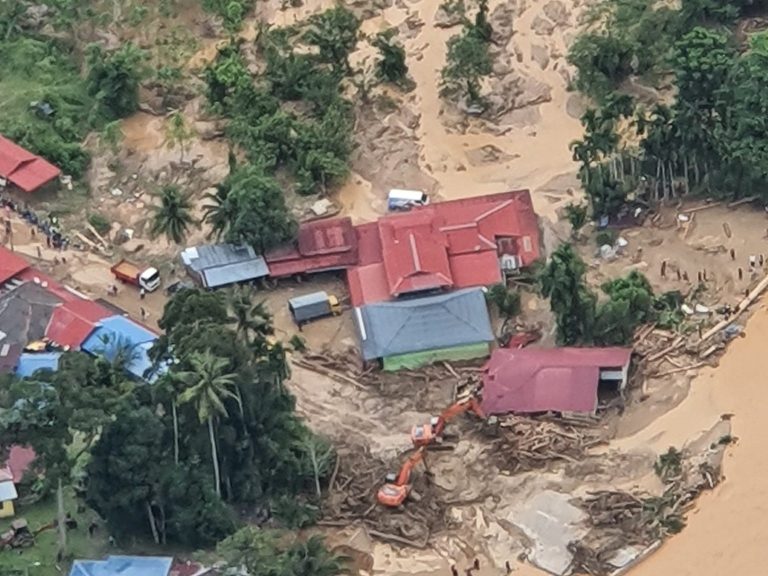
Environmental damage can become a national resilience concern when it disrupts essential services. River pollution, floods, forest loss, marine degradation and transboundary haze can affect public health, livelihoods and infrastructure.
The severity of a threat depends not only on the environmental damage itself, but also on the number of people exposed, the services affected and how quickly normal operations can resume.
Malaysia’s environmental approach is guided by the National Policy on the Environment (DASN), which promotes sustainable resource use, and the Environmental Quality Act 1974 (EQA), which provides a legal basis for pollution control. Sustainable Development Goals (SDGs) 13, 14 and 15 address climate action, marine ecosystems and life on land, respectively. Malaysia also participates in the Asean Agreement on Transboundary Haze Pollution (AATHP), recognising that some environmental risks cannot be managed within national borders alone.
The challenge is translating these commitments into practical protection for communities and essential services. Better links between environmental information, responsible agencies and timely decisions could help prevent incidents from escalating into wider disruptions. The priority should be to make existing arrangements work together rather than assume that additional policies or institutions will solve the problem.
Environmental performance is often measured through pollution levels, conservation targets and policy commitments. These measures matter, but their significance for national resilience becomes clearer when linked to essential services.
A river-quality reading, for instance, becomes more meaningful when authorities know which treatment plants draw water from the river, how many households depend on them and whether alternative supplies are available. Forest degradation also matters when it increases risks to catchments and downstream infrastructure.
These connections could be captured through proposed Environmental Security Indicators (ESIs), provided they are clearly defined and tested. This would shift the focus from whether environmental targets have been reported to whether exposed communities and essential facilities can withstand disruption. It would also help explain why similar levels of pollution can have different consequences in different locations.
The November 2020 Sungai Selangor pollution incident illustrates how an environmental problem can quickly disrupt daily life. Four water treatment plants temporarily ceased operations, affecting water supplies in parts of the Klang Valley. Environmental regulators, water authorities, operators and enforcement agencies have distinct responsibilities in such situations. Although the authorities responded, the disruption highlights the importance of shared information, clear responsibilities and early preventive measures. Protecting a water source is also about safeguarding the services it provides.
Some threats extend beyond Malaysia’s control. Transboundary haze can affect health, schools and economic activity even when fires occur outside the country. AATHP provides a basis for cooperation, while the Asean Specialised Meteorological Centre (ASMC) shares hotspot and weather assessments. These tools help countries identify areas of concern, but enforcement remains primarily a national responsibility.
Regional progress therefore depends on countries sharing information promptly, assessing conditions on the ground and acting on common assessments within their respective legal powers.
Environmental monitoring also creates opportunities for earlier intervention. Malaysia and Asean already use monitoring networks, satellites and geospatial information. Artificial intelligence (AI) could help integrate these sources, identify unusual patterns and support forecasts. However, an alert is useful only if its reliability can be verified and an authorised agency can respond. Poor data, false warnings and cybersecurity risks can undermine confidence. AI should support experienced officials, not replace their judgement or legal responsibilities.
Across these examples, the central issue is the link between information and action. Policies set priorities, agencies protect essential services, regional partners share information and monitoring tools identify risks. National resilience improves when these functions support timely, coordinated decisions rather than operate in isolation.
Malaysia Environmental Security Resilience Framework (MESRF)
To address these gaps, this article proposes the Malaysia Environmental Security Resilience Framework (MESRF). It rests on three pillars: policy and SDG integration, governance and regional cooperation, and AI-enabled environmental intelligence. Accountability and regular review would apply across all three. Its guiding principle is to connect existing institutions before creating new ones. Four initiatives could put the framework into practice.
First, Malaysia could develop a concise set of Environmental Security Indicators to identify where environmental pressures threaten people and essential services. These could include treatment plants exposed to river pollution, populations affected by haze and critical infrastructure downstream of degraded catchments.
Clear definitions, baseline data and pilot testing would be needed before the indicators could guide decisions. They should complement existing environmental measures rather than replace them, enabling decision makers to assess environmental trends alongside their potential effects on public services.
Second, federal and state agencies should agree on practical procedures for sharing risk information, verifying warnings and determining who should act. Joint assessments could initially focus on locations where disruptions would have serious consequences, including major water supply systems. Responsibilities should remain consistent with existing legal mandates.
Third, Malaysia should strengthen the operational value of Asean cooperation through timely information exchanges, joint assessments where appropriate and reviews of responses to regional warnings. Technical assistance and transparent discussions could improve preparedness without assuming that Asean has the authority to enforce national laws.
Fourth, Malaysia could explore an AI-Enabled National Environmental Intelligence Platform (AI-NEIP) as a decision-support tool integrating environmental, satellite and geospatial data. It should begin with limited trials, clear data ownership and validation against past incidents.
Verified alerts could then be linked to agency response procedures. Human oversight, clear and understandable warnings, cybersecurity safeguards, audit records and realistic cost assessments would be essential. Any expansion should depend on evidence that the system improves warning accuracy, response times and preventive decisions, rather than simply on the acquisition of new technology.
Environmental security is ultimately about keeping communities and essential services functioning when environmental conditions deteriorate. Malaysia already has policies, laws, regional partnerships and monitoring capabilities. Their value depends on how effectively information moves between institutions and translates into action.
MESRF offers a possible structure for bringing these efforts together, but it remains a proposal. Its indicators and AI component would require consultation, field trials, cost assessments and independent evaluation. Success should be measured by earlier, credible warnings, better-coordinated preventive action and fewer avoidable disruptions to essential services.
Stronger national resilience begins with making existing capabilities work together.
Assistant Commissioner of Police Mohd Sharifudin Khairudin is a senior police officer with the Royal Malaysia Police and is currently attending the National Resilience College at the National Centre for Defence Studies (PUSPAHANAS) in Putrajaya.
The views expressed here are the personal opinion of the writer and do not represent those of Twentytwo13.