

KUALA LUMPUR: Artificial intelligence (AI) is reshaping recruitment and higher education worldwide, prompting Malaysia to rethink how graduate employability is measured, demonstrated and developed.
Verifiable skills and practical experience are becoming increasingly important alongside academic qualifications as employers seek graduates who can demonstrate their capabilities in an increasingly AI-driven workplace.
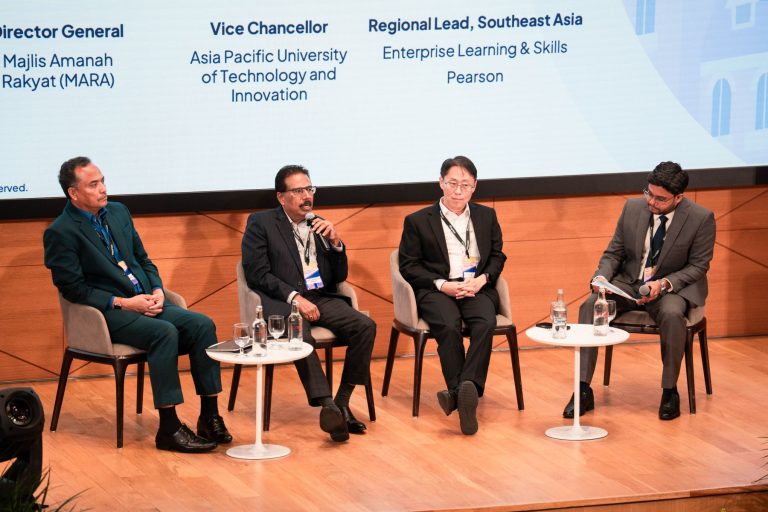
This was among the key messages raised during a panel discussion titled ‘Bridging ambition and ability: Shaping Malaysia’s future-ready graduates’, where industry and education leaders examined how graduates could remain employable in an AI-driven economy.
The discussion was held on the sidelines of the launch of a study titled ‘AI Readiness: Building the bridge from higher education to work in Malaysia’, conducted by Pearson and Amazon Web Services (AWS).
The study, which surveyed more than 2,700 students, educators and employers across six countries – Malaysia, the United States, the United Kingdom, Brazil, Saudi Arabia and Vietnam – found a gap between Malaysian learners’ confidence in their employment prospects and their readiness to use AI.
Among the findings was that 49 per cent of Malaysian educators believed their institutions were keeping pace with most or all AI developments. However, employers continued to report difficulties finding graduates with the skills required in the workplace.
Datuk V. Rathakrishnan, managing director of World Education Placement Service, said he was concerned about the challenges facing young graduates, particularly as companies increasingly adopted AI in recruitment and entry-level positions faced growing uncertainty.
He described a situation in which graduates used AI tools to prepare their resumes, only to find that employers were also using AI-powered applicant tracking systems and automated interviews to screen candidates.
This raised questions about how graduates could demonstrate that the skills listed in their resumes were genuine and supported by evidence.
One proposal he highlighted was the development of a Skills Passport, which would allow individuals to document their qualifications, projects, experience and competencies in a verifiable and portable format.
“Skills Passport is your resume, with your education background, your projects, whatever you have done,” said Rathakrishnan.
“AI could help identify and map the skills an individual possesses, but those skills need to be supported by evidence.
“Certifications, university projects and practical experience could contribute towards establishing that evidence, depending on what employers recognise and require.”
He said the Skills Passport should ultimately be visible, verifiable and portable, allowing graduates to demonstrate their capabilities to employers locally and internationally.
However, demonstrating employability also requires employers to define more clearly the skills needed for specific roles.
Rathakrishnan said organisations should develop their own role-specific skills profiles, using existing industry frameworks as a starting point before adapting them to their particular business needs.
He proposed a technology-enabled platform to connect skills frameworks, job requirements, assessments and training interventions, allowing graduates to identify their skills gaps and take steps to address them.
This would also help universities better understand employers’ requirements and ensure students were better prepared before entering the workforce.
For universities, this means rethinking not just what students learn, but also how their capabilities are developed and assessed.
Professor Dr Ho Chin Kuan, vice-chancellor of Asia Pacific University of Technology and Innovation, said changing the curriculum alone would not be enough.
“Changing curriculum is an easy bit because curriculum is on paper. What is challenging is actually how we deliver and assess student outcomes,” he said.
He said traditional teaching methods had changed little over the years, with PowerPoint presentations largely replacing older overhead projectors without fundamentally changing how students learned.
Universities should instead move towards problem-based and project-based learning, where students work together to solve real-world problems.
Ho also called for more authentic assessments that reflected how graduates would actually perform in the workplace.
Using computer programming as an example, he questioned why students were still expected to write programmes on paper during examinations when industry professionals used computers and other available resources.
“Why assess students on something that they will never do at work?” he said.
He said authentic learning and assessment were necessary to ensure students could demonstrate practical capabilities rather than simply reproduce knowledge in an examination setting.
Alongside developing practical capabilities, universities must also prepare students to use AI responsibly.
Ho said his university had introduced a traffic-light system to guide students on the appropriate use of AI in assessments.
Under the system, lecturers specify whether AI use is prohibited, permitted under certain conditions or freely allowed for a particular assessment.
Where AI use is permitted, students are required to declare how they used it, which model they employed and the prompts or processes involved.
He said the approach was intended to help students become responsible AI users rather than simply prohibiting the technology.
“Don’t worry, I’m not going to stop you from using AI, but we are going to coach you how to use AI responsibly,” said Ho.
Dr Mahzan Teh, director-general of Majlis Amanah Rakyat (Mara), highlighted the importance of institutional leadership in moving AI adoption beyond individual initiatives towards consistent practices across educational institutions.
“Institutions need clear AI strategies, investment in faculty capabilities and stronger industry engagement to ensure students receive equal opportunities to develop relevant skills,” he said.
“Educators need to be equipped and supported to integrate emerging technologies into teaching and learning.”
Mahzan said Malaysia’s AI ambitions required the education sector to look beyond technology adoption and reconsider how students were developed, how industry needs were connected to education and how curricula were designed.
He said students needed to move beyond simply knowing about AI to understanding how to apply it in real-world situations. This would require industry requirements to be embedded in curricula, with programmes focusing on practical skills and competencies rather than relying solely on conventional academic assessments.
“We are not just merely on the CGPA assessment, but based on the practicality and what skill-based input in our industry,” said Mahzan.
“We need to ensure graduates secured not just employment, but fair and dignified salaries.”
The panellists agreed that preparing graduates for an AI-driven economy required more than technical competencies, highlighting the importance of practical experience, ethical judgement and the ability to demonstrate skills.
Image: (From left) Mahzan, Rathakrishnan, Ho and Paul Franklin, Regional Lead of Southeast Asia Enterprise Learning & Skills at Pearson, who moderated the panel discussion.


