
Four decades as a journalist and I have become some kind of an expert on the matter of defamation, I think, even though I’ve never had the chance to read law, let alone practise it.
The newsroom is the best of gurus. And the courtroom, too, of course.
In 2007, barely six months after parting ways with the New Straits Times Press, I was dragged into what Google describes as a “historic defamation lawsuit that changed the media landscape in the country”. It was the first time on Earth that a newspaper company was suing a blogger for defamation.
My legal battle would drag on for five years and made me the wiser – a defamation suit cannot kill press freedom; on the contrary, it provides the journalist an opportunity in front of the whole world to prove that he has, to the best of his ability, reported the truth or has been fair to all parties in his commentary.
It is not defamation if it is true.
Journalists from my era, those who started reporting in the 1980s, have seen some of the biggest defamation cases. The 1990s served as the decade of mega awards, when the norm was for tycoons and corporations that believed they had been defamed to seek tens and sometimes hundreds of millions of ringgit in compensation and damages. The 2000s saw a string of lawsuits against blogs.
But we also had other bigger concerns, with the Internal Security Act and the Official Secrets Act chief among them. Yes, some of our bosses and colleagues had been incarcerated without trial. On top of that, there were scores of laws that could be used to shut your publication down without notice and put you out to pasture.
The police raid on the home of senior journalist B. Nantha Kumar last April over his reports on foreign workers had a chilling effect on journalists.
But with a defamation suit, a journalist gets to fight it out in court.
I have my own rules or principles pertaining to defamation. Firstly, journalists (and newspapers or media companies) have no business suing anyone for defamation; and, secondly, a politician should only sue another politician for defamation.
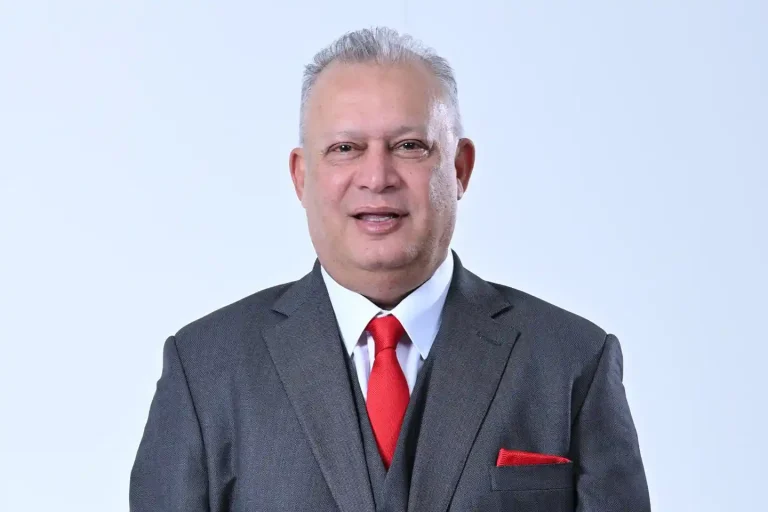
Tan Sri Mohamad Salim Fateh Din (image), who is suing journalist P. Gunasegaram for defamation, is neither journalist nor politician.
Salim is deputy executive chairman of Malaysian Resources Corporation Bhd (MRCB), a public-listed property development, engineering and construction company. The Employees Provident Fund (EPF) is the largest single shareholder of MRCB.
So if Salim decides to sue journalists in this country (which he has on several occasions), journalists in foreign countries (most recently against Murray Hunter), politicians (he recently won a case against a former assemblyman), or anyone else, for that matter, to defend his reputation or the reputation of his family or company, that is his business and his right.
Bear in mind that when someone is sued for defamation, he is not doomed. Whether he is sued for RM1 or RM240 million (probably the biggest case on record in Malaysia) is immaterial.
The defendant must still prove his case.
The system gives the defendant ample opportunity to defend himself or herself against the accusation.
I know at least a couple of journalists who were sued successfully by Salim for defamation in the past. One of them was ordered to pay the businessman a sum but after a post-hearing table-talk and after one party offered a belated but sincere apology, Salim waived that money.
All he wanted, Salim had said later, was to protect his reputation.
Last year, Salim successfully sued Hunter, the former lecturer at University Malaysia Perlis who has found fun, and fame in Thailand as a blogger specialising in finding fault with everything Malaysian.
The lawsuit was filed in Thailand. The arms of the law are long.
Hunter had a lot to say until reality hit him, which is that the laws are clear about defamation. The colour of your skin, your nationality, and your seniority do not count. What matters are facts, the truth, and your intentions.
Hunter made a public apology to Salim and admitted that he had defamed the Malaysian.
In another case, involving Badrul Hisham Shaharin, better known as Chegubard, Salim and the blogger settled their differences out of court. No public apologies were recorded, none in chambers as well, if I’m not mistaken.
Gunasegaram is no Hunter or Chegubard, of course. He was already an established byline when I interned at Business Times some 42 years ago. This is not his first multi-million ringgit defamation suit. He lost his job (not at BT), purportedly, because he published an article that made Proton, the national car manufacturer, look bad.
The RM100 million defamation suit against Gunasegaram is not an attack on the journalist and definitely not on press freedom. Salim felt he had been defamed by Gunasegaram, asked the journalist to apologise and bring down the article, and filed the suit only when Gunasegaram said he would stand by his article and would not say sorry.
Gunasegaram is a bigger expert than me on matters pertaining to defamation. That I am sure of.
He will agree with me that while it will be an inconvenience, a great one perhaps, the lawsuit is an opportunity to prove that his commentary or report was factual, a fair comment in the interest of the public, and was done without malice.
He has been given a chance in the courtroom, not just the court of public opinion, to uphold and fortify that freedom.
The views expressed here are the personal opinion of the writer and do not represent those of Twentytwo13.



