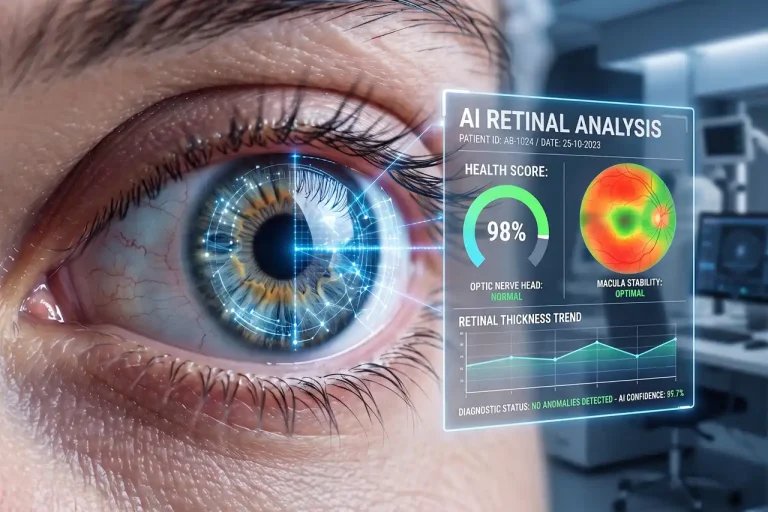
KUALA LUMPUR: Artificial intelligence (AI) is becoming increasingly embedded in eye care, from diagnostic equipment to clinical workflows – but how much do patients understand about the technology being used?
As AI adoption accelerates, questions are emerging over public awareness, patient safety, training, accountability and what should happen when the technology gets something wrong.
Ophthalmologist Dr Manoharan Shunmugam said more needs to be done to understand the views of patients and the wider public, rather than focusing primarily on doctors and technology specialists.
“Sometimes AI is embedded in diagnostic equipment, so you may be using it without necessarily thinking of it as AI,” said Dr Manoharan. Manoharan, the former Malaysian Society of Ophthalmology president, is involved in research examining some of these questions, including an anonymous survey forming part of a study led by Dr Iman Aslam from the University of Leicester.
The survey seeks to assess public awareness and understanding of AI tools in healthcare, while also examining wider questions about the risks and implications of their use.
Dr Manoharan said one of the key issues was liability.
“If an AI tool makes an incorrect diagnosis and a patient suffers harm, who should be held responsible?” he asked.
“Responsibility could potentially involve several parties, including the manufacturer of the AI system, the organisation that purchased it, the hospital or healthcare provider, or the doctor who used it.
“There are also questions about who should ensure that doctors receive appropriate training before using AI-based systems.”
Dr Manoharan said many of these questions remain untested in court. The study will examine the issue from several perspectives, with doctors and specialists, members of the public, and lawyers or other legal professionals forming three key groups.
There are also concerns around data sovereignty, deskilling, medico-legal implications and environmental impact.
The environmental impact of AI, in particular, is an area that Dr Manoharan believes deserves greater attention as increasingly powerful systems require significant computing resources.
There are also concerns about how AI diagnostic technologies are evaluated and reported.
The STARD-AI reporting guideline provides guidance for reporting studies of AI-based diagnostic accuracy, but questions remain about how consistently it is followed and how research involving AI is assessed as the technology develops.
The survey also provides an opportunity to compare attitudes between different countries.
Dr Manoharan said newly qualified doctors working in Malaysia could provide a useful subgroup alongside respondents from the UK.
“We get two subgroups – UK and Malaysia,” he said. “It will be interesting to compare the data.”
Such comparisons could provide insight into differences in awareness, adoption, training and perceptions of responsibility between healthcare professionals and members of the public in different countries.
Ultimately, Dr Manoharan said the aim was to ensure that AI adoption was accompanied by proper consideration of its risks, limitations and wider consequences. To take part in the survey, click here.