
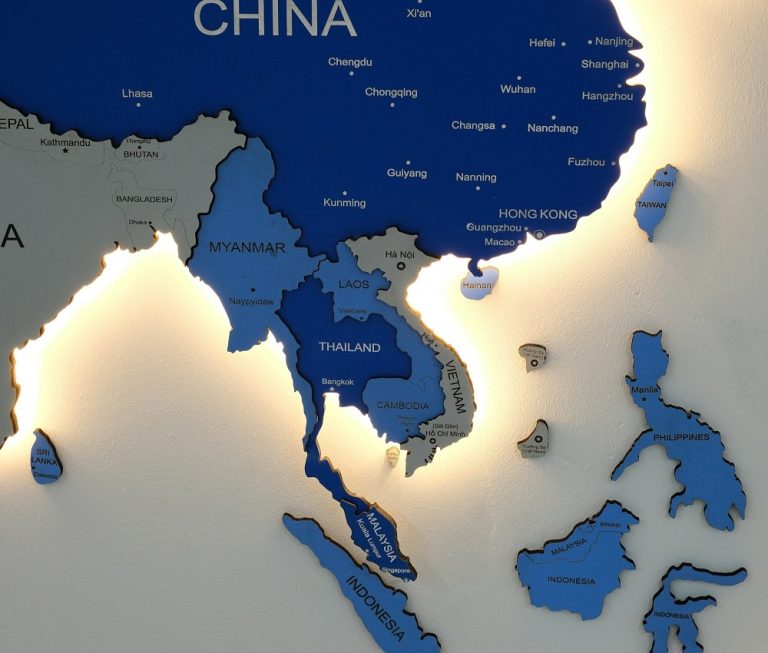
Malaysia, as the Asean Country Coordinator for China (August 2024-July 2027), is committed to advocating the region’s collective interests, particularly in advancing the Code of Conduct in the South China Sea.
Malaysia’s Foreign Minister Datuk Seri Mohamad Hasan, in his welcoming remarks at the Asean Foreign Ministers’ Meeting this morning, said there must be a whole-of-region commitment to peacebuilding when it comes to the conflict in Myanmar, and that the “same must be shown, in another critical pressure point – the South China Sea.”
“Open, but firm and consolidated engagement, must be the driving force of our approach, to resolving this issue,” said Mohamad Hasan.
“We look to all parties involved, both Asean Member States and Asean Dialogue Partners, to remember that geography binds us all. Regional security must be at the forefront of all that we do.”
The South China Sea is a strategic body of water bordering Brunei, Malaysia, Indonesia, the Philippines, Singapore, Thailand, Vietnam, and China. One of the busiest trade routes in the world and home to a wealth of marine and mineral resources, the South China Sea holds great economic and geostrategic importance.
China’s assertiveness in the area has steadily increased, resulting in heightened tensions with Southeast Asian nations, particularly the Philippines.
He added that through these challenges, Asean must remain firm and united.
“Hesitation or disunity will only encourage fragmentation and cause the proliferation of minilateral groupings that risk undermining Asean Centrality. It is crucial for us to embrace partnership, refrain from escalation, and respect the international laws to which we are all bound.”
He earlier highlighted the border conflict between Cambodia and Thailand that “has understandably opened some anxieties within the Asean community.”
“It reminds us of the fragility of peace,” Mohamad Hasan said.
“Fortunately, thanks to tireless mediation efforts, tensions have since de-escalated. We commend both countries for choosing the path of diplomacy and dialogue to resolve their differences.
“As (Asean) Chair, Malaysia is humbled by the trust placed in us to facilitate these efforts, and we remain fully committed to supporting both countries.
“We are encouraged by this progress and look forward to the signing of the formal ceasefire agreement and the establishment of the Asean Observers Team during this Summit.”
Thailand and Cambodia agreed to advance efforts to demarcate their shared boundary following a two-day special meeting of the Joint Commission held in Chanthaburi, Thailand on Oct 23.
The long-standing border dispute between the two countries escalated in July this year as troops from both nations clashed, claiming lives and displacing people on both sides. A ceasefire, mediated by Malaysia, was implemented in late July 2025.
US President Donald Trump, who is scheduled to arrive in Kuala Lumpur tomorrow, is expected to witness the signing of a ceasefire deal between Cambodia and Thailand on the sidelines of the 47th Asean Summit.


