
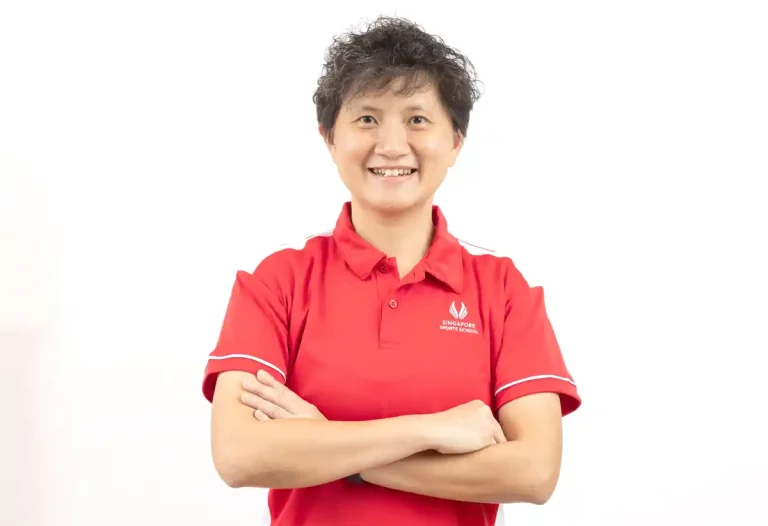
KUALA LUMPUR: Be daring, venture out of your comfort zone and seize every opportunity available. Those were the words of former shuttler turned administrator Joanne Quay Swee Ling.
For some, Quay is best remembered for her prowess on the court while representing Malaysia at multisport events, including the 1998 Commonwealth Games in Kuala Lumpur and the 2006 Asian Games in Doha.
Others, meanwhile, know the Kuala Lumpur-born Quay as an administrator focused on youth development.
It is only natural for Joanne to focus on the young. Like most athletes, her love for sports began early in life. From the tender age of five, she would accompany her father, Kit Quay, to the Selangor Badminton Association Hall in Kampung Attap, where he played social badminton.
“I picked up the racquet at the age of five and received proper training when I was eight. My first coach was Moe Chin Kiat, aka Ciku,” said Quay.
Moe is no stranger to Malaysia’s badminton scene and once served as the national para badminton head coach.
The former SRK Kampung Tunku, Petaling Jaya, student impressed many with her on-court performances. At 13, she was part of the first batch of shuttlers to train and study at Seri Garden International School, which also served as the national badminton academy at the time.
“I was with (Chan) Chong Min and (Lim) Pek Siah in that group. We were the first batch to study at Seri Garden International School. When I started playing, it was mostly singles and doubles, but towards the end of my career, I played women’s and mixed doubles.”
She also represented Kuala Lumpur Racquets Club, which was helmed by Datuk Seri Andrew Kam.
Quay admitted that transitioning from an athlete to a student was a struggle after she retired from badminton.
“In 2007, I got a scholarship to pursue a degree in sports business management at Leeds Metropolitan University. It was difficult because I went back to school. Many of my classmates were younger, but the experiences I gained and the support I received helped me during that transition.”
Upon completing her degree, Quay landed a job with the Badminton World Federation as a development officer.
“It helped me a lot in my career. It also allowed me to see the sport from an international perspective … how the world and other communities view badminton.”
She said that while badminton was popular in Malaysia, she saw how players from developing nations struggled to raise funds just to compete in tournaments.
After spending two years with the world body, Quay moved to the Badminton Association of Malaysia, where she joined as a development manager. She spent nine years with the national body, with her final position being deputy director of youth development.
Eager to learn more and explore new opportunities, Quay joined the Singapore Badminton Association as its junior performance programme director. She has been based in the island nation for three years.
Having seen the world, Quay believes Malaysia should do much more to build a solid talent base.
“In the past, we depended a lot on the state badminton associations. I was brought up in a system where I played in schools, followed by the state level and then the national team.
“But today, we have many clubs, and they contribute immensely to the ecosystem. We cannot ignore them (clubs). We have to find ways to turn this to our advantage.”
She cited Thailand and Indonesia as countries with strong club systems.
“The clubs keep mushrooming annually. They have many new players.”
Quay added that Singapore posed a unique challenge. While there were many clubs and players, education remained a top priority for student-athletes and their parents.
“Many kids will still play (badminton), but at the back of their minds, it is still about completing their education and achieving something academically first, and then sports,” she said.
“I still believe there can be a balance between sports and education. We intend to strike that balance. So when there are exams around the corner, training sessions will be reduced, but we insist that the players continue to train.”
As Quay continues her quest to unearth more badminton talent in Singapore, her heart remains in Malaysia, where she hopes to return and contribute to the domestic scene.
“I urge those intending to pursue sports to be daring and venture out. Take me, for example. I had to see what was out there and what other nations were doing. Only then would I be able to pick up key lessons and contribute back home.
“Being abroad also pushes your boundaries. Singapore, for example, is a striving nation, always wanting to do better and always thinking out of the box about how to improve. Here, you are always held accountable for your actions, and you have to justify and explain why things are being done. These are good traits.”
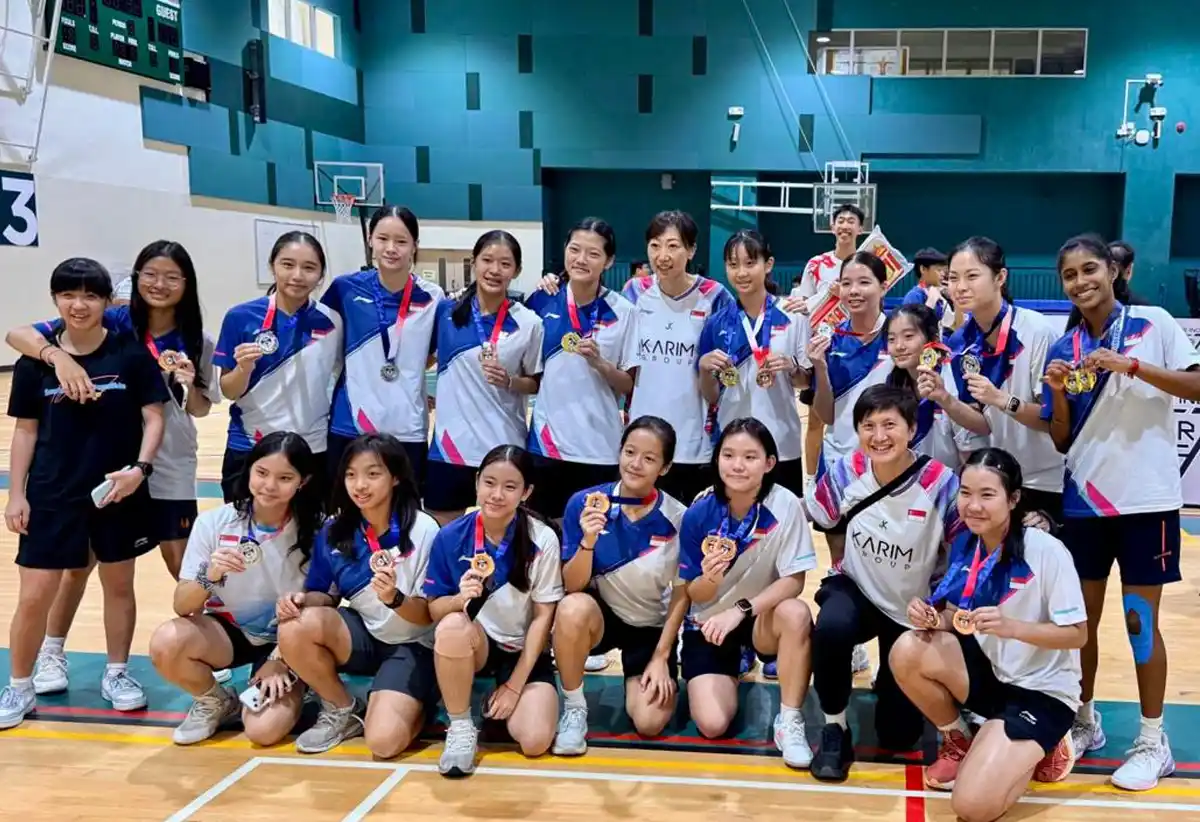
Quay (bottom; second from right) with her young Singaporean shuttlers. Image courtesy of Joanne Quay
Quay said it was important for those wanting to pursue a career in sports to believe in themselves and give it their all.
“Sports is very different from the normal world. For most people, they study hard, they work hard, they pass their examinations and become professionals. It is different in sports. It is tricky and risky. You can train hard and put in the hours, but it does not mean you can become a champion.
“But the satisfaction of being in sports is different. It took me to different parts of the world. It got me a scholarship to pursue my education and even got me a job.
“So my advice to those intending to make sports a career is to go for it, but please do not forget your studies.
“You still need your education. Because even on the court, you still need to use your brains,” she said in jest.


