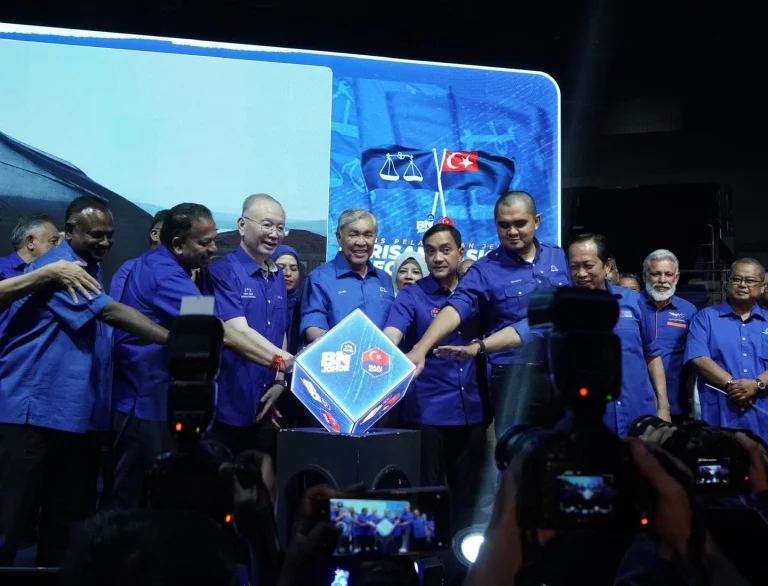
Just eight years after suffering its first-ever electoral defeat and watching its six-decade political monopoly crumble, Barisan Nasional (BN) is staging one of the most remarkable political comebacks in modern Southeast Asian history.
The coalition that governed Malaysia uninterruptedly from independence in 1957 until its historic downfall in 2018 has not only returned to federal power but is now positioning itself as the country’s most influential political actor ahead of the next general election, due by early 2028.
BN’s origins trace back to the Alliance Party, established in 1951 by the United Malays National Organisation (Umno), the Malaysian Chinese Association (MCA), and the Malaysian Indian Congress (MIC). This tripartite arrangement pioneered Malaysia’s consociational model of governance, carefully balancing the competing interests of the country’s major ethnic communities through power-sharing and negotiated compromise.
Following the May 1969 racial riots, then Prime Minister Tun Abdul Razak expanded the coalition into BN by incorporating additional parties from Peninsular and East Malaysia, creating a broader, more inclusive alliance that would dominate Malaysian politics from 1974 onward.
For decades, the coalition’s success rested on three pillars: inter-ethnic power-sharing, development-oriented governance, and political stability. Cabinet positions were distributed among component parties, federal development projects were channelled through government-linked institutions, and the coalition presented itself as the indispensable guarantor of stability and economic growth.
But this model began to show cracks after the 2008 general election, when BN lost its two-thirds parliamentary majority and several state governments. Although it retained federal power in 2013, the coalition lost the popular vote, a foreboding warning sign that growing public dissatisfaction was eroding its once-unassailable support.
The corruption scandals that followed, particularly the 1Malaysia Development Bhd (1MDB) affair, proved catastrophic. The coalition’s credibility was severely damaged, and in 2018, BN suffered its first electoral defeat at the hands of Pakatan Harapan under the leadership of Tun Dr Mahathir Mohamad, a former Umno and BN leader.
For the first time in Malaysia’s history, the coalition that had governed for 61 years found itself in opposition, its long-standing political monopoly shattered.
Yet even as political analysts wrote the coalition’s obituary, BN was quietly rebuilding. It returned to federal power in 2020 through a new governing coalition, with Umno’s Datuk Seri Ismail Sabri Yaakob serving as prime minister from 2021 to 2022. Following the 2022 general election, BN joined Datuk Seri Anwar Ibrahim’s Unity Government, with Umno president Datuk Seri Ahmad Zahid Hamidi assuming the position of deputy prime minister.
While no longer the dominant force it once was, the coalition retained considerable influence through its extensive grassroots machinery, particularly in rural Malay constituencies, and its reputation for administrative experience and political stability. It also had excellent ties with the royal houses, a strategic political force in the country.
By 2026, signs of a significant political revival have become unmistakable. The coalition retains formidable strength in traditional strongholds such as Johor, Pahang, Perlis, and Negeri Sembilan, where its grassroots networks remain highly effective. More importantly, BN has capitalised on weaknesses among both its rivals and its governing partners.
Ahmad Zahid announced that the coalition intends to contest the next general election independently rather than as a permanent component of either Pakatan Harapan or Perikatan Nasional. This “solo” strategy aims to rebuild BN’s independent identity, reassure conservative Malay supporters uneasy with cooperation alongside the Democratic Action Party (DAP), and maximise the coalition’s flexibility in post-election negotiations.
A major factor supporting BN’s resurgence has been the gradual revival of cooperation between Umno and Parti Islam Se-Malaysia (Pas). Although the formal Muafakat Nasional alliance collapsed earlier, elements of this partnership have resurfaced.
During the recent Johor polls, Pas openly encouraged its supporters to back BN, while similar cooperation emerged ahead of the Negeri Sembilan state election. This informal understanding potentially reunites conservative Malay-Muslim voters and reduces electoral competition between the two parties, strengthening BN’s appeal in Malay-majority constituencies.
Equally important has been the fragmentation of the opposition. Pas’ decision in 2026 to end its alliance with Parti Pribumi Bersatu Malaysia weakened Perikatan Nasional by separating Pas’ extensive religious and grassroots networks from Bersatu’s Malay nationalist appeal.
The resulting leadership struggles and organisational uncertainty within Perikatan Nasional have created opportunities for BN to regain voters who previously shifted towards the opposition. The Johor government’s success in attracting investments and promoting economic growth has further strengthened BN’s governance credentials.
BN has also benefited from growing tensions within Anwar’s Unity Government. Although Pakatan Harapan and BN cooperate at the federal level, both coalitions continue to compete for political dominance, creating disagreements over seat allocations, policy priorities, and ideological direction.
BN has positioned itself as a stronger defender of Malay interests while Pakatan Harapan continues to emphasise institutional reform and anti-corruption measures. These competing priorities have produced recurring tensions, particularly over issues involving former Prime Minister Datuk Seri Najib Razak and other Umno leaders facing corruption-related legal proceedings.
Malaysia’s first-past-the-post electoral system further enhances BN’s strategic position. Multi-cornered contests frequently split votes, allowing candidates to win with relatively modest pluralities. The coalition’s independent electoral strategy enables it to preserve its distinct identity while remaining open to post-election cooperation with either Pakatan Harapan or Perikatan Nasional. This flexibility enhances its bargaining power and reinforces its image as a potential kingmaker in any future coalition government.
At the same time, the Unity Government has struggled to fulfil many of its reform promises. Political compromises necessary to preserve the coalition have slowed institutional reforms, while several corruption cases involving Umno leaders have been postponed or discontinued, raising questions about the government’s commitment to accountability.
Economic pressures, including subsidy rationalisation and rising living costs, have also generated public dissatisfaction. These developments have weakened Pakatan Harapan’s reformist credentials and allowed BN to argue that experienced governance and political stability should take precedence over ambitious reform agendas.
Looking ahead to the 16th General Election, due by early 2028, BN appears to be positioning itself as Malaysia’s pivotal political force rather than seeking an outright return to one-party dominance.
The coalition’s resurgence reflects a combination of organisational resilience, strategic repositioning, opposition fragmentation, effective state-level governance, and weaknesses within the Unity Government.
Whether BN can fully restore its former dominance remains uncertain, but its recovery has transformed it once again into one of the country’s most influential political actors.
Its ability to cooperate with either Pakatan Harapan or Perikatan Nasional while rebuilding support among Malay-Muslim voters ensures that BN will remain central to Malaysia’s evolving political landscape in the years ahead.
The views expressed here are the personal opinion of the writer and do not represent those of Twentytwo13.