
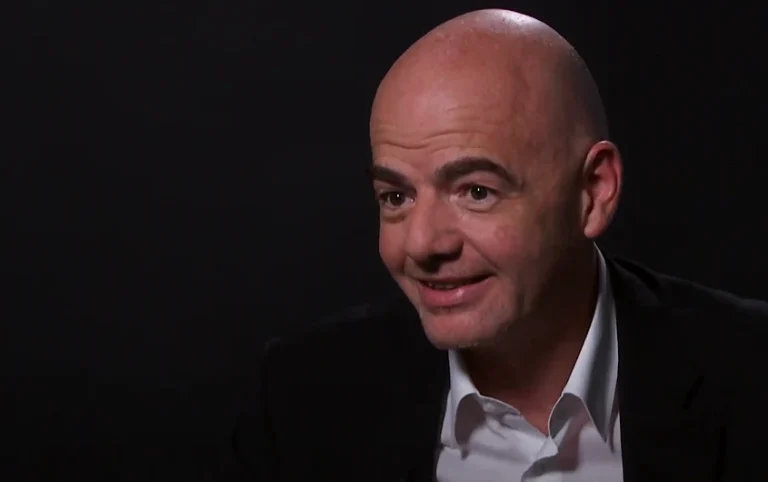
KUALA LUMPUR: The crisis surrounding Fifa is increasingly being framed around one question: will Gianni Infantino stay, resign or seek another term in 2027? Former United Nations (UN) spokesman Herve Verhoosel says that question matters, but it is no longer enough.
“Whether Infantino remains or someone else eventually succeeds him, Fifa risks missing the central lesson of the present crisis if the debate stops at the identity of its president,” Verhoosel told Twentytwo13.
“Changing the president without changing the governance would simply reset the crisis.”
Verhoosel spent more than two decades in international communications and leadership roles, including as a UN spokesman and director of communications.
He now works as an independent adviser in strategic and crisis communications and has been writing and commenting on Fifa governance.
Verhoosel said that even before the Fifa Forward Enterprise (FFE) controversy erupted, he had argued that the world body’s long-term credibility depended not simply on how it used football’s extraordinary commercial success, but on how the institution itself was governed.
Infantino’s FFE plan would see Fifa sell a minority stake in its commercial and tournament operations to private investors. The move was shelved following boycotts by regional football bodies. The episode also resulted in the sacking of Fifa chief operating officer Kevin Lamour, who had earlier criticised Infantino’s plan.
However, several football associations have supported the FFE.
“Initially, I approached some of these questions through Fifa’s social responsibilities and the role its foundation could play. But the underlying issue was always broader: how should an institution with Fifa’s global reach, resources and responsibilities organise power, accountability and decision-making?
“Recent events have made that question unavoidable.
“The controversy surrounding the proposed FFE, the increasingly public divisions among confederations and national associations, and now the departure of senior officials who challenged decisions internally all point towards something larger than a disagreement over one commercial proposal.”
He said this was becoming a question of institutional culture.
Having spent more than two decades working around international institutions within the UN system, Verhoosel said what struck him was how little of the present struggle resembled a conventional football dispute.
“It increasingly resembles international politics, with football attached to it.
“There are coalitions. There are competing regional interests. There are questions of loyalty and influence. And behind all of them sits the same fundamental institutional question: how much power should depend on one individual?”
He said Fifa’s 211 member associations should resist the temptation to believe that replacing one president automatically constitutes reform.
“Indeed, succession itself creates another risk. Any candidate who eventually replaces an incumbent will inevitably have supporters. Federations, confederations and individuals may have helped create the political conditions that made change possible.
“That is normal politics.
“But the next president – whoever that may be – must not enter office feeling obliged to reward those who helped deliver victory. Otherwise Fifa could simply invert the present political order: yesterday’s outsiders become tomorrow’s insiders, yesterday’s critics become tomorrow’s beneficiaries, and the underlying system remains untouched.”
He said the objective could not be to replace one system of political favours with another.
“This is precisely why governance reform matters more than personalities.
“Good institutions do not depend upon finding a perfect leader. They establish rules and counterweights that apply equally to good leaders, weak leaders and powerful leaders. They also protect disagreement,” he added.
Verhoosel said strong institutions were not measured by how well they rewarded loyalty, but by how effectively they protected independence, scrutiny and constructive dissent.
“None of this means weakening Fifa. Football needs a strong global governing body capable of taking difficult decisions, distributing resources, organising competitions and defending the global game.
“But there is an important distinction between a strong Fifa and a strong Fifa president. The two should never become synonymous.”
Verhoosel said Fifa did not need another strongman but stronger institutions.
“Ultimately, the legacy of this crisis should not be determined by who won or lost the political battle. It should be determined by whether Fifa used the moment to build an institution capable of becoming stronger than any individual president,” he added.


