
Politics and government are inextricably linked. Politics, from the Greek word politika, meaning affairs of the cities, refers to group decision-making and the exercise of power among individuals. It is essentially about people sharing power to run the affairs of a country for the benefit of the people.
However, politics today has strayed far from this ideal. It is now about making decisions that serve the interests of sectarian groups or political parties. These groups pursue their objectives through manoeuvring, manipulating issues and conflicts – or even outright character assassination – to serve their own agendas.
Often, these agendas do not align with the people’s interests. Both the opposition and ruling parties are guilty of using such tactics to retain or regain power.
This power struggle has been ongoing for ages – a reflection of man’s lust for power and position to enrich themselves. It is a phenomenon seen worldwide, particularly in Malaysia, where some politicians behave as if they own the country and assume they are the only ones fit to govern.
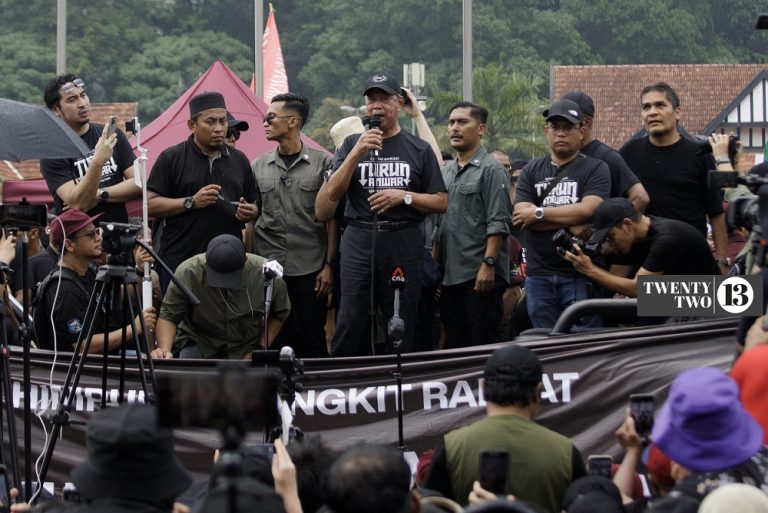
The recent ‘Turun Anwar‘ protest in Kuala Lumpur is a case in point. Two Malay-majority political parties – Pas and Bersatu – were joined by former prime minister Tun Dr Mahathir Mohamad, whose political relevance has long faded, along with the almost non-existent political party, Gerakan. Together, they staged a protest against Prime Minister Datuk Seri Anwar Ibrahim.
These opposition figures sought to bring down a sitting prime minister. Ironically, they were part of the previous government and have already proven their incompetence in governance.
Malay political parties have indoctrinated their supporters into believing that not aligning with their skewed agenda is tantamount to betraying the Malay race and the idea of ketuanan (supremacy).
Umno and Bersatu have exploited issues of Malay rights and ketuanan as a smokescreen to mislead Malays into thinking they will lose their rights and political power unless they support these parties.
This narrative is not only false but degrading. Even before independence, Malay leaders and the privileged class rarely fought for the Malays. It was the common people who stood up against the elites and certain leaders who were willing to compromise the country’s sovereignty through the Malayan Union.
After Merdeka, Malay leaders focused primarily on advancing themselves and their close circles. Since then, they – and the privileged class – have squandered the nation’s resources.
Just look at the corruption scandals involving Malay politicians from all sides, including those from Sabah and Sarawak. The Malays have been consistently short-changed while the elites and political class continue to enjoy the spoils.
As a result, Malays have been conditioned to accept crumbs and, in doing so, compromise their integrity and self-worth – even trading their votes for a mere RM100.
These Malay politicians want Anwar to fail – and with him, the country. They are not concerned about the impact of their unscrupulous actions on the rakyat, so long as their political agendas are fulfilled.
Attempts to mock and discredit Anwar, including caricatures of his diplomatic efforts and invoking the Qunut Nazilah to curse him, have backfired. Anwar responded by successfully brokering a ceasefire between Thailand and Cambodia, boosting his image as an international statesman.
He has demonstrated competence in governance and a sincere commitment to improving the social and economic wellbeing of all Malaysians. His stature has enhanced Malaysia’s image on the global geopolitical stage.
At this juncture, no one in Malaysia can match his ability, credibility, or experience in governance and international diplomacy.
Those eager to replace Anwar are, at best, mere jaguh kampung – village champions.
The views expressed here are the personal opinion of the writer and do not necessarily represent that of Twentytwo13.


