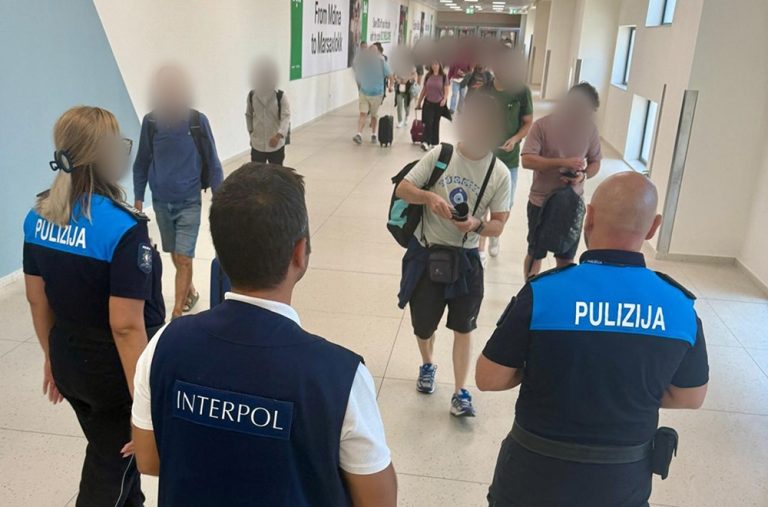
LYON: Dozens of people linked to terrorism investigations have been identified or arrested during a major international border security operation across Europe, North Africa, and the Middle East.
Police and border agencies in 18 countries carried out more than 41 million searches against Interpol’s global databases during Operation Neptune VIII. Interpol, however, did not mention when the operation took place in its statement to the media today.
The checks generated 395 hits, including 89 linked to suspects wanted for terrorism-related offences. A further 281 terrorism-related alerts were triggered through national databases and the Schengen Information System.
Among the most significant arrests:
- Algeria: Police detained a suspected member of a terrorist group wanted under an international arrest request, known as an Interpol Red Notice, following intelligence shared by Italian authorities.
- Tunisia: Officers arrested a suspect accused of providing logistical support to militants after spotting their name on the passenger list of a ship arriving from Italy. The individual was also the subject of an Orange Notice, which warns of an imminent threat.
- Albania: A woman convicted of belonging to a terrorist organisation and wanted by Turkey was detained at Tirana’s Rinas Airport after arriving on an international flight.
Border officers in Albania also flagged several other individuals linked to US intelligence requests and Interpol Blue Notices, which are used to gather information about a person’s identity or location.
“Terrorist networks do not respect borders, and those seeking to evade justice can exploit gaps between national jurisdictions,” said Maria Carmen Munoz, Interpol’s counter-terrorism director.
She added that integrating international databases into routine border checks allowed officers to “disrupt movements” in real time.
Alongside the counter-terrorism arrests, the operation uncovered wider cross-border crime, including drug smuggling and document fraud.
In Portugal, two people were arrested on suspicion of drug trafficking after airport officials seized about 290kg of cocaine. Meanwhile, Slovenian authorities at Ljubljana Airport detained two travellers carrying forged Indian passports and Spanish visas, prompting an investigation into possible links to foreign terrorist fighting activity.
In a separate joint operation with the European border agency Frontex, officers also intercepted three vehicles with altered identification numbers travelling between Italy and Algeria, uncovering a suspected trafficking route into North Africa.