
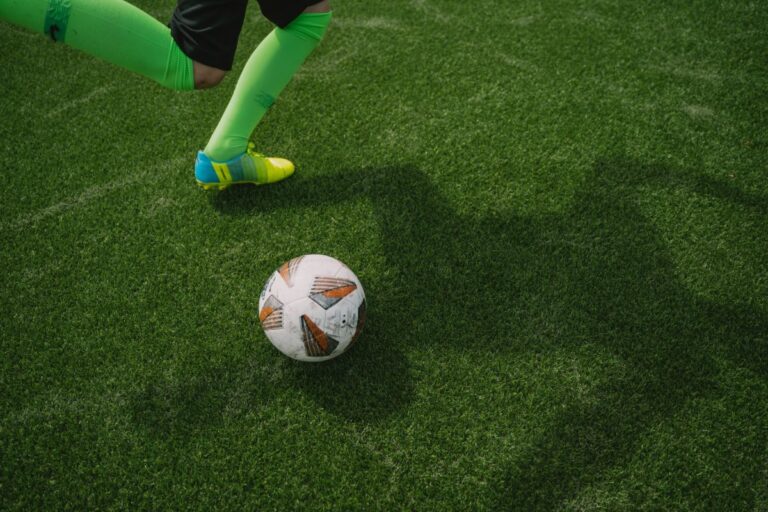
KUALA LUMPUR: As boots are laced and banter is exchanged, the pressures of daily life give way to the simple rhythm of a 90-minute football match.
It is this kind of simple yet meaningful grassroots interaction that could transform conventional diplomatic ties into something far more memorable.
Every March 23, Denmark, Finland, Norway, Iceland and Sweden celebrate Nordic Day, commemorating the 1962 Helsinki Treaty that laid the foundation for one of the world’s most enduring regional partnerships.
Traditionally, the occasion is marked by official receptions, speeches and cultural showcases. They serve their purpose, but rarely capture the public imagination.
Yet in a country where children regularly chant Erling Haaland’s name and Zlatan Ibrahimovic remains a household name, a more grounded opportunity presents itself – a Nordic Day amateur football tournament.
Leaving aside the recent documentation controversy involving seven Malaysian footballers, one thing remains beyond dispute: Malaysians love football.
The concept need not be elaborate. In fact, its simplicity could be its greatest strength.
A month-long round-robin tournament could pair teams from the four Nordic embassies with local amateur clubs and even media teams, with costs shared among the participating embassies.
Another option would be to focus entirely on children, giving young Malaysians and their counterparts from Denmark, Finland, Norway, Iceland and Sweden the chance to learn about one another through sport while building friendships that last long after the final whistle.
Before every match, each team could be given two minutes to share an interesting fact about its home country.
After the final whistle, everyone gathers around something Malaysia is renowned for – food. Players could sample Finland’s voisilmäpulla alongside Milo ais kurang manis ikat tepi, or, for the more adventurous, fresh durian served with pepparkakor (Swedish ginger thins).
Beyond the muddy boots, sweaty jerseys and shared laughter, the football pitch offers neutral ground for a different kind of diplomacy.
Geopolitical disagreements and stalled defence deals can occasionally strain official relations. Malaysia’s aborted missile procurement from Norway remains one example.
On the pitch, however, shared rules, teamwork and healthy competition have a way of cutting through political baggage.
Diplomacy works best when it moves beyond boardroom handshakes and vague, uninformative social media posts.
A friendly match on a local football pitch may do more to build genuine community connections than another round of carefully scripted speeches.
Perhaps Nordic Day 2027 could mark the start of an annual football tournament – or even a broader sporting festival – that strengthens ties between Malaysia and the Nordic countries for years to come.


