
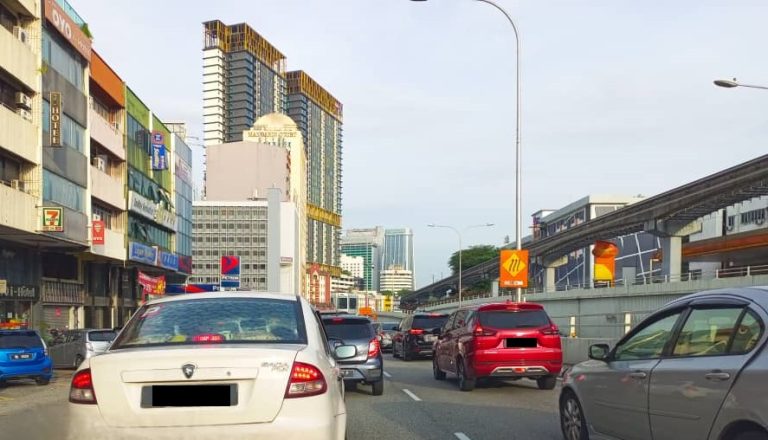
It has been two weeks since the launch of the “Bangun KL” programme – an initiative framed as a lifestyle shift, complete with discounted coffee incentives.
Some would have us believe the only barrier to a smoother commute is the time we start our day.
Little attention is given to deeper structural issues – urban planning gaps, weak last-mile connectivity, the sheer volume of single-occupancy vehicles, or intermittent rail disruptions.
Instead, the narrative suggests the rakyat have simply been waking up too late.
The target is modest: persuade 10 per cent of the 1.2 million vehicles entering Kuala Lumpur during peak hours to leave earlier. It is presented as progress – better than doing nothing, as Minister in the Prime Minister’s Department (Federal Territories) Hannah Yeoh has suggested.
But does it solve anything?
Kuala Lumpur’s congestion problem is not new. The city has grappled with gridlock since the 1970s, and the situation has only worsened.
Telling people to leave earlier merely shifts the problem. If commuters aim to beat the 7am rush by leaving at 6am, the congestion simply follows. It is a zero-sum game.
Long-time Kuala Lumpur resident Datuk M. Ali believes behavioural nudges alone will not work without structural reform.
“The Madani government must set its priorities correctly rather than trying to tempt the rakyat with discounted coffee,” he said.
“The peak has already expanded to fill the available morning hours. People do not need to be told to wake up earlier. This is sloganeering that will not be effective.”
He cited the example of commuters leaving as early as 4am from Banting just to reach Kuala Lumpur on time – a reality already faced by many.
Ali argued that instead of expanding highways and flyovers, the government should prioritise improving public transport.
“Why not focus on building an efficient public transport system? Strengthen catchment areas, deploy people movers for inter- and intra-city travel, and ensure seamless connectivity,” he said.
He added that while large buses remain necessary during peak hours, smaller buses could be deployed during off-peak periods to improve efficiency.
Ali, who is the chairman of the Selamatkan Kuala Lumpur movement, also highlighted poor synchronisation between rail services and feeder buses.
“It’s poor planning, and there is little effort to monitor the system,” he said.
He has a point. The idea that commuters can simply avoid peak hours overlooks the fact that peak hours have already expanded.
For many civil servants – even before the April 15 work-from-home directive – leaving at 6am was no longer a strategy but a necessity, especially to secure parking in Putrajaya.
For the working class, waking up at 5am to reach work by 9am is routine. Many still face long commutes home, often arriving after 9pm.
Consider parents managing school runs in Cheras while heading to work in Shah Alam, or working mothers preparing meals before dawn. Their schedules are already stretched to the limit.
Policies must not shift the burden of systemic shortcomings onto the public. While collaboration between the public and private sectors is important, traffic congestion cannot be solved with simplistic, one-size-fits-all solutions.
Meaningful change requires data-driven strategies and input from transport and urban planning experts.
Until then, the early bird may still catch the worm – but in Kuala Lumpur, it will likely be stuck in the same jam.


