
In the first of a series of articles, Twentytwo13 shares excerpts from Stories of the Seas, by ex-MISC (formerly Malaysia International Shipping Corporation) officers and engineers. This week, Captain Johari Mohd Noh reflects on his formative years at sea and his unforgettable encounters with Egypt.
I began my seafaring journey as a cadet officer aboard the Bunga Seroja on Aug 28, 1973, after completing my pre-sea training at The Training Ship Dufferin in Bombay (now Mumbai).
I was 19, full of excitement and curiosity. The sea represented a vast classroom, where every voyage offered new lessons about life, people, and places.
I have sailed to many corners of the world, but Egypt was unique. It was not only the history and culture, but also the sense that I was witnessing a nation rebuilding itself.
At that time, our vessel followed a fascinating and challenging route – from Malaysia to Japan, across the Pacific Ocean to the Panama Canal, through European ports, and finally back home via the Cape of Good Hope.
The Suez Canal – the shortcut between the East and the West – was closed due to the war between Egypt and Israel.
When the canal finally reopened in June 1975, we were among the early ships to pass through. I will never forget that sight.
As Bunga Seroja glided slowly along the waterway, the landscape told a story of devastation and endurance.
Even from the deck, we could see that fierce battles had raged there not long before. The silence of the desert felt heavy, as though it still carried the echoes of gunfire. It was humbling and haunting.
The mood aboard the ship changed as soon as local traders were allowed to board. The vessel transformed into a floating “pasar malam”.
They came bearing glittering trinkets, silverware, ornaments, snacks, and drinks. There were even people offering to polish shoes and mend clothes.
One man who stood out was a barber. Unfortunately for him, most of us were accustomed to cutting our own hair or helping each other.
Seeing little demand, he quickly adapted. Before disembarking, he packed up his tools and began selling them instead – scissors, combs, razors, all neatly displayed. I remember smiling and thinking, now that is adapting to the market on the spot!
Two transits stand out. In December 1980, when I was aboard M.V. Bunga Sepang, we had just entered the canal when news reached us that John Lennon, one of The Beatles, had been shot dead in New York.
I was a great fan and deeply affected.
In October 1981, once again on Bunga Sepang, we received word that the President of Egypt, Anwar Sadat, had been assassinated during a military parade in Cairo.
Yet, for all its turbulence, Egypt continued to fascinate me.
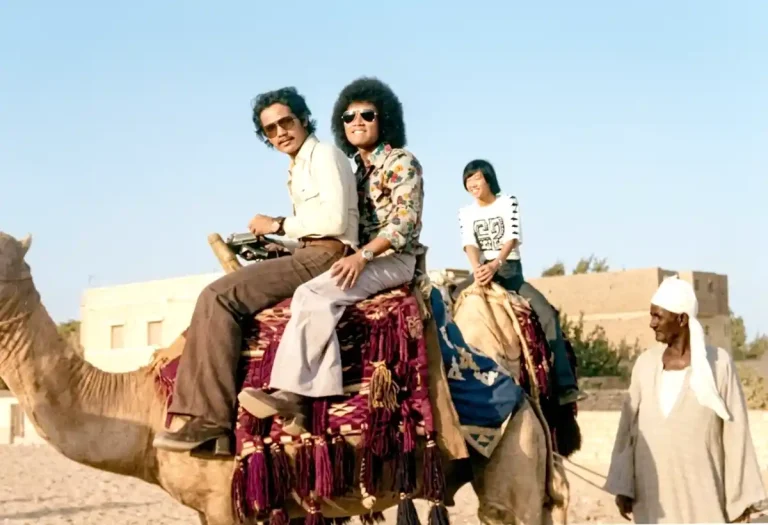
During one of our port calls, an engineer and I made the most of our short shore leave with a quick trip to the Pyramids of Giza.
Standing before structures built thousands of years ago made us feel small, yet deeply connected to history.
We were offered a camel ride for an unbelievably cheap fare. But when the time came, the camel driver smiled and refused to let the animal kneel.
“The fare,” he explained calmly, “is for going up the camel, not for coming down.”
“Very entrepreneurial people,” I told my friend. Indeed, it was a fine example of maximising profits when opportunity strikes!
Many years later, I returned to Egypt as a tourist.
I saw a different country – peaceful, welcoming, and vibrant. The people I met were warm, cheerful, and proud of their heritage.
Egypt will always be a place of contrasts – where history meets resilience, where hardship gives way to laughter, and where every encounter, from a barber on deck to a clever camel driver in the desert, teaches you something about the human spirit.
Even after decades at sea and countless ports of call, those early days aboard the Bunga Seroja and Bunga Sepang remain among my most treasured memories.
This is an excerpt from Memories of Egypt: A seafarer’s tale by Capt Johari Mohd Noh. It is part of a collection of short stories by ex-MISC (formerly Malaysia International Shipping Corporation) officers and engineers from SOS (Stories of the Seas). It can be bought here.
The views expressed here are the personal opinion of the writer and do not necessarily represent that of Twentytwo13.



