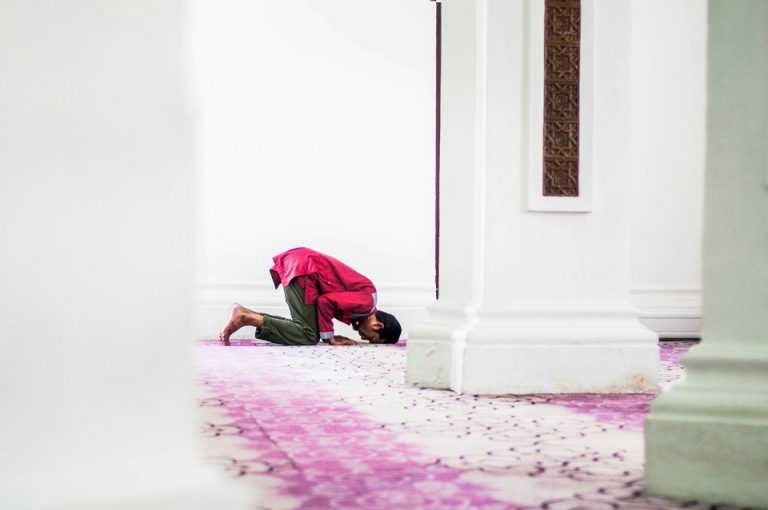
As we approach the final stretch of Ramadan and welcome Eid, I find myself in a familiar moment of reflection.
Ramadan is the month of the Quran – a time not just for abstaining from food and drink but for deep introspection, renewed purpose, and reconnecting with the values we often overlook.
“The month of Ramadan is that in which was revealed the Quran, a guidance for mankind, with clear proofs of guidance and the criterion (between right and wrong).” – Surah Al-Baqarah, 2:185.
When asked about the Prophet Muhammad’s character, Aisha (RA) replied: “His character was the Quran.”
This has stayed with me – a reminder that revelation wasn’t just to be read but embodied and reflected upon.
A prophet who keeps appearing
In my readings during Ramadan, I returned to one familiar name that echoes throughout the Quran – Prophet Musa (Moses), peace be upon him.
Musa (as) is the most mentioned prophet in the Quran – over 130 times. That repetition isn’t just historical; it’s deeply intentional and filled with instructional wisdom.
So, I started reflecting – why him? Why does his story keep surfacing?
Musa (as) and the model of leadership
Prophet Musa’s journey reflects almost every major theme we grapple with in leadership and personal development today:
• Standing up to injustice – Pharaoh vs. Bani Israel.
• Perseverance and purpose – leading a reluctant and often resistant community.
• Faith under fire – remaining anchored in moments of fear, doubt, and exile.
• Dealing with rejection – even by those closest to you.
• Navigating power and wisdom – from Pharaoh’s court to his spiritual journey with Khidr.
What strikes me most, though, is how human he was. He wasn’t a natural orator. When tasked by Allah to confront Pharaoh, Musa (as) didn’t feign bravado – he humbly acknowledged his limitation:
“And untie the knot from my tongue, so that they may understand my speech.” – Surah Ta-Ha, 20:27–28.
It’s a powerful moment – a prophet recognising his limitations and asking for help. In today’s terms, it’s leadership with self-awareness and humility.
A recent coaching moment
This reminded me of a conversation with a former journalist who recently interviewed a corporate figure – someone featured in an upcoming corporate book – but was stunned that the person struggled to articulate a meaningful, quotable thought.
It was a stark reminder: If leaders can’t communicate effectively, they can’t lead. They may have brilliant ideas or technical expertise, but without the ability to connect, inspire, and explain, their message falls flat.
In one of our recent coaching engagements with a C-suite team, this became even clearer. We weren’t just refining public speaking techniques; we were unlocking leadership through communication. Among the key takeaways were:
• Simplifying complexity – Breaking down intricate topics into clear, accessible language.
• Owning the message – Using confidence, consistency, and credibility to influence outcomes.
• The power of listening – Not just hearing, but actively responding to stakeholder concerns.
What became evident – again – is that no single approach fits all. Every leader has different gaps, strengths, and blind spots.
That’s why I never offer “off-the-shelf” solutions. Every engagement starts with questions: Where are the gaps? What’s holding your team back?
Meaningful leadership development must be as intentional as it is strategic. Like all growth, it is also a journey.
Much like Musa (as) – who didn’t arrive at leadership overnight but grew into it through challenge, humility, and divine guidance – we, too, evolve over time. With each experience, each test, and each turning point, we learn how to lead better, with more heart and wisdom.
Ramadan as a journey of transformation
Ramadan, in many ways, mirrors the journey of Musa (as). From the stillness of Mount Sinai to the crashing waves of the Red Sea, his story is one of struggle, transformation, and ultimately, liberation.
Similarly, Ramadan moves us from:
• Reflection to refinement
• Restraint to spiritual discipline
• Solitude to collective purpose
And then comes Eid—not just a celebration, but a marker of growth. A reminder that we have journeyed through difficulty and emerged lighter, clearer, and (hopefully) better.
As we move toward Syawal, let’s carry forward the leadership of Musa (as) – one rooted in humility, clarity, and faith. Let’s embrace the spirit of the Quran – not just in ritual, but in character.
Because the best leaders – in homes, offices, or nations – are those who, like Musa (as), lead with purpose, speak with intention, and listen with heart.
The views expressed here are the personal opinion of the writer and do not necessarily represent that of Twentytwo13.