
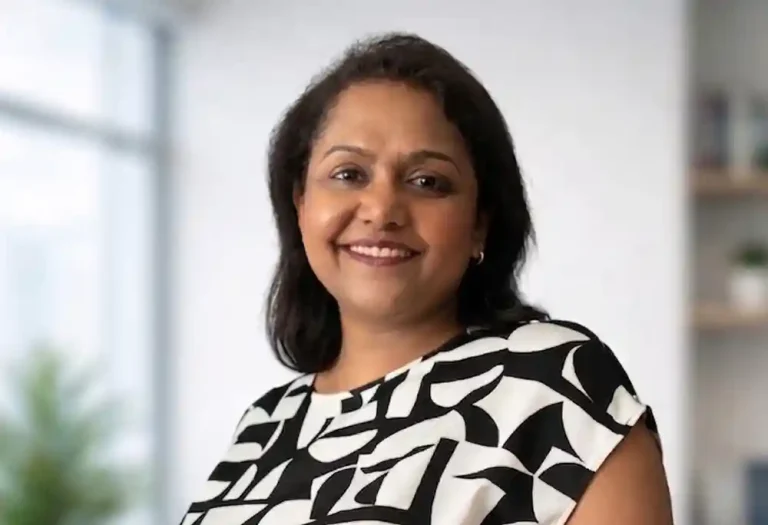
KUALA LUMPUR: Geetha Remy Vincent has built a career at the forefront of global satellite and spectrum policy, proving women not only belong but can lead.
From high-level negotiations at international forums to the technical coordination behind satellite operations, her work quietly underpins the connectivity millions depend on every day.
Yet for Geetha, Principal Spectrum Management Specialist at Measat Satellite Systems (Measat), the mission goes beyond infrastructure.
Some of the most important systems in the world are the least visible. Satellites and radio spectrum operate quietly in the background, enabling connectivity, information and services that millions rely on daily.
For Geetha, this invisible infrastructure has become the foundation of her life’s work – and a platform to show young women there is space for them in shaping the future of global communications.
“I believe satellite and space technologies offer girls and women an opportunity to work on challenges that genuinely matter,” she said.
“Girls should not question whether they belong here. There is a growing commitment to mentoring, inclusion and capacity building across the industry.”
Geetha joined Measat in 2000, straight out of university, beginning her career as an engineer in the spectrum management department.
“Over the past 26 years, I have grown alongside the organisation and now serve as Principal Spectrum Management Specialist.
“My role centres on spectrum management and international regulatory processes within the International Telecommunication Union (ITU), a specialised agency of the United Nations (UN), with particular focus on the World Radiocommunication Conference (WRC).”
At each WRC – held every four years – the Radio Regulations are reviewed and revised, shaping how spectrum is allocated and used globally. On a day-to-day basis, her work is both technical and strategic.
“My work spans a broad range of activities, from technical regulatory analysis and coordination planning to internal discussions with engineering and operations teams,” she said.
“I support the management of Measat’s satellite filings, engage in coordination matters with international operators, and translate evolving regulatory requirements into operational strategies for the company.”
Yet beyond the complexity, what drives her is a constant sense of purpose.
“The objective is always to protect spectrum and orbital resources, enable service continuity and innovation, and support Malaysia’s national connectivity goals,” said Geetha, who graduated with a Bachelor’s degree in Computer and Communications Engineering from Universiti Putra Malaysia.
Later in her career, she pursued an Executive MBA, broadening her perspective to include strategic, regulatory and policy-level considerations.
Not one to sit still, Geetha is also a registered Professional Engineer with a Practising Certificate (PEPC) with the Board of Engineers Malaysia, an Asean Chartered Professional Engineer (ACPE), and a Corporate Member of the Institution of Engineers Malaysia (MIEM).
She was drawn to Measat by the opportunity to be part of something truly distinctive.
“At the time, Measat was pioneering satellite technology in Malaysia, particularly through direct-to-home (DTH) satellite broadcasting that brought television and information services to millions of households nationwide,” she said.
“The opportunity to work with Measat was, quite literally, out of this world.
“What struck me most was how seemingly invisible systems could have such a tangible effect on everyday life, enabling access to information and services regardless of geography.”
That sense of purpose deepened following her first participation in the World Radiocommunication Conference in 2003.
She has seen how international regulatory outcomes directly shape the development of radiocommunication services – not only satellite services but also mobile, aeronautical and terrestrial services.
“My work has focused on ensuring that Malaysia’s operational experience and technical expertise as a satellite operating nation are reflected in global discussions under the ITU, particularly through coordinated engagement within the Asia Pacific Telecommunity (APT) regional framework,” she said.
“By contributing practical insights and technical perspectives through Measat, and as part of the Malaysian delegation at regional and global spectrum regulatory platforms, I have supported the continued recognition of Malaysia as a credible, constructive and reliable contributor to international satellite and spectrum policy.”
The impact of this work goes far beyond policy rooms.
“Satellite communications underpin national resilience, digital inclusion and economic competitiveness,” she said.
“This role is significant, especially for rural connectivity, disaster response, broadcasting and emerging services.”
She emphasised that none of this is possible without strong spectrum management. When it works, the results are transformative.
“One clear example is nationwide access to information through direct-to-home satellite broadcasting, including rural and remote communities,” she said.
“Satellite services are also critical during disasters, remaining operational when terrestrial networks fail. During previous landslides in Cameron Highlands and along the Gua Musang–Lojing corridor, satellite connectivity supported authorities and response teams when communities were temporarily isolated.
“Aviation safety offers another compelling example. The downing of Malaysia Airlines MH17 in 2014 underscored the need for global flight tracking, leading to regulatory outcomes at WRC-15 that enabled beyond line-of-sight aircraft tracking worldwide and secured the satellite spectrum required to support these safety-critical systems.”
Similar frameworks support Earth Stations in Motion (ESIM), enabling reliable connectivity for aircraft and maritime vessels operating far from land.
Her leadership journey also took shape on the global stage, despite it being predominantly male-dominated. Rather than seeing this as a barrier, she focused on building credibility.
“A defining moment in my career came when I began taking on regional and global leadership roles in international regulatory forums such as the ITU and APT. These platforms were, and in some cases still are, predominantly male-dominated,” she said.
“Being entrusted to chair drafting and coordination groups involving senior regulators and industry experts required confidence, clarity and resilience. I learned early that credibility is built through preparation and consistency.”
Equally important has been sustaining that journey over time.
She said engagement in international regulatory environments often involves demanding schedules, extensive travel and prolonged periods of intense preparation.
“Sustaining effectiveness requires conscious attention to wellbeing, clear boundaries and strong support systems.”
At home, she carries an equally important role.
“Being a mother of four boys has profoundly shaped my perspective on responsibility, resilience and the value of time.
“The unwavering support of my family, especially my husband, as well as my parents and parents-in-law, has been central to my ability to take on demanding roles with confidence.
“For me, balance has never meant scaling back ambition but sustaining it. By staying fully engaged professionally while grounded personally, and leading with clarity, discipline and a long-term perspective, this has enabled consistent and impactful contributions over time.”
Looking ahead, she is energised by where the industry is heading.
“Two emerging trends are Earth Stations in Motion (ESIM) and direct-to-device (D2D) satellite communications,” she said.
“What excites me most is how closely they bring satellite communications into people’s daily lives.
“Contributing to frameworks that enable these innovations while ensuring fair spectrum use and protecting existing services is both challenging and deeply rewarding.”
As the field evolves, so do the opportunities. It is this sense of purpose that she hopes will inspire more women to step forward.
“The industry now requires a broad and diverse range of skills beyond engineering. This makes the sector highly interdisciplinary, globally connected and relevant for the long term,” she said.
“There is a deep sense of purpose that comes from knowing that the work you do contributes meaningfully to people’s lives.”
Her message to the next generation is simple.
“To young women who may feel that space or engineering is out of reach, my message is simple: there is space for you here. All it takes is curiosity, commitment and the courage to keep learning,” she said.
“Encouraging more women to join this journey is not just about representation. It is about building a smarter, more resilient and more inclusive global communications ecosystem for the future.
“This is a field where your work can have a direct and lasting societal impact – connecting rural and remote communities, supporting emergency communications when they are needed most, and enabling access to education, healthcare and regional development.”


