With the recent announcement of the United States pulling out of United Nations (UN) climate agreements, many are concerned the global sustainability agenda may be at risk. It may even be derailed.
This is because the US is among the largest contributors to global carbon emissions. Its withdrawal would be a major setback.
The world today exhibits many characteristics of a chaotic state. Traditional norms, systems, and expectations are being upended at an unprecedented pace. Whether this is a temporary phase of upheaval or a lasting transformation depends on how societies navigate these shifts.
As a country very dependent on external economies, Malaysia will have to strategise to minimise the impact of such chaos.
There is strong evidence that technological disruption is accelerating. Algorithms are reshaping work, creativity, and decision-making, blurring the lines between human and machine roles.
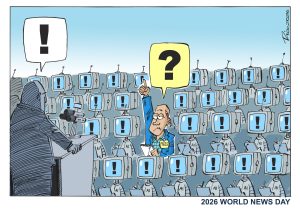
Social media platforms amplify extremism, misinformation, and polarisation, creating fragmented realities where facts are contested.
Why? Technology evolves faster than ethical frameworks or regulations. The rapid adoption of tools like generative artificial intelligence (AI) destabilises industries and challenges human identity. Extreme weather events – including record heatwaves, floods, wildfires – disrupt economies, displace populations, and destabilise food systems.
Species extinction and ecosystem collapse threaten the natural order humans depend on. Decades of unsustainable growth had prioritised profit over planetary boundaries. Now, feedback loops – for example, melting Arctic ice – accelerate chaos beyond human control.
Political and social polarisation becomes inevitable. This is accompanied by the erosion of trust. Institutions – governments, media, science – face scepticism, fuelling conspiracy theories and authoritarianism.
Culture clashes over race, gender, and nationalism further fracture societies. Examples include the US political divides and the global rise of far-right movements. The European Union (EU) is no exception in the rise of anti-immigrant politics. It is just a matter of time. Globalisation’s winners and losers, combined with algorithmic echo chambers, further deepen tribalism. People tend to cling to rigid identities as anchors in uncertain times.
The wealth gap continues widening. Billionaires thrive while wages stagnate, housing becomes unaffordable, and gig work replaces stable jobs.
Younger generations face existential dread about their futures, especially growing concerns over climate, debt, and AI job displacement. Neoliberal capitalism prioritises shareholder returns over social welfare. Automation and tax evasion exacerbate disparities, destabilising social contracts.
There are shifting norms. Debates over gender, sexuality, and ethics challenge traditional hierarchies. Rising mental health crises reflect a loss of meaning in a hyperconnected yet isolating world. Is protectionism returning? The internet exposes people to diverse worldviews, clashing with older traditions. This creates both liberation and disorientation.
Geopolitical fragmentation is evident everywhere. The post-WWII order – such as US hegemony and globalisation – is crumbling. Multipolar competition (US–China tensions, Russia’s aggression) risks conflict. Supply chain disruptions – pandemics, wars – reveal global interdependence as both a strength and vulnerability. Why? Power shifts as emerging economies demand influence, while nationalism resurges as a backlash to globalisation.
Is this state permanent? Some argue chaos often precedes transformation. History shows that upheavals like the Industrial Revolution or the 1960s counterculture led to progress – and backlash.
Today’s disruptions could lead to collapse if inequality, climate failures, and AI misuse go unchecked. They could lead to renewal if societies harness technology for equity, adopt regenerative economies, and rebuild trust through inclusive governance.
Navigating the chaos calls for new approaches. There are compelling reasons to embrace lifelong learning to navigate AI-driven job markets. There is a need to address climate change and inequality through systemic reforms – green energy, universal basic income.
It is seen as critical to regulate AI and social media to prioritise human dignity over profit. There is an overwhelming need to find purpose in community, creativity, or spirituality amid uncertainty. As some argue, systems need some disorder to evolve. The world may feel topsy-turvy, but chaos can be a catalyst for reimagining outdated structures.
The question isn’t whether we’re heading that way – it’s whether we’ll channel the chaos toward justice and renewal.
As Malaysia pursues reform, there are many interested parties putting all kinds of obstacles. The situation can even be described as chaotic too.
But many are convinced all such obstructions will be overcome. Many are convinced of the urgent need to reform.
The views expressed here are the personal opinion of the writer and do not necessarily represent that of Twentytwo13.