KUALA LUMPUR: Many of sport’s most visible international representatives – athletes, coaches, administrators and governance professionals – operate on the world stage with little formal preparation for the diplomatic and cross-cultural dimensions of their roles.
Too often, sport diplomacy is also misconstrued in policy discussions as falling outside an organisation’s mandate or purview, or reduced to symbolism, short-term visibility or even “sportswashing”.
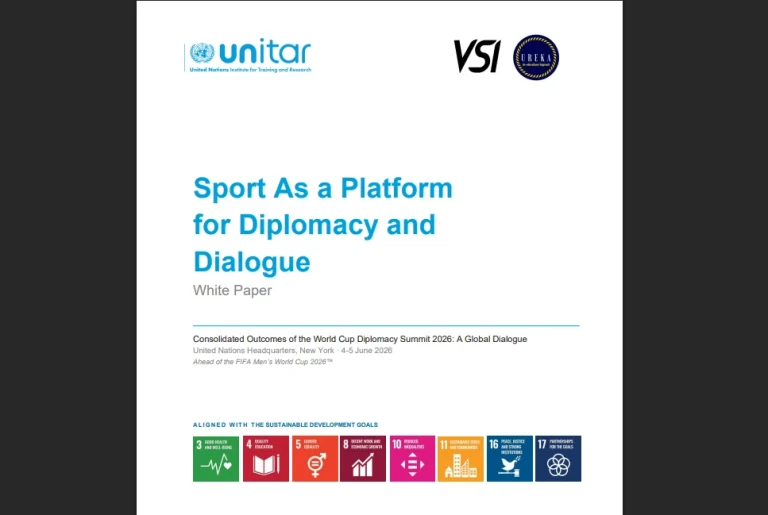
These are among the key findings of the United Nations Institute for Training and Research (Unitar) White Paper, Sport As a Platform for Diplomacy and Dialogue, which seeks to shift sport diplomacy from perception to practice – and from soft messaging to tangible outcomes.
The White Paper, which consolidated outcomes from the World Cup Diplomacy Summit 2026 held on June 4-5 at the UN headquarters in New York ahead of the men’s Fifa World Cup 2026, identified four priorities:
- sport diplomacy
- legacy and community inclusion
- artificial intelligence (AI), data and fan engagement; and
- sport, culture and entertainment nexus.
“Capability is what makes this framework deliverable. A priority is to embed sport diplomacy within the training of diplomats and international officials, which naturally falls within Unitar’s mandate as the training arm of the United Nations, building on its multilateral diplomacy training and customised sport diplomacy work [SDG 4: Quality Education],” the report said.
“In this spirit, future work should look towards the development of a UN-aligned competency framework to address the breadth and depth of actors across diplomacy and sport, from the elite level to the grassroots. This could define recognised skills, competencies and foundational knowledge for sport diplomats, supporting the professionalisation of the field [SDG 8: Decent Work and Economic Growth].
“In addition to practical abilities such as negotiation, communication and representation, sport diplomacy actors need grounding in core areas including history, politics, economics, international relations, sport governance, human rights, gender equity, cultural agility, and AI and data literacy.”
It added that current and former athletes and coaches with a clear sense of purpose, integrity and drive can emerge as sport diplomats when they combine lived sporting experience with a broader understanding of the environments in which they operate.
“Capability is institutional as well as individual: governments (especially Ministries of Foreign Affairs), federations and leagues should consider dedicated sport diplomacy positions and portfolios so capability is institutionalised and projects are designed and owned autonomously [SDG 17: Partnerships for the Goals].
“Where these actors lack the capacity to design, fund and deliver development projects, trusted intermediaries can bridge sport bodies, governments and communities. Many who participated in the Summit represent organisations that are global reference points in this field and are well placed to implement sport diplomacy initiatives.”
The White Paper also outlined action frameworks and stakeholder roles.
“Participants in the World Cup Diplomacy Summit recognise sport’s power to bring together communities, institutions and nations, and affirm a shared commitment to continued collaboration across sport diplomacy, inclusion, community engagement and the capability of those who represent and govern sport.
“Participants support practical follow-on work to strengthen governance, measurable impact and the responsible use of technology. They regard this White Paper as the first iteration of a continuing process to be advanced through dialogue, refinement and future editions, workshops and impact case studies.”
The paper stressed that while the UN does not govern sport, it helps align initiatives, build capacity and connect institutions that might not otherwise work together.
“This White Paper is therefore an expression of this mandate. The White Paper posits that alignment alone is not enough. Three questions should guide any sport diplomacy initiative: what value is being claimed, who is responsible for delivering it, and how will outcomes be tracked over time? The shift from advocacy to implementation is the decisive test.”
Among the expert contributors to the White Paper were Arnaud Amouroux, Political Affairs Officer at the UN Good Offices Mission in Cyprus; Dr Lindsay Sarah Krasnoff, Clinical Assistant Professor at the Tisch Institute for Global Sport at New York University; Gavin Price, Director of the Sports Diplomacy Alliance and founder of Sports Diplomacy Unwrapped (SDU); and Dr J. Simon Rofe, professor of Sports Diplomacy and Management at Leeds Beckett University.
Click here to read the White Paper.