Back in the 90s and early 2000s, Kuala Lumpur did not just exist – it had a heartbeat.
I still remember the Michael Jackson fever of 1996. My brother could not get a ticket, so he hopped on his bike and joined a massive, multiracial sea of fans outside Stadium Merdeka just to soak in the atmosphere.
We did not need VVIP seats to feel the harmony; we just needed to be there together, under the open sky.
The city then was a wide-open landscape of subcultures – a metropolis where diverse identities flourished without the need for moral dominance.
As a city boy, I spent my youth befriending the legends at DJ schools like Playaz Universe and Bionic DJ Academy. I lived for the tactile soul of vinyl and the craft of mixing on Technics turntables. Eventually, the industry shifted to digital Pioneer CDJs, trading analogue warmth for high-tech versatility.
But as the gear became smarter, our social environment grew more rigid. The atmosphere I loved as a teenager feels worlds apart from the landscape of constant social friction I navigate today.
Algorithms did not exist then. We spent our nights on IRC chat groups. The legendary Boom-Boom Room in the heart of Kuala Lumpur was a mid-90s staple.
The pulse of the movement, however, beat loudest along Jalan Sultan Ismail. That stretch was the epicentre. Brannigans was the sanctuary for R&B and hip hop, where The Notorious B.I.G.’s Hypnotize ruled the airwaves.
Techno heads gathered at Warp or The Jump. Trance found its spirit at Emporium, while Poppy Garden became synonymous with progressive house. From the live energy of Planet Hollywood to the massive raves at Sunway Lagoon, it was a space of expression that felt both electric and peaceful.
Even on the eve of the millennium in 2000, Bukit Bintang was alive without friction – no complaints, no moral panic, just a city in motion.
Fast forward to today, and we appear to be drowning in unnecessary conflict. Big-name organisers behind festivals like Tomorrowland often skip Malaysia, deterred by high levies and the loud noise of dissent.
The post-Covid era dealt a heavy blow to our iconic venues, leaving only fragments of those glory days. To counter this, the government has taken steps – slashing security deposits and reducing levies for foreign acts to build momentum for Visit Malaysia 2026.
These are necessary moves to revive an industry long suffocated by bureaucratic weight and social pressure.
Yet the decline is also driven by a culture where dissent amplifies online while politicians remain quick to politicise every issue for leverage. Critics too readily equate such events with disorder, painting entire subcultures with a single, negative brush.
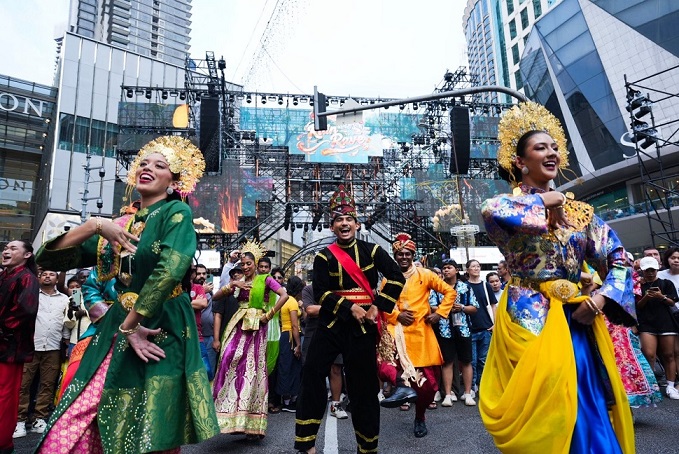
Traditional dancers at the Rain Rave Water Music Festival from. Image: Tourism Malaysia Corporate.
It is ironic that in defending certain principles so fiercely, some forget Malaysia is a multiracial society, with freedoms protected under Article 10 of the Federal Constitution.
Some states host their own Pesta Air to attract tourists, yet similar events in the capital are dismissed as “imported culture”. This selective acceptance exposes a deeper inconsistency.
We also forget that Malaysia has a sizeable Siamese community in northern states, particularly in Kedah, where Songkran is celebrated. Cultural expression has never been singular – it has always been layered.
Having served on Kuala Lumpur City Hall’s advisory board, I can attest that our vetting processes are among the strictest in the region. Every permit undergoes a rigorous safety assessment.
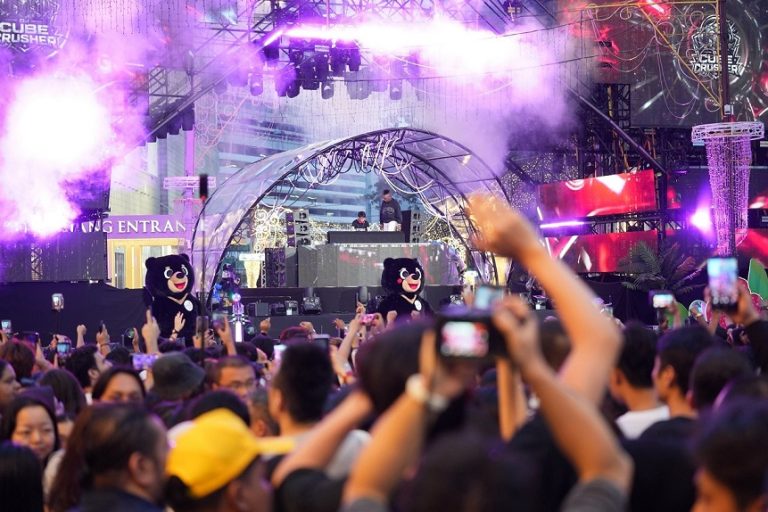
The recent Rain Rave Water Music Festival in Bukit Bintang illustrates the gap between rhetoric and reality. I saw images of Tourism Minister Tiong King Sing officiating the event with a water gun – a rare willingness to lead from the front in support of Visit Malaysia 2026.
While many remain silent for fear of backlash, he chose to stand with the industry’s recovery. Despite the noise and the manufactured “water shortage” narrative, the event concluded with zero arrests and zero misconduct.
If Kuala Lumpur wants to remain globally competitive, we must stop allowing social dictates to stifle growth. We are losing ground to neighbours like Singapore and Vietnam because we have forgotten how to be a city where everyone belongs.
A global city is not defined by its skyline alone. It is defined by whether freedom and faith can coexist without one overwhelming the other.
As Tiong noted in relation to the festival, faith is personal – if an event does not align with your values, you simply do not attend.
It is time to stop politicising the stage and start letting the city breathe again.
Let Kuala Lumpur be open, inclusive, and confident enough to dance to its own rhythm.
The views expressed here are the personal opinion of the writer and do not represent that of Twentytwo13.