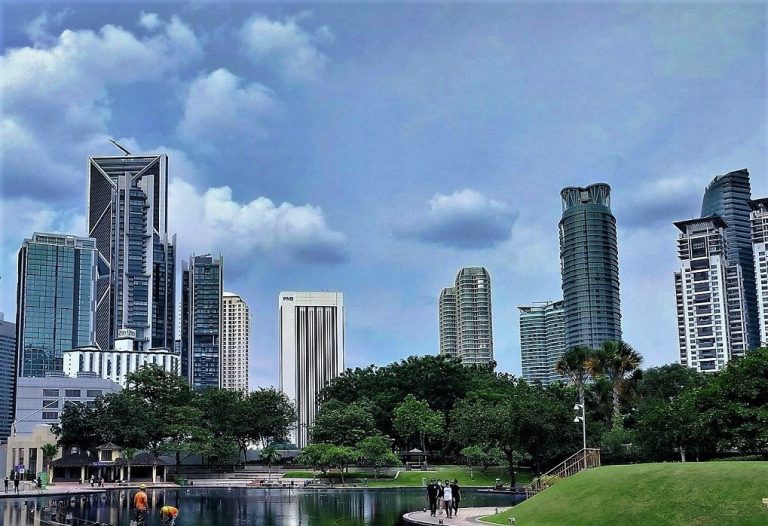
Malaysians are generally in good spirits.
The mood has lifted, and the microscopic particles, smoke, dust and gaseous pollutants that shrouded the country have cleared.
In Kuala Lumpur, in particular, conversations have shifted from gloomy expressions to plans for going out.
Amid the enthusiasm over the return of better weather and the freedom to venture outdoors, we may have forgotten the nearly three months of haze that obscured the sky and made breathing a chore.
In fact, haze has been an issue for more than 30 years.
It is not surprising that some young adults regard it as part of their lives – a yearly occurrence, almost seasonal, making Malaysia a three-season country of hot, hazy and rainy weather.
In an official statement on Oct 16, Prime Minister Datuk Seri Anwar Ibrahim spoke about the cross-border haze affecting the health and lives of Malaysians, including the forced closure of schools.
He said: “I acknowledge the earnestness of the Indonesian government, which has deployed tens of thousands of personnel as well as various aerial assets to curb this increasingly alarming problem. We are aware that efforts to manage such a disaster are no easy task, especially given the vastness of the affected areas and unpredictable weather challenges.”
He highlighted the need for cross-border challenges to be addressed through shared resolve and responsibility.
“We have already proposed an Asean-level cooperation mechanism to strengthen coordination, preparedness, and collective action in addressing cross-border haze,” he said.
An independent monitor analysing satellite data said forest fires had consumed more than 1.9 million hectares in the nine months to September.
Meanwhile, Indonesian President Prabowo Subianto has repeatedly lashed out at what he described as the vilification of his country by neighbouring nations over the haze.
Without naming any countries, Prabowo said: “As for certain countries that like to insult the Indonesian nation, when the time comes, we will reveal the companies involved.”
He said “many corporations bear responsibility” for the crisis.
The president, who recently marked two years in office amid record-low approval levels, said deliberate fire-setting amounted to “a crime against humanity, because what they have done endangers the health of millions of our citizens”.
Prabowo said Indonesian authorities would revoke the licences of companies found to have violated the law once evidence was obtained.
Before we began enjoying clear skies again, the heated debate and blame-shifting among countries affected by the haze proved frustrating, despite the need for what should have been straightforward measures to protect their citizens.
The Singapore government has taken a bold step by naming companies involved in the Indonesian wildfires – something no country had done during decades of recurring toxic haze.
So far, 10 companies have been identified, and Singapore’s National Environment Agency (NEA) said it would issue preventive measure notices under the Transboundary Haze Pollution Act (THPA).
The notices will require the companies to deploy firefighting personnel to stop fires from spreading on land they own or occupy, refrain from further burning and submit action plans to the NEA to extinguish any fires or prevent their recurrence.
Singapore enacted its transboundary haze law in 2014, allowing authorities to fine companies up to S$100,000 (US$78,000 or RM318,670) for each day of pollution.
The city-state sought to enforce the law in 2015, but the Environment Ministry said at the time that it was having difficulty obtaining information from its Indonesian counterpart on firms suspected of illegal burning. A decade later, four companies remain under investigation.
Many argue that the responsibility for naming and investigating these companies lies with Indonesia, as they fall under its jurisdiction.
Indonesia’s lack of accountability has drawn condemnation not only from people in neighbouring countries who have suffered significantly from the haze, but also from its own citizens.
Protests are continuing in Jakarta, the Indonesian capital.
It was reported that Indonesian civil society groups had strongly criticised Prabowo over wasteful government programmes, increasing militarisation and centralisation of power, deepening patronage, attacks on the press and claims of a weakened judiciary.
Social media users have posted videos and photographs of the protests, with some saying: “To all of our neighbours, Malaysians, Singaporeans and Bruneians, this is our proof that we as Indonesians are not siding with our government and that we hold them accountable for the destruction of our forests.”
In a more recent development, Indonesian police have named 245 individuals and 20 companies as suspects in investigations into forest and land fires, including four foreign-invested companies.
Police Criminal Investigation Agency chief General Asep Safrudin said 16 companies were locally owned but declined to identify the four foreign-invested entities.
While we celebrate the return of haze-free days, our neighbours are still protesting, seeking justice and calling for a solution to an issue that has persisted for far too long.
Blame the haze on peatlands or seasonal wind patterns, but the fact remains that, as long as the main contributing factor to the burning is man-made, accountability is of the utmost importance.
Does this mean that, while we are preoccupied with enjoying clean air and the sight of the skyscrapers that are a source of pride and joy, we simply forget about the issue until we start choking on toxic air again?
Should demands for solutions to this problem fade away along with the restrictions on going outdoors, when the dreaded “go out at your own risk” or “don’t forget to put on a mask” messages are quietly forgotten?
Arguably, surging global demand for low-cost palm oil gives multinational corporations, along with local officials and state actors, a significant stake in maximising profits while exploiting protected ecosystems.
It is almost impossible to ignore the role of political patronage and enforcement failures in this wider ecosystem. Attempts to improve the system may be crippled by a lack of enforcement mechanisms and the legal complexities involved in prosecuting transboundary environmental crimes.
While technicalities and policies are discussed and debated by those elected and paid to address them, one wonders where their loyalties lie. Is it with the people or with those behind the entities responsible for the fires?
According to a report by the Centre for Research on Energy and Clean Air (CREA), smoke and air pollution from Indonesia’s forest and peatland fires caused an estimated 5,260 deaths throughout August and September 2026.
In a world where deaths are reduced to statistics, a report such as this may be buried and forgotten as we go about our daily routines, breathing fresh air until the next haze “season” arrives and affects our lives again.
The views expressed here are the personal opinion of the writer and do not represent those of Twentytwo13.