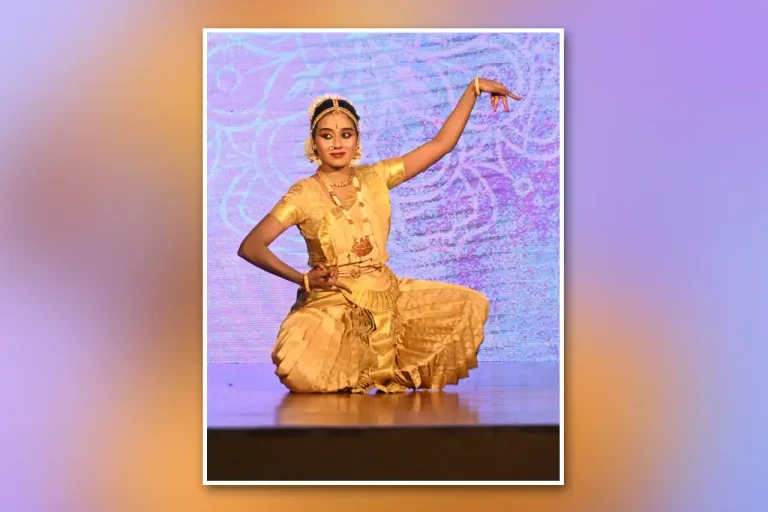
KUALA LUMPUR: For Jay Shangkari Batumalai (main image), Bharatanatyam was never just a childhood pastime. It became a lifelong companion that shaped her identity, strengthened her resilience and guided her through one of the most difficult periods of her life.
Now a child psychologist running her own practice, Jay Shangkari began learning classical Indian dance at the age of six.
“Over the years, this beautiful art form has become one of the most important parts of my life,” she said.
What started as a childhood activity evolved into a journey that taught her dedication, independence, patience and emotional expression.
Now a senior dancer under guru Sheela Raghavan and a member of Mahavidya Dance Theatre, Jay Shangkari hopes to continue growing as an artist while encouraging future generations to embrace the art form.
“Teacher Sheela always tells us, ‘Now it’s your turn’,” she said. “Once you have learnt something, it becomes your responsibility to share that knowledge with others.”
Finding her way back to dance
Jay Shangkari began training under Sheela Raghavan at nine. The new environment felt daunting at first, but she quickly found a welcoming space.
“I was hesitant because I was entering a new environment with a new group of students,” she recalled. “But Teacher Sheela welcomed me with a warm smile, and the entire team never treated me like a new student. It always felt like home.”
Over the years, she took breaks from dancing – first during her SPM examinations and later while completing her master’s degree. Balancing full-time work, postgraduate studies and family responsibilities eventually became overwhelming. She was working as an Applied Behaviour Analysis (ABA) supervisor and child psychologist while studying, often completing assignments on LRT trains with her laptop.
Eventually, the pressure became too much.
“I became so emotionally exhausted that I sought professional help,” she admitted. The advice surprised her: “She told me, ‘You need to go back to dancing’.”
At that point, Jay Shangkari had stopped attending classes, feeling she could not spare even a few hours each week for training.
“I started attending dance classes again, and gradually everything changed. I found balance again.”
That experience reinforced something she now shares with the children and families she works with: wellbeing requires more than achievement. It also requires time for joy and the things that bring meaning to life.
Lessons beyond dance
As a child psychologist, Jay Shangkari works with children from different backgrounds, including neurodivergent children who learn at their own pace. She believes Bharatanatyam has shaped her professional approach.
“Meaningful progress doesn’t happen overnight. It requires patience, consistency and commitment,” she said. “These values guide my work with children and families, where emotional regulation, trust and patience are essential.”
She also believes the expressive nature of Bharatanatyam has improved her communication with clients.
“Classical dance teaches you how to express emotions and tell stories. I think that has helped me build rapport because I am able to connect emotionally and communicate expressively.”
At one stage, Jay Shangkari explored introducing Bharatanatyam classes for neurodivergent children. Using principles from ABA, she adapted the teaching process by breaking movements into smaller steps and allowing children to learn at their own pace.
“Some children may not be able to perform the movements exactly as shown, but that’s alright. The fact that they are trying is already meaningful.”
For Jay Shangkari, the arts provide children with another avenue to discover their strengths and express themselves.
A guru above all else
What makes Sheela’s role significant in her students’ lives is not only her teaching of dance technique, but the lasting relationship she builds with them.
Jay Shangkari describes her guru as compassionate, dedicated and inspiring.
“She treats every student equally. Whether you are a beginner or a senior dancer, everyone receives the same care, encouragement and attention.”
She also admires Sheela’s commitment to preserving and sharing Bharatanatyam, including making the art form accessible to children who might otherwise miss the opportunity to learn.
“She has devoted decades of her life to preserving and sharing Bharatanatyam with everyone,” she said. “I hope to continue learning from her while supporting and encouraging future generations of dancers.”
Confidence beyond the stage
For IT consultant Tinithra Krishnan, Bharatanatyam became a foundation for confidence. Having learnt under Sheela for almost two decades, Tinithra said the greatest transformation was not only in her dancing, but in who she became outside the classroom.
“When I first started dancing, I had very little self-confidence and low self-esteem,” she said. “Today, I am able to speak confidently in front of hundreds of people at forums and events. Dance has played a huge role in helping me become who I am.”
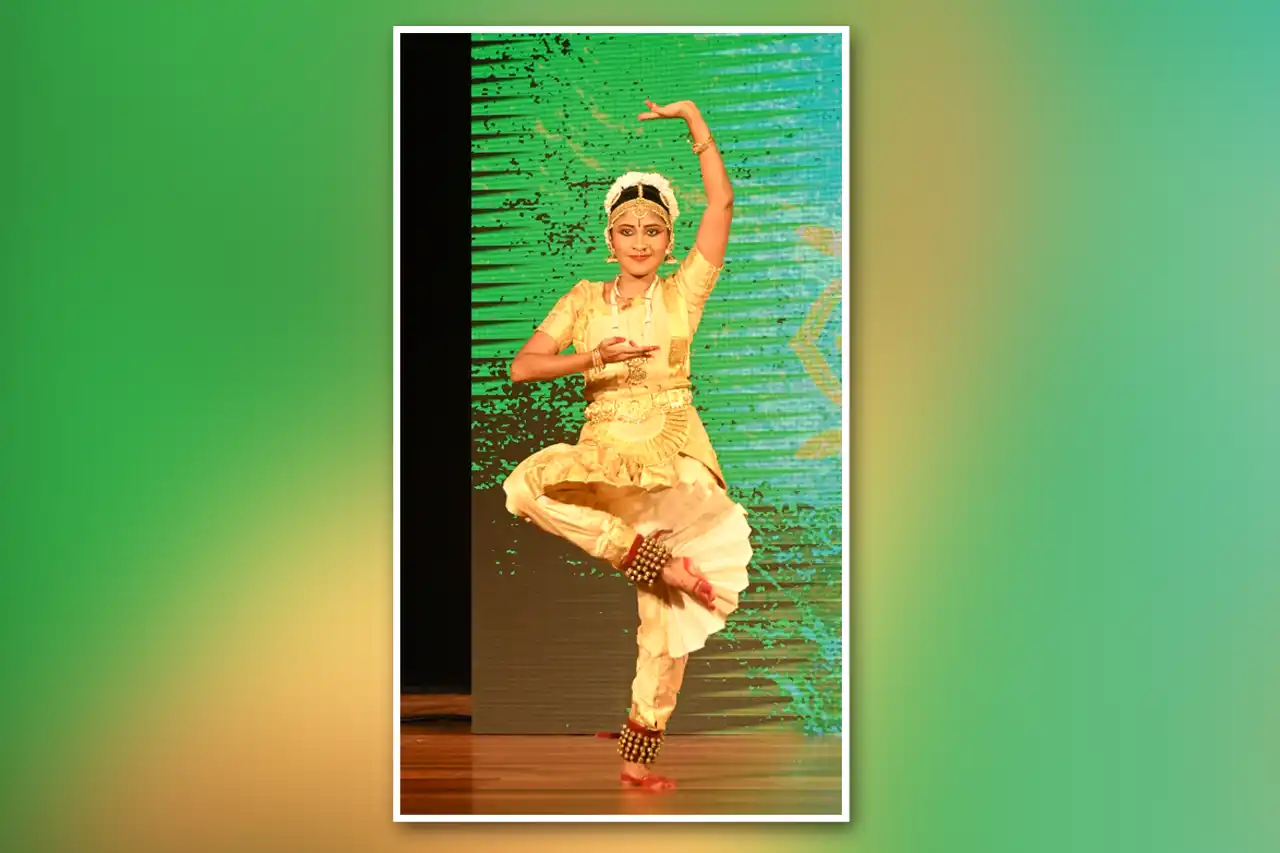
Tinithra believes the confidence developed through performance has helped her face challenges in other areas of life.
Maintaining regular dance practice requires commitment, especially when classes coincide with family gatherings or social events. However, Tinithra does not view this as a sacrifice.
“It is more about managing your time well. Good time management allows you to balance dance with your responsibilities, friendships and family commitments.”
For her, Bharatanatyam is not something that ends once a performance is completed. It is a lifelong learning process.
“I’m still learning. I certainly haven’t reached the level that Teacher Sheela has. Classical dance is a lifelong journey.”
One lesson from Sheela that continues to influence her performances is the importance of understanding the characters she portrays.
“When you truly understand the character – their emotions, experiences and struggles – you begin to feel what they are feeling.”
For Tinithra, this connection between movement and emotion is what allows a performance to truly reach an audience.
Carrying the tradition forward
For younger dancers Gopikasri Murally Dasan and Pooveneswary Sanmugam, Bharatanatyam represents confidence, friendship and a connection to their culture.
Gopikasri, 17, said dance has helped her become more confident and taught her the importance of perseverance.
“Dance was making a difference when I became more confident. It helped me express myself better and taught me to overcome challenges through practice and perseverance.”
Although dance requires commitment, she believes the experience has been worthwhile.
“I hope to teach Bharatanatyam one day and inspire the younger generation to appreciate and learn this art form.”
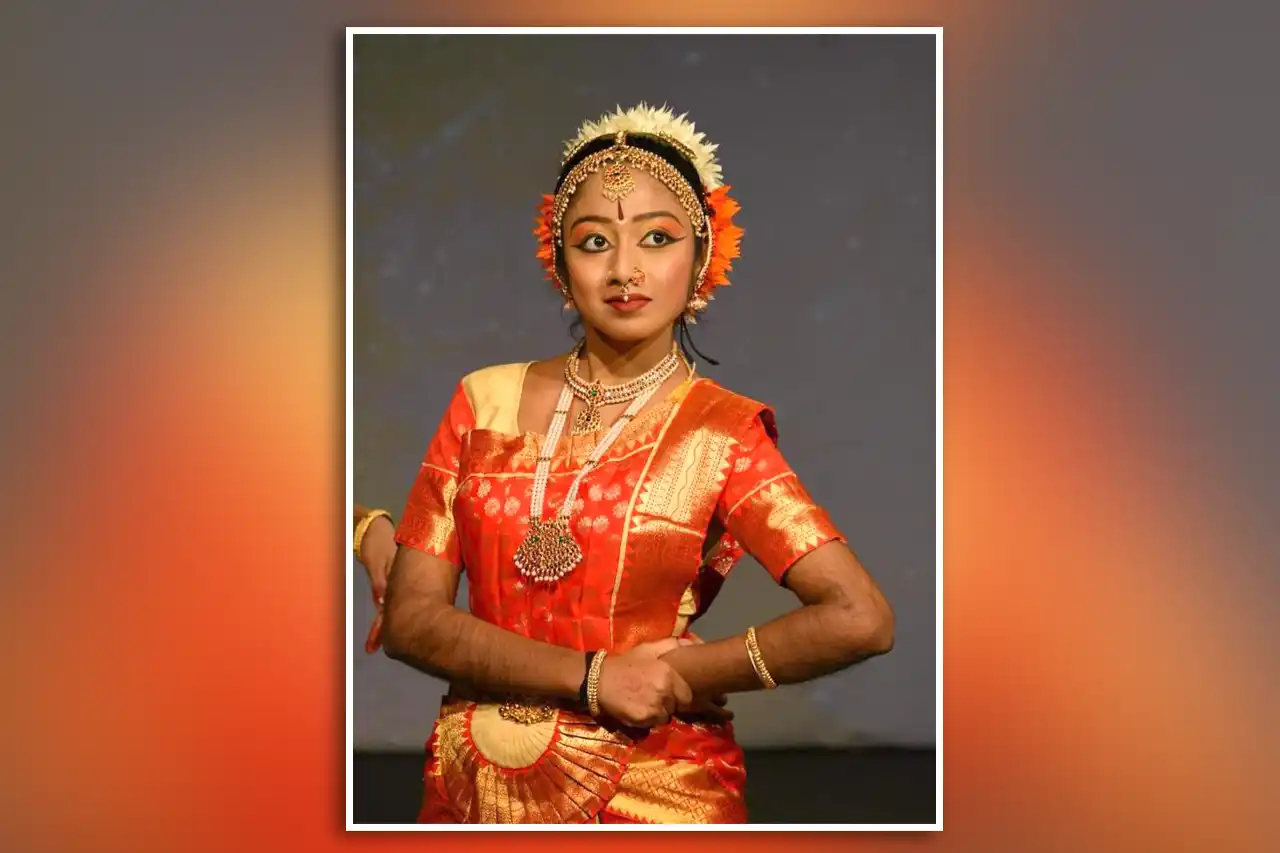
Among the stories Gopikasri enjoys performing is the Ramayana, which she finds meaningful because of its connection to culture and tradition.
Rather than focusing on fame or performing at a particular venue, Gopikasri says what matters most is continuing to learn and eventually giving back through dance.
“If opportunities come my way because of dance, I will be grateful. If they don’t, that’s perfectly fine too. I’m simply happy to keep learning and sharing what I have learnt with others.”
For Pooveneswary, 18, dance has become a place of comfort amid the pressures of school life.
“When I have a lot of schoolwork and tuition assignments, it can feel overwhelming. But when I come to dance class, I can forget about all of that and simply enjoy dancing,” she said.
She credits her mother for encouraging her to join the class, even though she was initially interested in another activity.
“At first, I wasn’t interested, but after attending a few classes, I really began to enjoy it. Everyone was so friendly, including my teacher, and I made many good friends.”
Today, the dance classroom feels like a second family, where students support and encourage one another.
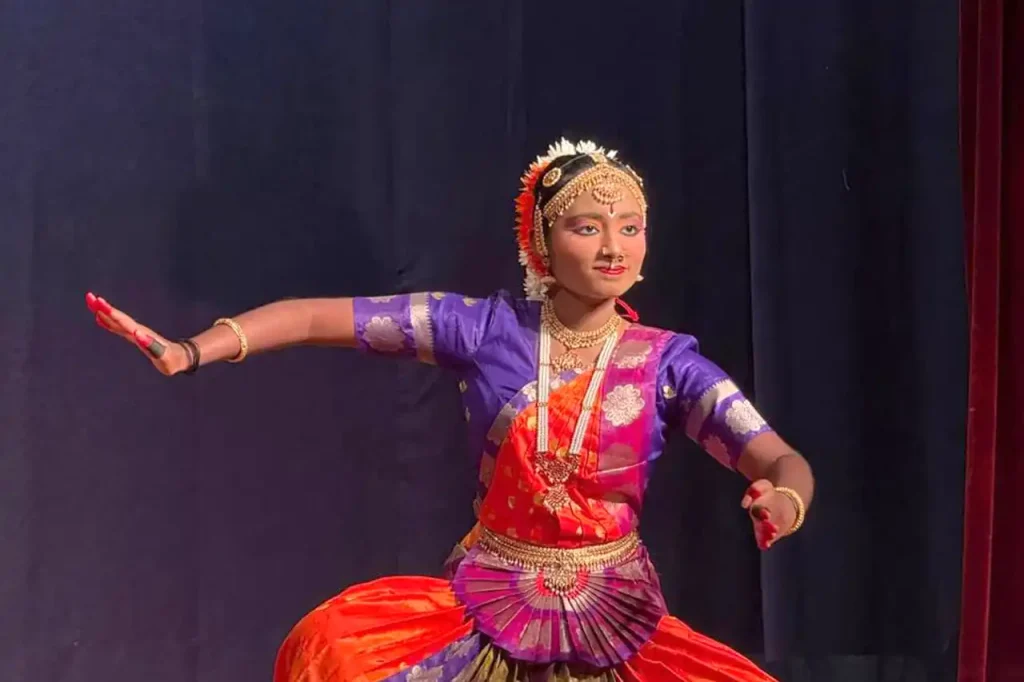
Pooveneswary credits her mother for encouraging her to join the class.
More than an art form
Across different generations, the four dancers share a common belief: Bharatanatyam teaches far more than choreography. It teaches discipline, patience, resilience, confidence and empathy.
For Jay Shangkari, parents should look beyond seeing dance as simply another activity on a child’s schedule.
“Don’t see Bharatanatyam as just a dance class. It teaches values that children carry with them into adulthood.”
In a world where children often face increasing academic pressure, the dancers believe the arts provide something equally important: a space to explore, create and find joy.
For these four dancers, that joy has become a lifelong journey guided by a guru who taught them that learning is only the beginning.
The next step is to share what they have received.