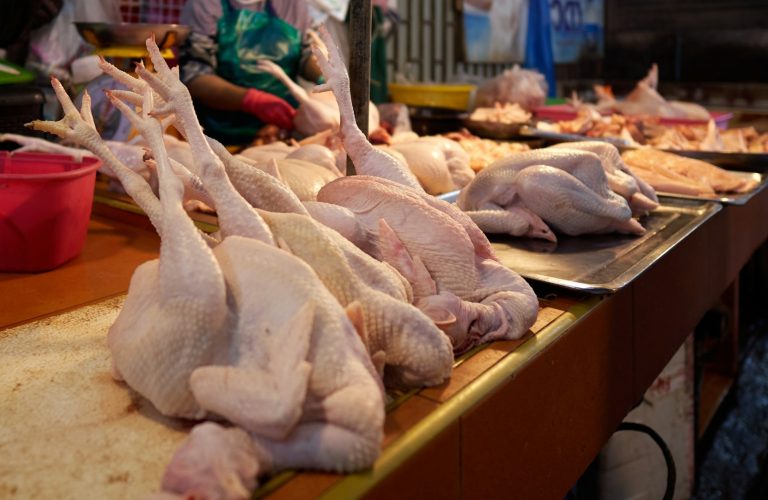
KUALA LUMPUR: The discovery of chicken carcasses and suspected non-compliant slaughtering activities at a premises in Puchong on Oct 30 has raised serious questions about weaknesses in Malaysia’s halal monitoring and enforcement system.
An integrity body has urged Putrajaya to review enforcement agencies’ coordination and monitoring of commercial chicken processing facilities.
Malaysian Integrity and Anti-Corruption Organisation (Intras) president Datuk Mohamad Fauzi Husin said the incident should serve as a wake-up call to the government and agencies responsible for administering and enforcing the country’s halal system.
He said the issue went beyond factory hygiene and slaughtering procedures, involving religious trust, consumer safety, business integrity and public confidence in Malaysia’s halal certification system.
“This is not merely an issue concerning chickens that died before slaughter, factory hygiene or compliance with slaughtering procedures,” said Mohamad Fauzi.
“It is a far more serious matter involving religious trust, consumer safety, business integrity and the confidence of the Muslim community in Malaysia’s halal certification system,” added the former deputy chief commissioner of the Malaysian Anti-Corruption Commission.
“How could such problems continue to arise despite the existence of various government agencies, regulations, procedures and monitoring mechanisms?
“The authorities must establish how long the premises had been operating, identify its owners, examine its inspection history and determine what follow-up action had previously been taken.”
He said if a facility could operate for years and only attract widespread attention following a raid, questions had to be asked about the effectiveness of the monitoring system.
He identified inter-agency coordination, monitoring effectiveness and enforcement integrity as key areas requiring attention.
The agencies involved include the Department of Islamic Development Malaysia (Jakim), the Selangor Islamic Religious Department, police, the Domestic Trade and Cost of Living Ministry, Health Ministry and the Department of Veterinary Services.
Minister in the Prime Minister’s Department (Religious Affairs) Dr Zulkifli Hasan told the Dewan Rakyat on Nov 2 that the slaughterhouse, suspected of operating without local authority permits, was not listed in Jakim’s monitoring records because it did not have halal certification.
He said halal certification in Malaysia was governed by the Trade Descriptions Act 2011 and the Trade Descriptions (Certification and Marking of Halal) Order 2011.
Mohamad Fauzi said that while each agency had its own responsibilities, a clear mechanism was needed to ensure information was shared and cases properly followed through.
“We must avoid a situation in which every agency carries out its individual duties, but no single mechanism ensures that the overall problem is properly resolved,” he said.
“I propose the establishment of a National Halal Enforcement Coordination Committee, with Jakim playing a strategic coordinating role alongside state and federal agencies.”
Under the proposed mechanism, every case should have an identified lead agency, a designated coordinating officer, a clear timeframe for action and a monitoring mechanism that remains in place until the case is resolved.
Mohamad Fauzi also questioned the effectiveness of inspections and audits at chicken slaughterhouses and processing facilities, particularly whether monitoring focused only on premises holding halal certificates.
He pointed out that halal certification in Malaysia was voluntary, but businesses involved in slaughtering, food processing and making halal representations remained subject to relevant laws and regulations.
He proposed a comprehensive registration and monitoring system covering all commercial chicken slaughtering and processing premises.
Inspections, he said, should be conducted according to risk levels, with large-scale premises, those with previous records of non-compliance and those receiving repeated complaints subjected to more frequent checks, including unannounced inspections.
He also proposed an annual Halal Enforcement Integrity Audit to examine inspection records, follow-up action, enforcement effectiveness, conflicts of interest and the integrity of officers involved.
“Every warning must be followed by appropriate action. Every corrective instruction must be verified through a follow-up inspection. Where violations recur, appropriate legal action must be taken,” he said.
On accountability, Mohamad Fauzi said investigations should not focus solely on workers at the premises, but must also identify the business owners, company directors, operators and individuals responsible for managing chicken supplies, slaughtering and distribution.
“Any elements of fraud, abuse of power, corruption or protection of unlawful operations should be investigated based on evidence,” he added.
He stressed that enforcement integrity was not solely the responsibility of business operators, but also extended to officers entrusted with monitoring and enforcing regulations.
Another area requiring attention, he said, was the traceability of chickens and processed products throughout the supply chain, from farms and slaughterhouses to supermarkets, restaurants and food outlets.
Mohamad Fauzi proposed a digital chicken supply chain traceability system linking poultry farms, slaughterhouses, processing centres, transport operators, distributors and retail premises.
Under the proposed system, every production batch would be assigned a unique identification number or QR code to enable its source and destination to be identified.
“This system would enable the government to identify affected products and implement detention or product recalls whenever necessary,” he said.
“We should not have to wait until a problematic product reaches the market before discovering that something is wrong.”
He also proposed an integrated monitoring centre to analyse complaint records, inspection histories, changes in company ownership, chicken supply volumes and production records at individual premises.
However, he stressed that technology alone would not be sufficient, as enforcement decisions must remain evidence-based and be carried out by officers with the appropriate legal authority.
On enforcement integrity, Mohamad Fauzi proposed several safeguards, including rotating inspection officers assigned to high-risk premises, declarations of conflicts of interest, digital inspection records, unannounced audits of inspection decisions and confidential channels for reporting officer misconduct.
He said any information suggesting possible corruption, protection or compromises in enforcement must be investigated impartially and without favouritism.
He further called on the government to review the key performance indicators of halal enforcement agencies, saying their success should not be measured merely by the number of raids conducted, tonnes of chicken seized or compounds issued.
“The government should publish an annual halal enforcement performance report detailing inspections conducted, violations detected, actions taken and the effectiveness of corrective measures,” he said.
“Such transparency is essential to ensure that agencies are not merely reporting their activities, but are also held accountable for the outcomes of their enforcement efforts.”
To address these weaknesses, Mohamad Fauzi proposed a phased 24-month reform programme to strengthen the country’s halal monitoring and enforcement framework.
He suggested that the first three months focus on audits of high-risk premises and improved coordination between enforcement agencies.
This would be followed by the development of an integrated database, risk-based audits and rapid response mechanisms within the first year.
Within 24 months, the digital traceability system and enforcement performance assessment framework should be expanded.
He said the proposed reforms did not necessarily require the establishment of numerous new agencies, but should instead focus on strengthening existing systems, closing enforcement gaps and ensuring that every party fulfilled its respective responsibilities.
“We do not want the public to lose confidence in Malaysia’s halal certification system, which has long served as one of the key foundations for safeguarding the interests of Muslim consumers,” he said.
“Halal is not merely a certification. It is a trust and a responsibility. Enforcement, meanwhile, is the responsibility of the state.”