
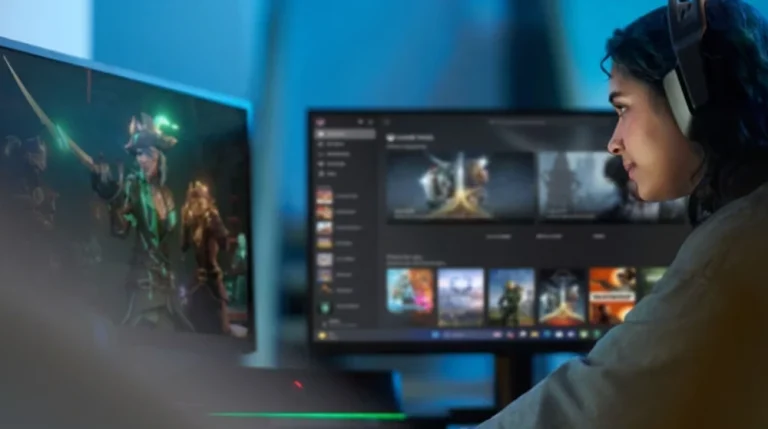
KUALA LUMPUR: Earlier this week, Microsoft Games chief executive officer Phil Spencer announced his retirement and left the company. His supposed successor, Sarah Bond, has also resigned.
Taking over Microsoft Gaming is new CEO Asha Sharma, whose prior experience was as Microsoft’s CoreAI lead. Xbox Chief Content Officer Matt Booty will serve as her second-in-command.
While she may not have games industry experience, she is an established leader and will likely get up to speed quickly with Booty and her team’s support.
The company may promise changes and a renewed focus on games while rejecting AI-created titles, along with the usual public relations assurances that accompany leadership transitions.
But when problems from the past decade, dating back to the Xbox One era, remain unresolved, and new missteps such as the “This Is An Xbox” initiative emerge, the situation feels less like renewal and more like temporary remission.
The biggest crime Xbox committed from its original Xbox days until now? Failing to acknowledge the rest of Southeast Asia beyond Singapore.
Most consumers in Southeast Asia must parallel import their Xbox consoles from Singapore just to access the ecosystem.
Furthermore, much of Southeast Asia only has access to PC Game Pass under Microsoft’s subscription service.
Even if Microsoft attempts to enter the broader Southeast Asian market now, it may be too late to convince entrenched PlayStation and Nintendo users to switch – something that arguably should have been addressed in 2005.
Short Beats
Neverness to Everness, an upcoming China-made open-world action adventure title, will be released worldwide starting April 29. The game launches in China first on April 23.
Toge Productions CEO Kris Antoni has plans to move his game studio abroad after recently receiving a tax underpayment demand.
Mortal Kombat II, the sequel to the 2021 reboot of the fighting game series, will be released in cinemas on May 8.
Three-versus-three boss battle arena title Dissidia Duellum Final Fantasy will be released for iOS and Android this March. You can pre-register in the game right now.
EA’s Skate studio Full Circle has confirmed layoffs as the company moves to “better support the game’s long-term future”.
NIS America has announced a new action RPG titled Disgaea Mayhem, a spin-off of the Disgaea strategy role-playing game series. The title will be released in English in Summer 2026 for PC, PlayStation 5, and Nintendo Switch 1 and 2.
Op-Ed
We touch upon the recent Xbox shift in leadership in our latest video.
Games out This Week
Nintendo and the Pokémon Company have announced a new entry in the long-running Pokémon role-playing game series: Pokémon Winds and Pokémon Waves. The Nintendo Switch 2 exclusive title will be out in 2027 and will take place in a new seaside and tropical region similar to Southeast Asian countries like Malaysia, Thailand, the Philippines, and Vietnam.
Resident Evil Requiem is the latest mainline Resident Evil survival horror title, starring newcomer Grace Ashcroft and veteran Leon Kennedy. The two protagonists return to where it all went to hell – Raccoon City – and uncover new mysteries surrounding recent biohazard incidents that are turning people into abominations and crazed humans.
Tom Clancy’s Rainbow Six Mobile is a new tactical shooter from Ubisoft Montreal, slated for iOS and Android devices.
Classic 1990 Sunsoft action title City Hunter, based on the hit cop anime series, has received a remastered re-release for PC and various game platforms.
Tales of Berseria is getting a remastered release for PC, PlayStation 5, Xbox Series, and Nintendo Switch. Originally released in 2016, this Japanese role-playing game follows Velvet, a woman seeking revenge against those who wronged her, as she joins forces with other outcasts along the way.
Recommended Viewing
YouTube channel The Electric Underground tackles the recent “fighting games are bad products” debate, arguing that fighting games are not merely products but art forms within the broader context of game design and mechanics.


