
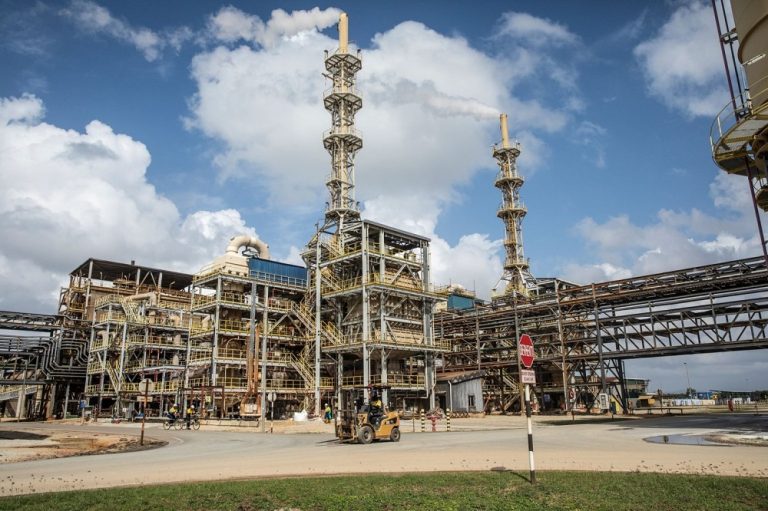
Many may recall the debate when Lynas first began operations in Malaysia.
The investment drew criticism from groups that viewed it as a threat to the environment and public health, despite assurances from international experts, including the International Atomic Energy Agency, that the operations were safe.
Efforts by the Academy of Sciences Malaysia to engage the public on the science of rare earth processing were met with continued resistance, particularly from groups opposed to the project.
Elsewhere, rare earth processing facilities, such as the plant in La Rochelle, France, have operated for decades without incident. Similarly, years of monitoring at Lynas have not produced evidence to support claims of harm.
The government’s decision to grant Lynas a 10-year operating licence marks a significant shift in Malaysia’s industrial approach. It signals a move from regulatory caution towards a more strategic economic direction.
Beyond a routine renewal, the decision reflects Malaysia’s intent to position itself within the global rare earths value chain.
While environmental concerns were valid, particularly during the plant’s early years, they must be balanced against scientific findings and economic opportunities. Recent research has also highlighted potential value in materials previously regarded as waste, aligning with broader circular economy principles.
This reframing not only addresses earlier concerns but also opens new avenues for economic development.
More importantly, the decision reflects a forward-looking strategy. Malaysia is signalling its intention to move beyond processing and develop its own rare earth resources.
Securing long-term operational stability for Lynas lays the groundwork for a broader domestic ecosystem.
This stability is critical for downstream industries such as magnet manufacturing, alloy production, and battery technologies, which depend on reliable supply chains.
A 10-year licence provides the certainty needed to attract investment, support infrastructure development, and build local expertise. It sends a clear message that Malaysia is positioning itself as a stable and competitive player in this sector.
However, this progress must be accompanied by continued oversight. The extended licence should be seen as part of an ongoing commitment to uphold environmental standards and maintain transparent engagement with affected communities.
Sustainable development must remain central as Malaysia expands its role in the rare earths industry.
Ultimately, the decision reflects a broader shift in national policy. Malaysia is moving towards a more proactive role in shaping its industrial future.
With global demand for rare earths increasing, the country is positioning itself to participate more actively in supplying these critical materials.
The views expressed here are the personal opinion of the writer and do not represent that of Twentytwo13.
Main image: Lynas


