The changing nature of Malaysian politics, especially after the fall of Barisan Nasional (BN) in 2018, has made it more challenging for analysts to determine how traditional political cleavages shape political alignments before or after elections.
What we thought we knew about how politics is organised and what determines political coalitions has been turned upside down by three tectonic shifts.
First, Tun Dr Mahathir Mohamad’s decision to partner with Parti Keadilan Rakyat (PKR) and the Democratic Action Party (DAP) in 2018 to bring down Datuk Seri Najib Razak and BN.
Second, Tun Dr Mahathir’s decision to step down as prime minister in 2020, followed by the collapse of the Pakatan Harapan government, paving the way for the Perikatan Nasional (PN) government. PN saw two major parties representing the Malay community – United Malays National Organisation (Umno) and Parti Islam Se-Malaysia (Pas) – come together with regional parties from Sabah and Sarawak.
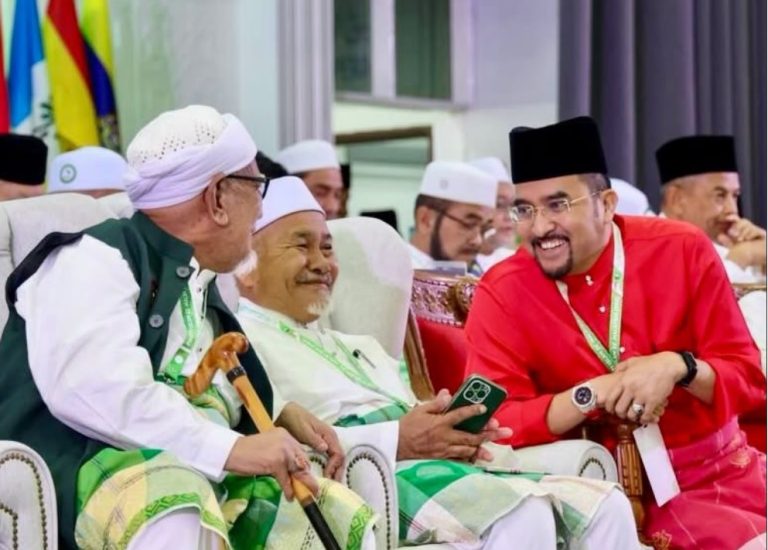
Third, Umno’s decision to form a unity government with PKR and DAP after the 15th General Election. To further complicate the political equation, Pas has lent its support to Umno in the recently held state elections in Johor and Negeri Sembilan. Whether the same arrangement will take place in the upcoming Melaka state election is anybody’s guess.
While it may surprise many, the alliance between Pas and Umno, and their long-standing love-hate relationship, is not without precedent. Pas’ historical roots can be traced to Umno’s religious wing. Due to policy and ideological differences, religious leaders within the bureau increasingly sought an organisation through which they could act politically in their own right.
The second and third Malayan Ulama Congresses in August and November 1951 were important in transforming this aspiration into an independent political organisation. Pas was formally inaugurated on Nov 24, 1951, in Penang.
Contrary to conventional wisdom, Pas did not initially develop an ideology that could be interpreted as an alternative to Umno, nor did it take an adversarial stance towards the party. Many members maintained dual membership.
Gradually, particularly during Dr Burhanuddin Al-Helmy’s term as party president, Pas adopted a more radical stance against British colonialism. This infuriated British colonial officers, who sought to discredit Pas. They were more comfortable with Umno’s accommodative style.
Pas’ performance in the 1959 general election, winning 13 parliamentary seats and the state of Terengganu, must have rattled Umno’s leadership. Nevertheless, Umno-Pas relations were somewhat cordial during Asri Muda’s term as president, and when Tun Abdul Razak Hussein formed BN in 1974, Pas became a member.
Relations deteriorated after an internal conflict within Pas in Kelantan in 1977. The power struggle triggered a mass demonstration in Kota Baru, followed by a declaration of a state of emergency by the Yang di-Pertuan Agong.
When the emergency was lifted in 1978 and a state election held, Pas lost control of Kelantan. These events reshaped Umno-Pas relations and sowed major distrust between the two parties.
Relations improved when both parties came together to form the PN government.
Could this roller-coaster relationship culminate in a stable partnership in the run-up to the 16th general election?
The answer is not straightforward. Umno’s political strength is not what it was pre-2018, while Pas does not have national appeal. A political alliance may therefore seem natural, but this might not necessarily be the case.
While talk of “Malay unity” may appeal to a segment of the electorate, the political equation is far more complicated. Even if both parties decide to cooperate, realpolitik dictates that the distribution of largesse and horse trading could be major sources of friction.
Which party would emerge as the primus inter pares? Umno is used to calling the shots, while Pas is becoming more assertive. Striking a political balance is akin to walking on thin ice. Both parties might also consider other alliances.
The political terrain in Malaysia is fluid. At the end of the day, the main motivation in politics is power. That will be the major consideration for both parties moving forward.
The views expressed here are the personal opinion of the writer and do not represent those of Twentytwo13.
Main image: (From left) PAS president Tan Sri Abdul Hadi Awang, deputy president Datuk Seri Tuan Ibrahim Tuan Man and Umno secretary-general Datuk Asyraf Wajdi Dusuki at the opening of Pas’ 72nd muktamar in Kota Baru last week. – Facebook/Asyraf Wajdi Dusuki.