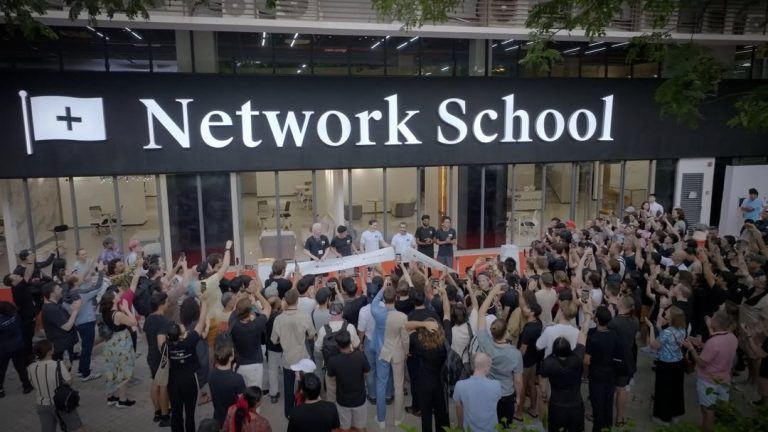
Network School is officially out of Malaysia – specifically, Forest City in Johor.
Yet the controversy surrounding its establishment, including targeted attacks on certain personalities, underscores the need for governance in Malaysia to be evaluated through the lens of verified facts and decisive action, rather than online outrage.
For starters, attempts to implicate Digital Minister Gobind Singh Deo in the saga, with some even claiming he launched or endorsed the centre, provide a textbook example of how the routine discharge of executive duties can be reframed as a partisan political weapon.
There is a need to strip away the social media chatter and examine the documentary timeline to establish a clear and objective account of events.
Federal protocol was followed, jurisdictional boundaries were respected, and the moment regulatory non-compliance was formally established by the Johor authorities – namely the Menteri Besar and the relevant state agencies – enforcement was swift and uncompromising, particularly by the Immigration Department.
There is also a need to dismantle the premise that a routine ministerial site visit amounts to a personal endorsement or formal government approval.
Ministers responsible for policy and economic development regularly conduct exploratory visits to industry hubs, incubators and innovation projects nationwide. Assessing the ecosystem on the ground is a fundamental responsibility of executive leadership, not an endorsement of a private company’s philosophy, management or operations.
No special agreements, policy concessions, tax incentives or regulatory exemptions were granted to NS0 Malaysia, the operator of Network School, following the minister’s visit to the school in April this year.
It should also be noted that, long before federal authorities took an exploratory interest, Network School had established its presence in Forest City in 2024 with the knowledge of the local and state authorities.
In fact, late last year, Johor investment, trade, consumer affairs and human resources committee chairman Lee Ting Han was quoted by Bloomberg as saying: “With the Network School now, we’re seeing multiple nationalities in Forest City.”
“It brought an energy to the area that was missing,” he added.
Spanning four man-made islands across approximately 30 sq km, Forest City is an integrated development by Country Garden Pacificview Sdn Bhd, a joint venture between Country Garden Group and Esplanade Danga 88 Sdn Bhd. Once promoted as “a dream paradise”, it was described by the BBC in 2023 as a “ghost city”, reporting that only 15 per cent of the project had been completed and, based on estimates at the time, just over 1 per cent of the overall development was occupied.
Jurisdiction over business licensing and local operations rests with the relevant municipal authority – in this case, the Iskandar Puteri City Council. Border control and immigration matters fall under the Home Ministry.
When investigations found that NS0 Malaysia had breached its licensing conditions, the city council acted promptly and revoked its business licence.
Following the council’s decision, the Malaysia Digital Economy Corporation (MDEC), an agency under the Digital Ministry, initiated the revocation of the company’s Malaysia Digital (MD) status because one of the conditions attached to the designation is compliance with all relevant permits and licences.
According to MDEC’s website, MD status allows companies to enjoy government incentives, rights and privileges, subject to obtaining the necessary approvals and complying with applicable laws, regulations and conditions.
MDEC also made its position clear. While Malaysia welcomes high-value digital investments, full compliance with local laws and licensing requirements remains non-negotiable.
Online chatter surrounding the set-up was fuelled by commentary about foreign participants, blurring statutory immigration requirements with partisan rhetoric. In reality, the entry of foreign nationals into Malaysia is governed strictly by established laws and international agreements.
Checks by the Immigration Department identified 430 individuals linked to Network School. Of the total, 210 remained in Malaysia, 201 had left the country, while the movements of 19 could not be verified.
Immigration director-general Datuk Zakaria Shaaban reportedly said checks carried out by the department found no evidence of passport misuse among those inspected.
Sovereign nations enforce border controls based on documented evidence and statutory law, not online speculation. In this case, the authorities acted within their legal powers.
Ultimately, conflating legitimate administrative oversight with partisan controversy does a disservice to public discourse and undermines Malaysia’s broader digital ambitions.
In the case of Network School, the record shows that standard executive processes were followed and, when non-compliance was established, the relevant laws were enforced.
Preserving the integrity of Malaysia’s regulatory framework requires governance to be judged on verified facts and decisive action, rather than allowing online outrage to dictate the narrative.