


KUALA LUMPUR: The abolition of the Universities and University Colleges Act 1971 (UUCA) should go beyond removing restrictions on students and address what Academy of Sciences Malaysia Fellow Datuk Dr Omar Shawkataly sees as excessive interference in universities.
Prime Minister Datuk Seri Anwar Ibrahim announced over the weekend that UUCA would be abolished, while Communications Minister Datuk Seri Fahmi Fadzil said yesterday that any new law would focus on the administration and management of universities and university colleges.
Omar, who has been in academia since 1981, said UUCA reforms should go beyond provisions affecting students. The law has long been criticised as draconian for restricting freedom of speech.
“One section of the Act concerns the students. Abolishing that is good as it gives them the space to develop and allows them more freedom,” he said.
“The other part of the Act concerns universities, including administration and staff, among others, and has to improve.”
Omar, who was actively involved in the student movement during his student days, said students then were concerned about the struggles of ordinary people and the community.
The year 1974 saw the height of student activism in the country. On April 22, 1974, some 6,000 Institut Teknologi Mara (ITM) students marched from their campus in Shah Alam, Selangor, to the Parliament building in Kuala Lumpur.
The students were angry that the government did not recognise ITM certificates. Some even hijacked a train to travel to the city centre. ITM is now known as Universiti Teknologi Mara (UiTM).
In December that year, thousands of university students gathered in Baling, Kedah, to show solidarity with rubber tappers struggling to earn a living following the collapse of global rubber prices.
The Baling incident led to the tightening of UUCA, which was first amended in 1975 during Tun Dr Mahathir Mohamad’s tenure as education minister.
The amendments expanded government oversight of public universities.
This included greater government authority over university governance and the appointment of vice-chancellors, who in turn appointed deans, deputy deans and heads of schools and institutes, replacing the previous practice of elections among academics.
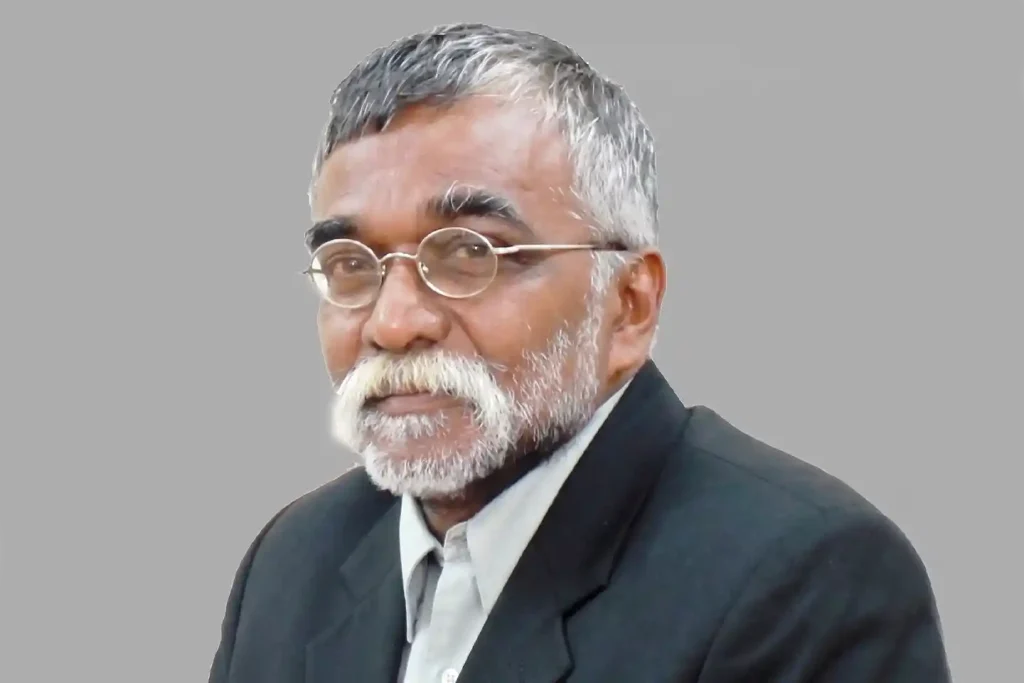
Omar says the proposal to abolish the UUCA is timely.
Omar said UUCA had been amended six times and that the proposal to abolish it presented an opportunity for reform.
“It is a good opportunity to look at how we want to move forward and improve higher education in Malaysia,” he said.
“Even though universities are supposed to have autonomy, it’s just on paper. In reality, there is just too much outside interference.
“Previously, there was no such thing as a Higher Education Ministry. Now, there are hundreds of staff in the ministry, and everyone wants to have a say.”
One example, he said, was the authority of the university Senate, which is supposed to be the university’s highest academic authority.
“But today, you have another body that is telling it what to do. That is undermining the Senate’s authority,” said Omar, who had served five terms as a Senate member of Universiti Sains Malaysia.
Omar questioned political appointments to university boards.
“What can they contribute? They are there to put their names out there.
“We have hundreds of distinguished scholars who have retired, who deserve to be on the boards of universities.”
Omar also criticised what he described as excessive intervention by the Malaysian Qualifications Agency (MQA).
“MQA is going overboard. It’s turning universities into glorified high schools as it’s infringing on academic freedom,” said Omar, citing MQA regulations requiring universities to seek formal permission and re-approval if more than 30 per cent of a course curriculum is changed.
“Academic freedom is about academics having the freedom to teach, to do research in their own discipline as long as they take care of quality and scholarship.”
He said university leadership should facilitate the core activities of teaching, learning and research.
“I think the leadership must facilitate these three important components within the university: teaching, learning, and researching.
“If the leadership does not facilitate the three major activities, then they do not deserve to lead the university.”
Omar pointed to a committee set up after the change of government in 2018 that had examined UUCA and produced recommendations.
“So, it’s already there. But we must be serious. It’s not just rhetoric. If we’re going to abolish UUCA, it has to be serious.”
For Omar, the test is whether the new law gives universities genuine autonomy.
“The new Act must be serious to give universities real autonomy. Let universities prosper. Let scholarship prosper.”


