
KUALA LUMPUR: Happy Valentine’s Day! The weekend may be filled with love, but there is little of it in this week’s video game news recap.
The big picture
It is a difficult week for two studios and their respective titles: Riot Games’ 2XKO and Wildlight Entertainment’s Highguard. Two very different games, facing two very different circumstances, yet arriving at the same destination – layoffs and uncertainty.
Riot Games has laid off about half of the development team behind its fighting game 2XKO, just weeks after its late January launch. That amounts to around 80 staff members.
For context, 2XKO spent close to 10 years in development, far longer than initially expected. The project – formerly known as Project L – was rebooted multiple times during that period and was built from the framework of Rising Thunder, the game Riot acquired when it bought Radiant Entertainment in 2015.
Despite the cuts, 2XKO will continue to be supported, and previously announced plans are expected to move forward. However, its long-term prospects appear uncertain, with some suggesting it may only have a limited shelf life. In many ways, its release after such a prolonged development cycle was already something of a minor miracle.
The title also had to compete for attention within Riot’s own ecosystem, alongside heavyweights like League of Legends and Valorant – both of which command significantly larger player bases and fanfare.
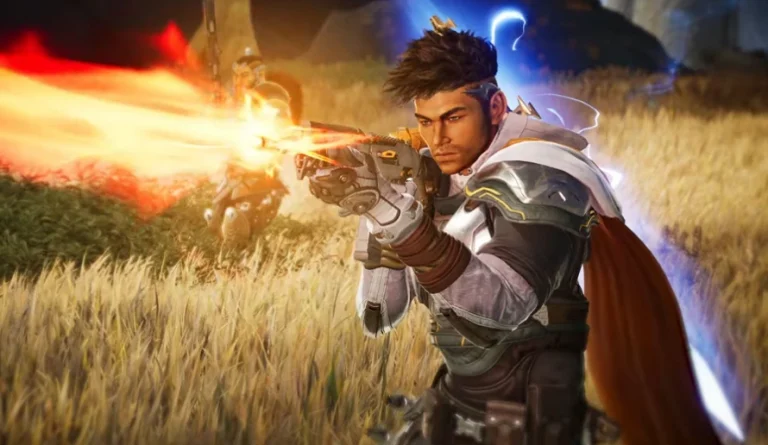
On the other end of the spectrum is Highguard. The game was unveiled as a “one more thing” reveal at last year’s The Game Awards 2025 but struggled to generate meaningful excitement. Online reaction to its trailer was lukewarm at best, with some critics describing it as a generic multiplayer hero shooter with live service elements.
Some even openly predicted – or hoped – that it would fail.
When Highguard launched, reception was mixed. Pre-release promotion appeared limited, with The Game Awards creator Geoff Keighley and a handful of relatively unknown key opinion leaders among the few prominent supporters. Reviews ranged from decent to middling, with common criticisms pointing to oversized maps relative to the number of players in each match.
Following the underwhelming reception, Wildlight Entertainment laid off most of its team, retaining only a core group to continue supporting the game. Some of the affected developers have cited gamer toxicity as a factor that contributed to negative sentiment before launch.
If there are takeaways from these developments, they are sobering:
- Hype can be a double-edged sword.
- Passion for a genre is not always enough when business targets and large-scale KPIs take priority.
- Turnarounds are possible, even after disastrous launches. Fallout 76, Cyberpunk 2077, Final Fantasy XIV and No Man’s Sky all recovered from deeply troubled beginnings to become far more successful over time.
Short beats
Riot Games has laid off about 80 employees from its 2XKO team, citing insufficient player momentum despite a passionate core audience following its Jan 20 launch.
Wildlight Entertainment has laid off much of its staff, with a smaller team remaining to support its online shooter Highguard.
Blizzard has announced a new class for the Diablo franchise – the Warlock. The class will be available in Diablo II: Resurrected (available now), Diablo Immortal, and Diablo IV: Lord of Hatred on April 28 as part of a cross-game initiative.
Indie title Mewgenics has reportedly sold 250,000 copies within 12 hours of release, effectively recouping its development budget within three hours of launch.
Konami has announced a new Castlevania title, Castlevania: Belmont’s Curse, a 2D search action game developed by Evil Empire and Motion Twin (of Dead Cells fame). It is slated for release in 2026 on PC and consoles.
A new Dead or Alive fighting game is in development by Team Ninja and Koei Tecmo.
Op-ed
We explore the PlayStation State of Play February 2026 livestream and Marvel Tokon: Fighting Souls in our latest editorial video.
Games out this week
Mewgenics is a new indie strategy role-playing roguelite hybrid from developers Edmund McMillen and Tyler Glaiel. Players breed their ultimate cat army while tackling dungeons and stages through turn-based combat, all wrapped in the duo’s signature irreverent humour.
Romeo Is A Dead Man is a new 3D action title from Grasshopper Manufacture, known for the No More Heroes series and Killer 7. Players take on the role of Romeo Stargazer as he attempts to rescue his girlfriend Juliet from space aliens, using a mix of guns and blades.
Tokyo Scramble is a Nintendo Switch 2-exclusive survival horror game set in a ruined Tokyo overrun by dinosaurs. Players must rely on their wits, a multifunction smart watch and stealth skills to survive.
Yakuza 3 Kiwami & Dark Ties is a remake of the 2009 Yakuza/Like A Dragon entry originally released on PlayStation 3, now available for PC and consoles.
High on Life 2 is a new first-person shooter from Squanch Games for PC and consoles, featuring talking weapons and surreal sci-fi settings. Players battle enemies in an effort to save humanity.
Reanimal is a 3D survival horror adventure from Tarsier Studios, the creators of Little Nightmares and Little Nightmares II. A brother and sister journey through a nightmarish world to rescue their missing friends and escape their former home.
God of War: Sons of Sparta is a PS5-exclusive 2D action prequel to the main God of War series. Players control a younger Kratos and his brother Deimos as they train as Spartans, navigate treacherous 2D stages and battle mythological creatures.
Recommended viewing
The Electric Underground examines the value of difficulty in video games, arguing that it is increasingly rare in modern design. The discussion uses Ninja Gaiden 2 (Xbox 360 version) and the late Tomonobu Itagaki’s design philosophy as key reference points.


