It was an outburst that drew widespread attention.
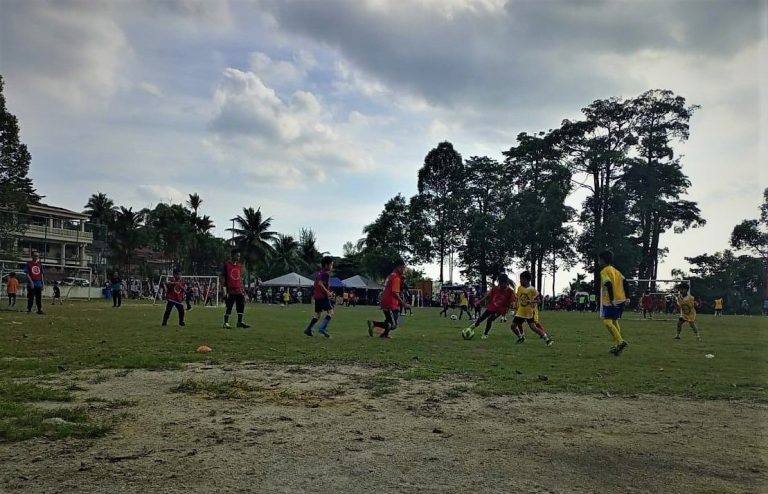
A parent of two football-playing children recently shared his frustration about eight- to 10-year-olds playing under the scorching heat, at noon and 2pm, in a local youth league. His social media post quickly made the rounds, and many could relate to the episode.
The issue is neither new nor exclusive to football. However, it highlighted how little attention is given to the decades-long problems that plague grassroots sports, where organisers – both in schools and beyond – often hold competitions for the sake of doing so, sacrificing the true spirit behind the sport.
Not enough time, money
In April, Twentytwo13 highlighted how school hockey competitions continue to suffer from poor planning, despite policymakers boasting about their “great initiatives.” This was in reference to the Bangsar District schools’ hockey competition held at the Education Ministry Stadium in Kuala Lumpur.
The three-day tournament saw 12-year-olds playing on a full-sized turf for just 10 minutes per group match, while semifinals and finals were played over two 10-minute halves. To ensure the schedule ran on time, matches were held throughout the day, including at 11.30am.
Watching from the stands, with frustration written across his face, was former hockey international Kevinder Singh, who once dazzled fans on the same turf.
Organisers, both in schools and beyond, often lament the lack of time. There aren’t enough dedicated sports teachers in schools, and competitions are scheduled to avoid disrupting lessons, often resulting in rushed events.
Funding is another issue. Sporting facilities are scarce, even in the Klang Valley, with some undergoing refurbishment ahead of the Malaysia Games next year. Rental costs for private organisations are high, forcing organisers to cram multiple matches into a single day. Additional challenges include securing technical officers, referees, umpires, and other administrative personnel for the duration of such tournaments.
Is physical education in Malaysian schools that bad?
Former national athlete Zaiful Zainal Abidin held the 400m national record for 22 years, clocking 46.41s at the 2001 Asian Junior Athletics Championships in Brunei. His record was eventually broken in 2023 by Umar Osman, who ran 46.34s at the SEA Games in Cambodia.
Zaiful swapped his spikes for red pens as a teacher and now serves as a special officer to the Education Ministry’s director-general, Azam Ahmad. He was also involved in refining physical education (PE) lesson modules in schools.
During the Julang podcast last month, Zaiful said the lesson plans were sufficient but execution depended on teachers. Nevertheless, many pupils still complain that PE lessons are often considered “unimportant,” with children allowed to do as they please or lessons replaced by other subjects, especially during exam periods.
The Education Ministry aims to develop students who are intellectually, spiritually, emotionally, and physically balanced, harmonious, and knowledgeable. However, in most schools nationwide, academic achievement is prioritised over sports, often due to a shortage of dedicated PE teachers. Teachers are further burdened by heavy workloads and managing WhatsApp groups, where messages continue beyond working hours.
Lack of attention to grassroots will eventually lead to Malaysia’s sports failure
The Youth and Sports Ministry launched its Road to Gold initiative to secure Malaysia’s elusive Olympic gold medal. The programme, however, serves primarily as a supplement to existing elite athlete development programmes.
Most attention remains at the top level, with clout-chasing individuals seeking instant success through existing athletes instead of investing in grassroots development. Grassroots nurturing is a long-term effort, and only a small fraction of young athletes progress to higher levels of competition.
The way forward is to instil a sporting spirit within families, which can then grow into the community and eventually become a national agenda. Such a bottom-up approach requires time but must be done swiftly, or Malaysia will continue to lag in sports, celebrating mediocrity instead of genuine achievement.
Schools and community clubs can play a massive role in transforming Malaysia into a sporting nation. This means moving away from carnival-style competitions and exposing children to extreme weather conditions that compromise their safety and performance. Sports should be played year-round.
Policy-makers from the Youth and Sports, Education, and Higher Education ministries must collaborate to implement guidelines that ensure young talents continue to play sports at every age. A ‘whole-of-government’ approach should be complemented by public-private initiatives involving community academies and clubs.
Crucially, such programmes must outlast politicians, who are transient in office. Consistency is key.
Much groundwork, including the National Sports Vision 2030, has already been done. It is time to act decisively rather than chasing social media validation or creating the illusion of progress.