PUTRAJAYA: Malaysia has commenced the nationwide rollout of Rakan Tani, a homegrown artificial intelligence (AI) co-pilot designed to deliver real-time, expert farming advice directly to padi farmers via WhatsApp.
And the impact of Rakan Tani is already evident from its pilot phase.
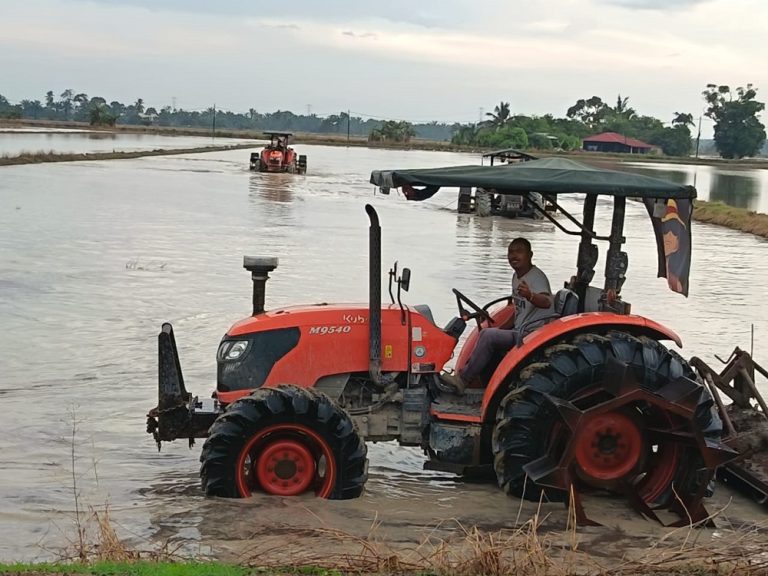
Mohamad Fazeli Abdullah, a padi farmer from Sungai Manik, Perak, reported a significant increase in yield — from four tonnes to nine tonnes in a single cycle — after applying Rakan Tani’s AI recommendations.
“Rakan Tani has become an essential tool in my daily farming,” he said.
“It gives clear guidance on fertilisation, pest control, and water management. With accurate weather insights and timely alerts, I no longer rely on guesswork, and my harvest has improved beyond what I thought possible.”
The initiative is a strategic collaboration between the Digital Ministry, the Agriculture and Food Security Ministry, the National AI Office (NAIO), Padiberas Nasional Berhad (Bernas), and the Global AI Village (GAIV).
Developed through the NAIO Lab, Rakan Tani represents a “Made by Malaysia” AI solution built to address local agricultural challenges. It also serves as a core pillar of the AI Nation 2030 vision to accelerate AI adoption across Malaysia’s essential economic sectors. The project demonstrates how locally developed AI can translate expertise into practical, everyday solutions that improve productivity and decision-making on the ground.
Bridging the productivity gap
Malaysia’s rice self-sufficiency stands at just over 50 per cent today, against a national target of 80 per cent by 2030. The gap is not due to a lack of knowledge, but rather the challenge of turning expertise into consistent action on the ground.
While Malaysia possesses strong agronomic expertise, scaling personalised, day-to-day guidance for every farmer has remained a hurdle. Rakan Tani addresses this by acting as an AI-powered co-pilot, delivering tailored guidance for individual farmers. Its intelligent engine continuously updates recommendations based on weather, pest risks, and field conditions — ensuring every farmer knows their “next best step.”
The practical result is simple but powerful: a knowledgeable agronomist in every farmer’s pocket. Available around the clock, the tool responds to questions via text or voice in Bahasa Malaysia or local dialects, accessible through a familiar platform. This level of hyper-personalisation across a vast number of farmers simultaneously is only possible through generative AI.
From pilot to nationwide rollout
The national expansion follows a successful 10-week pilot involving 42 farmers, including Mohamad Fazeli, at the Bernas Large-Scale Padi Field Programme (Smart SBB) in Sungai Manik, Perak. Two hundred farmers will be onboarded by the end of March 2026, as the initiative aims to reach approximately 110,000 Bernas-registered padi farmers nationwide.
The enhanced national version includes improved soil moisture insights, pest monitoring, and expanded crop guidance tailored specifically to Malaysian rice varieties.
Empowering farmers, strengthening food security
Beyond improving yields, Rakan Tani plays a critical role in modernising agriculture and making the sector more attractive to younger generations, particularly as the current farming population continues to age.
Digital Minister Gobind Singh Deo stated that AI must deliver real value to the rakyat.
“Through Rakan Tani, we are placing practical AI tools directly in the hands of farmers, helping them make better decisions, improve productivity, and strengthen Malaysia’s food security,” said Gobind.
“Our goal is to ensure no Malaysian is left behind in the digital age. To build an AI Nation, we must show the rakyat how innovation solves everyday problems. By democratising access to high-level expertise, we are ensuring that the benefits of digital transformation are felt as much by the rural padi farmer as they are by the urban tech developer, with the aim to uplift the lives and livelihoods of all Malaysians.”
The Digital Ministry, in a statement today, said Rakan Tani is envisioned as a foundational platform to support broader agricultural transformation, including enabling alternative credit scoring, micro-insurance, and more efficient subsidy delivery.
“By combining local expertise with generative AI, Malaysia is laying the groundwork for a more resilient, productive, and sustainable agricultural ecosystem — where innovation directly uplifts livelihoods and strengthens national food security,” the statement read.