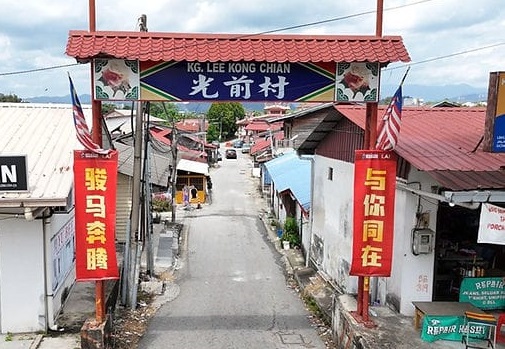
The world moves at a relentless pace. In Setapak, Kuala Lumpur, the footprints of history at Kampung Lee Kong Chian are gradually fading beneath the tide of progress.
Established in 1927, the village is more than just a former settlement for workers of the Lee Rubber factory – it is a living monument preserving a century of collective memories.
Today, its residents face an uphill battle following a redevelopment dispute that could see them evicted. They have been fighting for fair compensation, including relocation assistance.
Eviction notices were issued in November last year, requiring about 1,000 residents from more than 140 homes to vacate the land within six months after it was acquired by a new developer.
As an adviser to the village committee, I see my role as bridging the community. However, I have deliberately stayed out of the compensation negotiations.
I believe this is necessary to avoid political friction and allow discussions between the developer and residents to proceed independently. While I have recused myself from financial negotiations, I remain fully committed to ensuring the residents receive the advocacy and support they deserve.
This mission would not be possible without the steadfast support of Tanjung Piai MP Datuk Seri Wee Jeck Seng. Although he is not the elected representative for Wangsa Maju, he has consistently championed the welfare of the residents.
I must also thank Deputy Minister in the Prime Minister’s Department (Federal Territories) Datuk Lo Su Fui for his continued concern. My appreciation also goes to Kuala Lumpur City Hall’s Ismadi Sakirin and village head Tan Lai Kee, whose cooperation has enabled many families to move into more comfortable People’s Housing Scheme homes.
The reality is that the land is privately owned, and we must respect the law. At the same time, redevelopment must not come at the expense of the community.
We can learn from Singapore’s experience in the 1970s, when it successfully transformed old kampungs into modern urban centres without erasing the unique character of their communities.
This reflects the Malaysia Madani vision championed by Prime Minister Datuk Seri Anwar Ibrahim – one that promotes inclusive urban development that does not solely benefit the elite, but also safeguards lower-income communities to ensure no one is left behind.
Future development, guided by the Kuala Lumpur Structure Plan 2040, should integrate affordable housing schemes such as Rumah Madani and Rumah WIP alongside commercial projects.
It has been reported that the developer has offered RM50,000 to each household and extended the relocation deadline by three months until September this year.
To me, RM50,000 is merely a figure on paper. It cannot replace the nostalgia or the living history cultivated by generations who have called this village home since 1927.
That is why, before the bulldozers erase everything, I took the initiative to document the beauty of this village before it disappears forever.
I sincerely hope the developer and the authorities can find a dignified way forward through rational dialogue. Physical development is necessary, but the human element must never be sacrificed.
Soon, Kampung Lee Kong Chian may disappear from the map, but it will remain forever in our hearts – especially mine.
The views expressed here are the personal opinion of the writer and do not represent that of Twentytwo13.