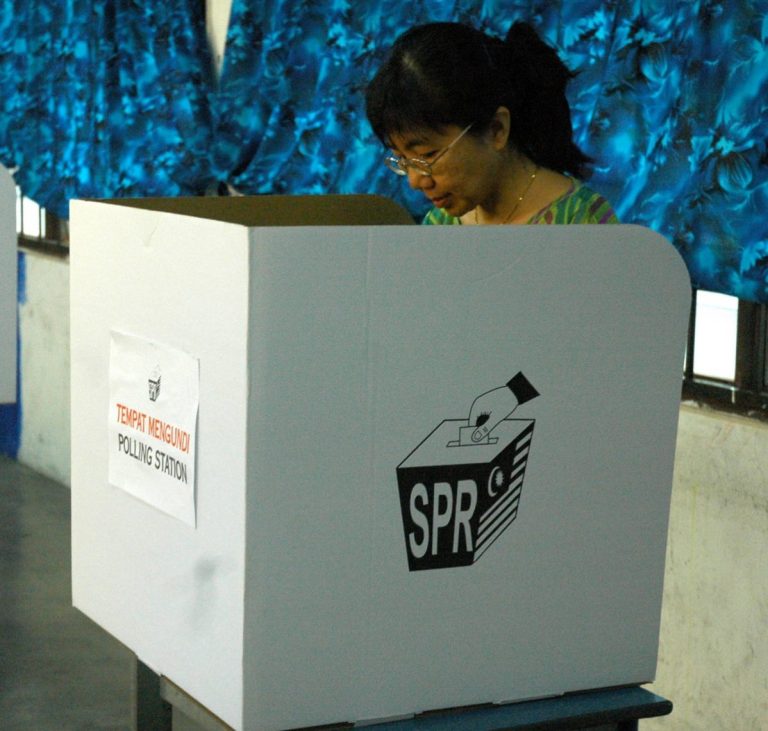
Sabah’s political landscape has always been volatile, shaped by warlords and chieftains, amid an electorate that traditionally votes along ethnic lines and according to incentives offered. Political frogging was also a familiar feature before the anti-hopping law came into force, with elected representatives – a misnomer in many cases – free to jump to any party offering a more lucrative proposition.
Past state elections have seen candidates and parties roll out ambitious manifestos promising broad development: a stronger economy, improved infrastructure, better education and tourism growth. Yet the conditions on the ground have remained largely unchanged.
Rural Sabahans continue to face harsh realities that stand in stark contrast to the lifestyles of those elected to represent them. Primitive infrastructure, frequent blackouts and schoolchildren forced to navigate jungle paths or cross rivers simply to attend classes are still commonplace.
Promises are once again plentiful for the 17th state election, where more than 596 candidates are vying for 73 seats.
As always, the political atmosphere undergoes a sudden transformation during election season. The once distant and disengaged become effusive, empathetic and deeply concerned for the people’s welfare. Candidates project themselves as champions of the poor, claiming to feel the daily struggles of ordinary Sabahans.
The familiar slogan of “Sabah for Sabahans” resurfaces, promoted by politicians who insist that non-Sabahans have no place in shaping the state’s economic, educational, security and commercial affairs. They argue that Sabahans are capable of managing everything themselves.
It is also during this period that sentiments against Peninsular Malaysia and the Federal Government re-emerge. Yet more than 200,000 Sabahans work in the Peninsula, and Sabah records one of the highest unemployment rates in the country with around 170,000 jobless. Many more Sabahans study in institutions across the Peninsula.
While Sabahans enjoy unrestricted access to Peninsular opportunities, Peninsular Malaysians face barriers when seeking employment in Sabah due to work-permit requirements and immigration control. The message is clear: Sabah is for Sabahans, whereas Peninsular Malaysia is for all Malaysians, including those from Sabah and Sarawak.
It is an odd situation – bordering on the absurd – that Peninsular Malaysians require immigration clearance to travel within their own country, a condition rooted in the Malaysia Agreement 1963.
Although Sabah prides itself on interracial harmony, with Malay serving as the state’s lingua franca, politics remains fractured along racial and tribal lines. Communities including Malays, Bajaus, Kadazan, Dusun, Suluk, Tidung, Rungus, Bisaya, Idahan, Orang Sungai, Berunai, Kedayan, Kimaragang, Murut, Kokos, Iranun and Chinese all play their part. The groups with the greatest electoral weight are the Malays, Bajaus, Kadazan, Dusun, Murut and Chinese, while smaller tribes tend to align with these blocs based on religion and cultural ties.
This illustrates the fragility of Sabah’s supposed intercultural and religious unity.
There are voters who look past party and ethnic lines when casting their ballots, but this is not the norm. Incentives and promises continue to influence voting behaviour across political, religious and ethnic boundaries.
Ever optimistic – sometimes to the point of gullibility – Sabah now sees an abundance of candidates eager to “serve the people”. Ultimately, victory will rest on which candidate resonates most with voters, the strength of their machinery, their ground campaign and the narratives they offer.
Yet competency and character alone rarely determine the outcome. More often, the deciding factor lies in the strategic use of monetary inducement to secure the people’s franchise.
This was even acknowledged by the deputy prime minister, who alleged that some parties were distributing cash. In a recent campaign speech, he told voters: “Take the money, that’s your rezeki, but vote for BN (Barisan Nasional).”
When it comes to the Sabah election, it is the well-heeled parties and candidates that hold the decisive advantage in winning seats and forming the next government.
The views expressed here are the personal opinion of the writer and do not necessarily represent that of Twentytwo13.