A country’s heritage, both tangible and intangible, reflects the thoughts, values, and creativity of its people. These expressions are not static but evolve in response to changing natural and human circumstances, which can be either destructive or constructive.
Natural forces such as earthquakes, volcanic eruptions, floods, hurricanes, and storms can destroy tangible heritage, from mountains and caves to pristine forests. Human actions, including wars and political revolutions, can wipe out civilizations through genocide, ethnic cleansing, or cultural purges, as seen with the Australian Aborigines, New Zealand Māori, Cambodia under Pol Pot, and China during the Cultural Revolution.
Yet, these efforts cannot fully erase the cultural traits and values of a people, because heritage is more than physical expression – it is embedded in the collective consciousness and DNA of a community. Political repression may cause division and mental anguish, but common cultural heritage endures. China and Cambodia illustrate that even violent attempts to destroy culture cannot succeed completely.
A similar situation exists between Singapore and Malaysia. Historically, Singapore was part of the Johor-Riau kingdom, with Malays as the indigenous people. Malay cultural influence was evident in place names such as Tanjung Katong, Bedok, Bras Basah, and Geylang, as well as in dance, music, and crafts.
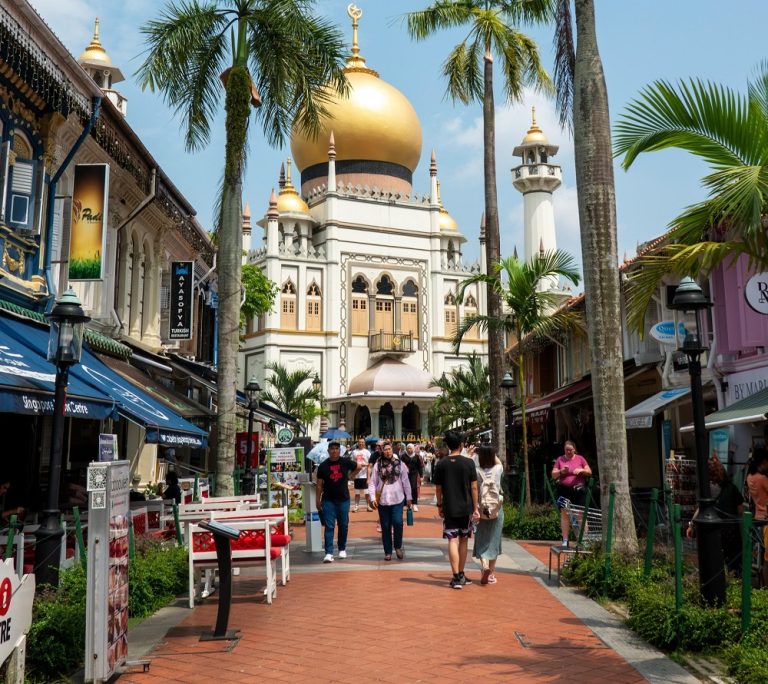
Over time, however, indigenous Malay presence has declined, especially after Singapore separated from Malaysia to pursue its own economic and cultural path. Urbanisation replaced verdant villages with concrete landscapes, leaving few tangible Malay cultural markers beyond mosques, a Malay Cultural Centre, and occasional performances of traditional dances and Bangsawan troupes.
Singapore lacks natural tangible heritage such as caves, mountains, or archaeological remnants. What remains is largely artificial, housed in museums or public spaces. Similarly, authentic intangible heritage – including traditional performing arts, crafts, cuisine, textiles, and weapons – cannot be claimed as uniquely Singaporean. These elements are shared, rooted in Singapore’s historical role within the Johor-Riau kingdom.
Despite efforts to assimilate Malay heritage into its cultural narrative, Singapore cannot entirely claim these elements as its own. Its cultural identity is tied to the region through shared values, language, behaviours, and mental attitudes. Even as Singapore develops a western-influenced, cosmopolitan heritage blending Malay, Indian, and Chinese elements, it cannot fully detach from its regional cultural surroundings, exemplified by the joint Unesco recognition of the kebaya.
The reality remains that Singapore and Malaysia share a common heritage as part of the Malay world, making cultural ownership a question of politics rather than culture.
The views expressed here are the personal opinion of the writer and do not necessarily represent that of Twentytwo13.