
KUALA LUMPUR: From the doctored documentation saga involving the Football Association of Malaysia (FAM) and seven foreign-born players to widespread non-payment of wages by local football clubs and shuttler Lee Zii Jia’s high-profile family court dispute, Malaysia’s sports legal and regulatory framework is being put to the test.
Such incidents are of interest beyond sports fans. They also serve as case studies for academics and lawyers.
This is where the Sports Law Association of Malaysia, better known as SLAM, should step up and make its presence felt.
According to its website, SLAM was formed in 2016 to promote ethical and professional standards of conduct among sports law practitioners in Malaysia, as well as education in sports law and the resolution of sporting disputes.
“The body brings together athletes, sports administrators, lawyers, governmental bodies and sports associations alike to navigate the intricacies of Sports Law and sporting disputes,” reads the website.
However, how much is known about SLAM or its work? Are its representatives readily accessible to stakeholders within the Malaysian sporting ecosystem? More importantly, is the Sports Commissioner’s Office (SCO) working closely with SLAM to educate sports officials and athletes about the legal aspects of sport?
Sports associations, especially those representing lesser-known sports, face various challenges. Inadequate auditing of accounts and flimsy agreements entered into without proper representation continue to plague them.
Many officials also seem clueless about their constitutions, with conflicting opinions often leading to public spats and even lawsuits.
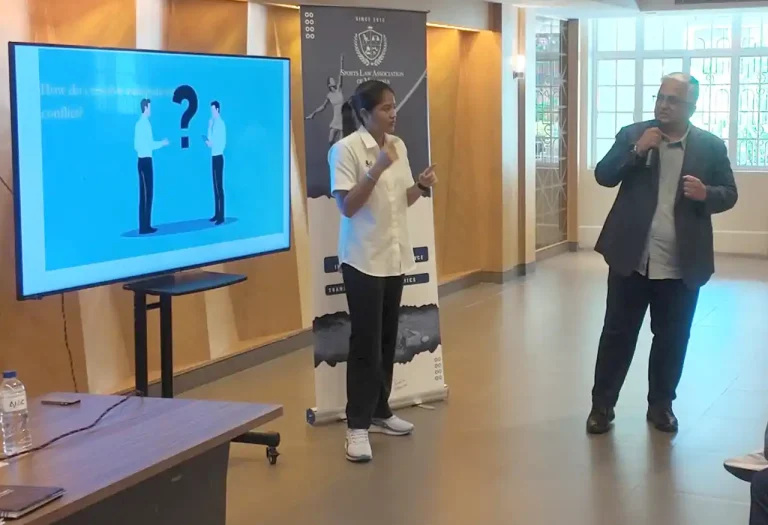
Ten years after its formation, SLAM is doing the national sports ecosystem a huge favour by organising its inaugural Sports Law Lab. Scheduled for tomorrow at the Asian International Arbitration Centre (AIAC) in Kuala Lumpur, the invitation-only lab will bring together members of the legal fraternity and those involved in sports administration, management and governance.
The three-hour session will provide a platform for SLAM members to engage, exchange perspectives and identify how the legal profession and Malaysian sport can better support one another. Best of all, participation is free for invitees.
SLAM committee member Nicolas Chan said the Sports Law Lab was organised to benefit the domestic sporting ecosystem.
“There is a gap (between the legal fraternity and the sports officials), and we are trying to close that gap between a need and a solution,” Chan told Twentytwo13.
“The idea is to gather lawyers and officials in the same room and for them to discuss, network and understand the sporting landscape in Malaysia.”
On April 13, SLAM held a session on safeguarding, safe sport and mediation at the AIAC for representatives from the Malaysian Deaf Sports Association and Special Olympics Malaysia.
Such sessions are welcome. But SLAM must do more to publicise its initiatives and, more importantly, make its views known. After its April session, SLAM posted only a series of greetings on its Facebook page for Labour Day, Aidiladha, Wesak Day, the King’s official birthday and Hari Malaysia. Its latest newsletter, SLAM Digest, available on its website was published four years ago, in June 2022.
Beyond the Lee family saga, SLAM should be at the forefront of discussions on the Sports Development (Amendment) Bill 2026, passed in the Dewan Rakyat on Oct 6; issues that newly appointed Sports Commissioner Jefri Ngadirin should address; and the non-payment of wages in football.
SLAM should also continue promoting mediation at a time when sports officials are quick to take their grievances to court, as seen most recently in the fencing scene.
A thriving sports ecosystem depends on a solid foundation of legal literacy and good governance. SLAM has a vital role to play in driving this transformation.
However, its true impact depends on active engagement from the entire sporting community. By prioritising legal awareness, those involved in sport can protect their interests and focus on what matters most – achieving excellence both on and off the field.
Image: SLAM / Facebook


