
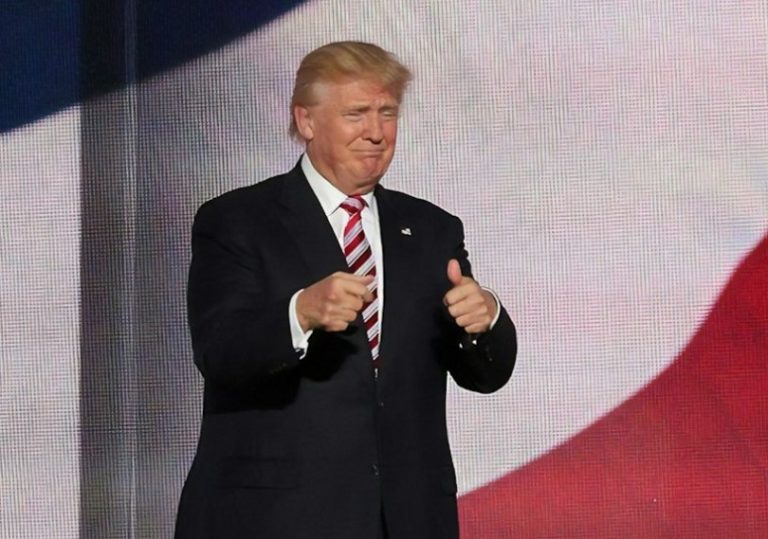
US President Donald Trump’s arrival in Kuala Lumpur for the 47th Asean Summit has been described as a powerful message to regional powers and adversaries alike, namely China.
While details of his itinerary in Kuala Lumpur remain vague as security heightens following planned anti-Trump protests near the Kuala Lumpur Convention Centre, Collins Chong Yew Keat, the foreign affairs, security and strategy analyst of Universiti Malaya, believes Trump’s decision to come to Malaysia sends the enduring message that the US is back and is ready to provide strong countermeasures and deterrence against China in economic and security capacities.
Trump had, earlier this morning, posted on his Truth Social platform that he was on his way to Malaysia to sign the “great Peace Deal which I proudly brokered between Cambodia and Thailand”.
Chong said Trump’s presence in Kuala Lumpur sends a message that the region’s long-standing strategic dependence on Washington has been lopsided for decades and must now come to an end.
“If the region still yearns for American security and economic umbrella (which it still does, now more than ever), then the injustice of the trade and security approach will need to be corrected,” Chong wrote in his opinion piece that was emailed to Twentytwo13.
He added it also sends a strong message to Beijing that the era where this region has long been Beijing’s convenient playground of influence, coercion, and economic manipulation, is now over.
“Washington is now back re-engaging and regaining lost times, but on Trump’s terms.”
Chong wrote that strategically and militarily, Southeast Asia is the geographic heart of the Indo-Pacific – and a frontline in the contest with China.
“Beijing’s ‘nine-dash line’ claims 90 per cent of South China Sea, directly challenging international law and the security of Southeast Asian states, and posing a threat to Washington’s supply chain and economic resilience in maritime stability and security,” he said.
“China has militarised reefs and increased naval patrols, raising tensions with countries like the Philippines, Vietnam, and Malaysia and a deeper US involvement is a crucial counterweight, ensuring that these powers have the ability to protect and secure their rights and interests under international law.
“American naval patrols and defense partnerships provide a security umbrella that helps deter Chinese aggression in disputed waters.”
Chong said having the US visibly back in the game restores balance and deters unilateral Chinese moves.
“A declining US presence left the region’s autonomy at risk. Trump’s re-engagement is the right strategy to reverse that decline.
“Most importantly, Trump’s approach is seen as correcting the region’s past tilt toward China.
“In the decade before, many regional players welcomed Chinese investment and infrastructure projects under the Belt and Road Initiative, but this pivot to China came with strings attached, from rising debts to fear of economic coercion, and did not resolve longstanding security threats.
“These experiences of Chinese actions have been a wake-up call, with a new understanding that over-reliance on Beijing was a mistake that must be balanced by strong ties with Washington.”
Chong wrote that a key deliverable will be on trade and investment ties. He added Trump would want to showcase agreements that benefit American businesses and Southeast Asian growth alike, showing that America has always been the world’s biggest economy and the most important market, and still is the world’s biggest innovation and technology leader.
“This fact has been ignored, drowned by the wave of Chinese propagandistic drive to discredit the strength of the American economic and technological power gap in the fierce rivalry.
“Investments in infrastructure or technology collaboration, securing critical resources and supply chain resilience and security and widening the pool of fallback options on these sectors, will be the showcase of the American strength on offer to the region, that will provide direct benefits to American economy and maintaining the supply of key minerals, while also filling the gaps for the region still in thirst for the American market, capital and injection of technology.
“With Southeast Asia’s young population and digital economy boom, partnerships in areas like 5G networks, digital infrastructure, or supply chain diversification in providing an alternative to Chinese tech investment are natural options on the cards.
“All these economic initiatives strengthen the argument that Washington offers a better economic partnership than Beijing.”
He added such plans would be a win-win mantra – Southeast Asia can develop its resource sector with US investment, and the US reduces its dependence on China for raw materials.
“Trump is absolutely right to re-engage the region as a fallback and deterrence against China’s ambitions. His mix of economic incentives and security guarantees is exactly what the region has been quietly calling for.
“Southeast Asian nations, having seen the downsides of overdependence on China, now welcome Washington’s renewed focus.
“They need US markets, technology, and capital to grow their economies independently, and they rely on US naval power to keep regional peace. America’s assistance and assurance help them in the South China Sea, rather than yielding to Chinese pressure.”
Chong said by rebuilding trust and ties in Southeast Asia, Trump is laying the groundwork for an American-led coalition that can effectively check China’s expansionism while promoting shared prosperity.


