KUALA LUMPUR: Whenever results do not come, whenever performances are poor, whenever a project looks like it has been running for years without actually arriving anywhere, someone will eventually tell the fans to trust the process.
These coaches and officials believe that when they come into the picture, it is a new beginning, a new chapter. But not for the fans and observers who have been trusting the process for decades.
And then there is the other favourite. “Noise.”
Criticism? Noise. Questions from fans? Noise.
People asking where the promised improvement is? Noise.
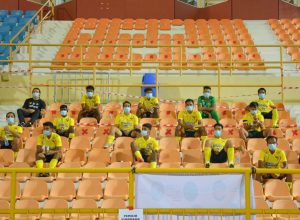
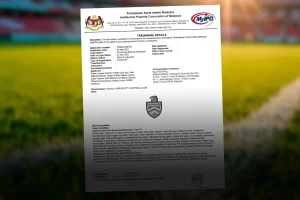
Former Malaysian football coach Peter Cklamovski, who was with the team during last year’s doctored documentation saga involving seven footballers that hit international headlines, seemed to love that word. The same goes for Indonesia’s coach, John Herdman.
It is amazing how two perfectly ordinary words have been turned into sporting escape routes.
The problem is, there is a trust deficit. And you cannot build trust by repeatedly asking people to trust you.
At some point, you have to show them something. That is particularly true in Southeast Asian sport, where fans have spent decades being told to be patient, to believe in the system, to give administrators time and to trust the people in charge.
Fair enough. But patience is not infinite, and neither is public goodwill.
Fans are changing too. We live in the age of the reel. The 30-second clip. The next scroll. The next piece of content.
Attention spans may be shorter, but more importantly, patience has become shorter when people are repeatedly promised progress without being shown enough evidence of it. They demand reforms from the government and have no qualms about booting it out at the next elections. They would do the same if they could cast their ballots when it comes to sports.
Development takes time, but development also needs milestones that eventually lead to results.
Take Malaysia, Indonesia and Singapore.
Beyond football, their Olympic records tell an uncomfortable story.
At the end of Paris 2024, Malaysia had won 15 Olympic medals – eight silver and seven bronze – but no gold.
Indonesia, meanwhile, had collected 40 Olympic medals: 10 gold, 14 silver and 16 bronze. Singapore had six: one gold, two silver and three bronze.
Malaysia has therefore gone through 17 Olympic appearances, since competing as Malaya in 1956, without producing an Olympic champion.
That statistic should not be used to ridicule Malaysian athletes. Quite the opposite. The athletes who won silver and bronze had done something extraordinary.
However, the uncomfortable question is bigger than any individual athlete. It is about the system around them.
How long can a sporting nation keep saying that the next cycle will be different?
How many four-year cycles does “trust the process” get? And what happens when the process itself becomes the product?
Singapore is an interesting case.
One Olympic gold can sound small compared with Indonesia’s 10. But Joseph Schooling’s 100m butterfly victory at Rio 2016 remains one of the country’s defining sporting achievements.
The point is not that Olympic medals are the only measure of whether a country’s sports system works. The point is that eventually, elite sports, with all the billions of taxpayers’ money spent over the decades, have to produce champion athletes.
Otherwise, what exactly are we measuring?
Football is where the argument becomes even more apparent. Southeast Asia has spent decades arguing over who is better than whom.
Malaysia versus Indonesia. Singapore versus Malaysia. Vietnam and Thailand versus everyone else.
The rankings change, a tournament comes around and everybody starts the argument again. The same conversation is seen in the on-going Fifa Asean Cup.
We celebrate being better than our neighbours rather than asking whether the entire neighbourhood is actually moving forward. And while we squabble, other parts of Asia keep moving.
Regional rivalry cannot become the ceiling of ambition. Malaysia has been inconsistent in the region. And all fans are often told is to “trust the process”.
What process? Where are the players? Where are the academies run by the state FAs producing them? Where are the coaches developing them?
Malaysia has gone down the naturalisation route. The nation’s move to naturalise foreign-born players should be viewed as a short-term measure. Naturalisation by itself cannot build a football culture.
This is where sporting administrators sometimes get the relationship with supporters wrong.
Fans understand that development takes time. They understand that a 17-year-old cannot suddenly become Lionel Messi, Cristiano Ronaldo or Kylian Mbappe because somebody announced a five-year plan.
They also understand that coaches need time and that rebuilding takes time.
What they do not understand is being told the same thing forever.
If you ask people to trust the process, show them the process.
Show them the grassroots programme. Show them the coaches being educated. Show them the number of youngsters playing competitive minutes. Show them the academies run by the state FAs. Show them the pathway. Show them the improvement.
Give people something tangible to trust.
Because “trust the process” without evidence is not a strategy. It is a mere slogan.
And “noise” is not an argument either.
Criticism does not automatically become noise because it makes administrators uncomfortable. Constructive criticism is feedback. But sometimes it is just asking a very reasonable question: Where is the result?
Let’s be very clear about which process to trust. The real process that needs to be trusted begins much earlier, at the grassroots.
We want to see children grow from representing schools to donning the national jersey. That’s a tangible result. That earns trust because we will have watched it happen.
Until then, perhaps officials and coaches should retire two words from their vocabulary – “trust” and “noise”.
The fans have heard both often enough.