
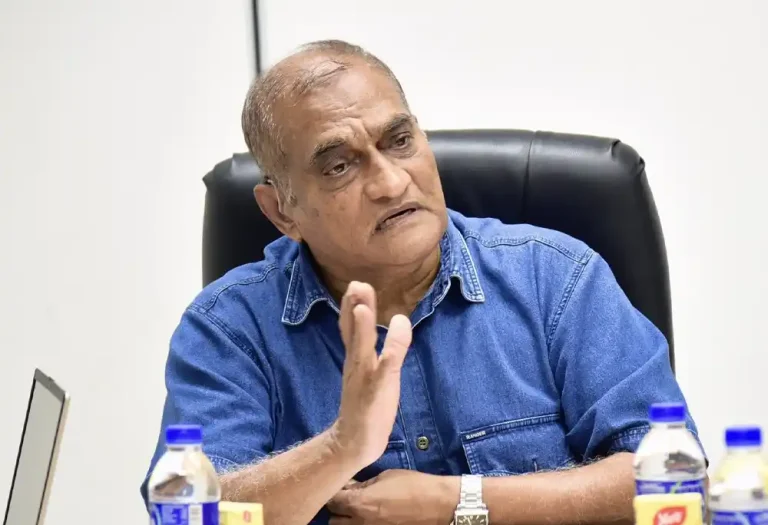
KUALA LUMPUR: Silence, ambiguity, and unanswered questions continue to cloud Malaysian athletics, with no clear and definitive explanation of Datuk Karim Ibrahim’s status.
At the heart of the issue appears to be a communication breakdown at every level – from the national body right up to World Athletics.
Karim, who is currently president of Malaysia Athletics, was suspended by World Athletics (then the International Association of Athletics Federations) in 2018, a decision later upheld by the Court of Arbitration for Sport. Yet he was allowed to contest and serve on the Asian Athletics Association Executive Council for the 2019-2023 term, even after the CAS decision.
This raises the question: was the suspension limited strictly to World Athletics’ structure, or did it carry broader implications?
If the latter, why was Karim permitted to continue holding influential roles elsewhere? He should not have been allowed to contest for a seat within the Asian body, stripped of his positions within Malaysia Athletics (then known as MAF), and removed as Perak Athletics Association president.
But none of that happened.
Does this mean the suspension was confined only to the world body? By remaining silent, stakeholders risk appearing complicit or evasive.
Karim has remained Perak president throughout but lost his post in the national body’s 2019 elections. It is learnt that Karim will use this as his defence if Malaysia Athletics tries to remove him as president.
For the record, the statement regarding Karim’s suspension read: “Mr Karim Ibrahim is no longer a serving member of the IAAF Council. This is following a decision by the IAAF Vetting Panel who has found Mr Ibrahim not eligible (within the meaning of the IAAF Constitution and IAAF Vetting Rules) to hold office as a Council Member.”
There was no mention of a timeframe, and it did not arise during his appeal to CAS.
The issue resurfaced when Malaysia Athletics amended its constitution to allow members to stand for election after a maximum five-year suspension.
That paved the way for Karim to contest in last June’s elections, where he defeated Datuk Wira Mark Ling 25-14 after incumbent Datuk Seri Shahidan Kassim withdrew hours earlier.
Recently, it was revealed that a letter from World Athletics, sent to Malaysia Athletics in January, allegedly referred to Karim’s 2018 suspension.
However, the letter was only presented to the Malaysia Athletics executive council this month, prompting frustration and questions over the delay.
Karim has denied claims that he was banned for life, insisting such assertions are inaccurate.
Sports Commissioner Arrifin Ghani has since written to World Athletics seeking formal clarification on Karim’s eligibility, while also requesting Malaysia Athletics to disclose the contents of the letter.
Malaysia Athletics insiders claim the world body had requested a list of candidates for the president’s post, which was duly submitted. Karim’s name was on the list, but no response was received. This silence was interpreted as tacit approval.
If there was no objection, should World Athletics not have issued a clear statement confirming this? And if there were concerns, why were they not communicated promptly?
Both World Athletics and Malaysia Athletics now face scrutiny for what appears to be a pattern of ambiguity. Governance cannot function effectively on assumptions, nor can it rely on silence to fill critical gaps.
Beyond official statements, there is also growing frustration over the lack of accountability among administrators.
Journalists are receiving phone calls but are often met with this line: “Please don’t quote me, but this is what’s happening.”
Unlike the infamous Article 88 once used by the Football Association of Malaysia to punish officials who spoke to the media, Malaysia Athletics does not have such restrictions. Their reluctance to go on record has only clouded perceptions.
The media, often described as the fourth estate, plays a crucial role in holding institutions accountable. Expecting journalists to accept incomplete information without scrutiny undermines that role.
Ultimately, the question remains simple: what is Karim’s actual status?
Until a clear, consistent, and transparent answer is provided – backed by documented evidence and open communication – the uncertainty will persist, and confidence in athletics governance will continue to erode.
Image: Malaysia Athletics


