

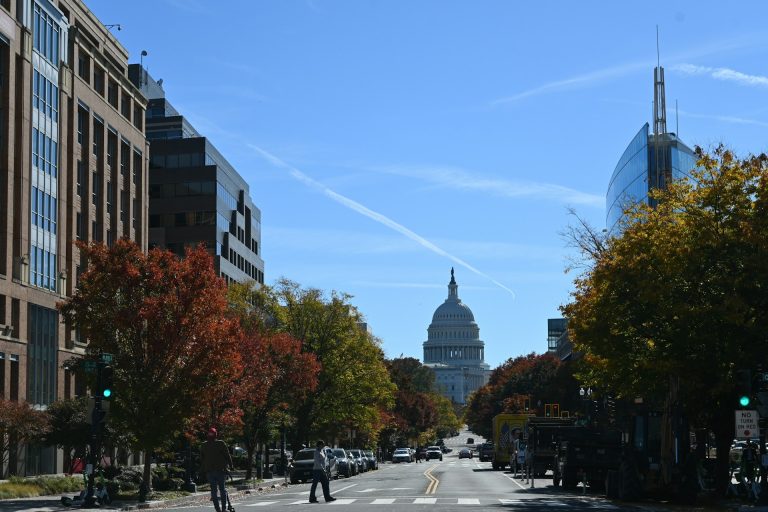
The US midterm elections offered more than a routine update on American political dynamics. They served as a mirror reflecting a crisis unfolding worldwide.
From established Western capitals to developing nations such as Malaysia, public faith in democratic institutions is steadily eroding. The underlying causes of this disillusionment are remarkably similar across countries.
Macroeconomic growth figures often paint a different picture from the financial realities facing ordinary households. Countries, including Malaysia, report strong GDP growth, yet working-class families continue to face cost-of-living pressures and struggle to put food on the table.
When an economic system consistently delivers strong aggregate growth alongside stagnant household financial security, voters begin questioning whether democracy is truly designed to serve them.
Transparent influence vs shadow networks
A key lesson from the US midterm elections is how plutocracy operates under different governance models.
In the United States, political financing by ultra-wealthy donors is largely conducted in public view. Mega-donors spend hundreds of millions of dollars directly funding political campaigns, political action committees and ballot initiatives.
In the 2026 midterm election cycle, billionaire entrepreneur Elon Musk spent at least US$474 million backing Republican candidates and political causes, making him one of the most prominent examples of the growing financial influence of ultra-wealthy individuals in American politics.
Policy outcomes may include tax cuts, capital gains concessions and corporate deregulation, although the relationship between political contributions and specific policy decisions is not always direct.
By contrast, concerns about money politics in countries such as Malaysia frequently centre on opaque financial arrangements and potential links between political interests, business beneficiaries and public policy decisions.
Because these transactions lack public disclosure, accountability becomes nearly impossible, fuelling systemic cynicism among ordinary citizens.
Whether donor influence is exercised openly or through opaque networks, the underlying risk is similar: public policy becomes disproportionately tilted towards capital holders rather than wage earners.
Wealth and windfall taxes
Addressing this imbalance requires moving beyond incremental adjustments. For democracy to retain its legitimacy, governments must demonstrate that economic gains are shared equitably across society.
Introducing targeted taxes on net wealth above high thresholds can help curb extreme capital accumulation and prevent concentrated financial power from translating directly into political dominance.
Taxing temporary and extraordinary profits, particularly in sectors such as energy and finance, as well as profits generated by highly subsidised monopolies, can help ensure these gains are channelled back into public services, infrastructure and targeted social safety nets.
Reforming tax codes to ensure that gains from asset ownership are taxed at rates comparable to those on wage income would prevent the working class from shouldering a disproportionate share of the tax burden.
Redefining economic fairness beyond labels
Critics often dismiss proposals such as wealth redistribution and windfall taxes as “socialist”. However, ensuring that extreme wealth contributes proportionally to the society that enabled its creation is not an ideological experiment but a practical safeguard for democratic capitalism.
When the distribution of national wealth is perceived as fundamentally rigged, voters gradually lose faith in elections, peaceful transitions of power and institutional checks and balances.
Rebuilding that trust requires decisive fiscal action: rebalancing tax structures, demanding transparency in political financing and ensuring working people share in the wealth their labour generates. If governments fail to act, the erosion of public trust will not wait for the next election cycle.
Professor Dr Baharom Abdul Hamid is a professor of economics at INCEIF University (The International Centre for Education in Islamic Finance). His areas of expertise include applied macroeconomics, the economics of crime, military expenditure, shadow economies and natural disasters.
The views expressed here are the personal opinion of the writer and do not represent those of Twentytwo13.



