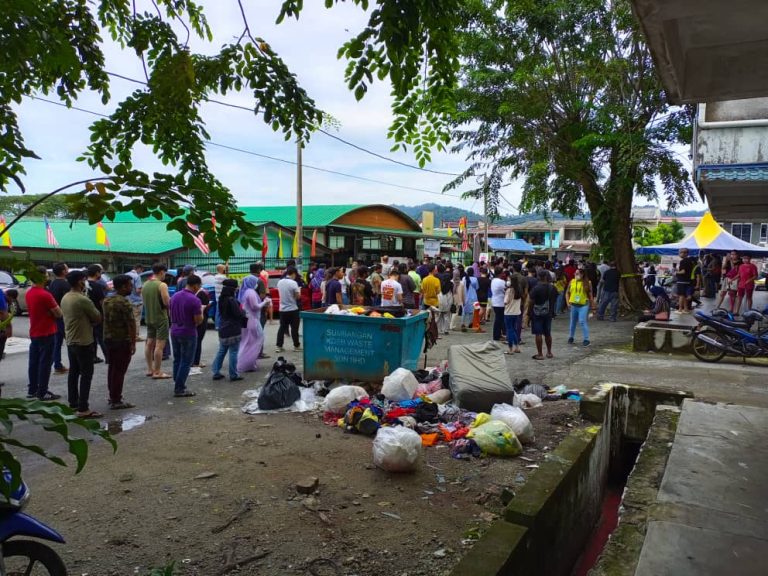
We are living in the Plastic Age, the Disposable Era, and the evidence isn’t buried in ancient rock layers – it’s piling up in landfills, choking our rivers, and swirling in giant ocean gyres.
The World Bank’s seminal report, What a Waste: A Global Review of Solid Waste Management, isn’t just a technical document for city planners. It is a staggering confession slip from a planet hooked on consumption, and a stark map of global inequality written in garbage.
The headline finding is as simple as it is horrifying: we are generating more waste than ever, and the trajectory is catastrophic. The report projects a 70 per cent global increase in waste generation by 2050, driven relentlessly by urbanisation, population growth, and economic development.
To put a number on our shame, that’s 3.4 billion tonnes of waste annually, up from 2.01 billion. Imagine a line of garbage trucks so long it could circle the globe 24 times. That’s our yearly output, and we’re ordering more trucks. How do we get out of this mess?
But the real story What a Waste tells isn’t just about volume – it’s about profound injustice. The report draws a brutal fault line between the haves and the have-nots in waste.
High-income countries, representing just 16 per cent of the world’s population, generate more than a third of its waste. Yet they largely have the systems to manage it – out of sight, out of mind. The crisis is most acute in the fastest-growing urban areas of the developing world, particularly in sub-Saharan Africa and South Asia. Here, cities are being overwhelmed, often spending 20 per cent of their municipal budgets on waste management systems that still fail to collect a significant portion of garbage, leaving it to fester in open dumps or clog waterways.
This is where waste management becomes a matter of public health, dignity and climate change. Open burning and unregulated dumps are toxic time bombs, poisoning air, water and soil, and disproportionately affecting the poorest communities living near them.
Meanwhile, organic waste rotting in landfills is a major producer of methane, a greenhouse gas far more potent than CO2. Our trash, in other words, is actively cooking the planet.
Perhaps the most damning finding, however, is one of monumental market failure: we are throwing away a fortune. The report highlights that recyclables like plastic, paper and metals represent a lost economic opportunity worth billions. Organic waste, which makes up about half of the waste stream in low-income countries, could be composted to regenerate soils or converted into energy. Instead, we bury it or burn it. Our linear “take-make-dispose” economy isn’t just environmentally bankrupt – it’s fiscally stupid. The case for going circular is clear.
So, what’s the way out of the dump?
What a Waste makes clear there is no single magic bullet, but rather a hierarchy of solutions we have stubbornly ignored. The first and most critical step is simply to generate less waste. This requires a revolution in product design, a move away from single-use plastics, and a cultural shift in which “reduce” and “reuse” are not just hippie slogans but central tenets of business and consumer behaviour.
For the waste we do create, the path forward is integrated systems: efficient collection, expanded recycling, and proper treatment of organic waste. This isn’t just an environmental imperative – it is an engine for green jobs and local economic growth. Technology, from smarter logistics to advanced material recovery, has a role to play, but the foundation is political will and investment.
Ultimately, What a Waste holds up a mirror. Our trash reflects our throwaway culture, rampant inequality and dangerous disregard for circular systems.
Managing waste is one of the most basic functions of a civilised society. That we are failing so spectacularly at it is a sign of profound dysfunction. The report’s message is urgent: cleaning up our act isn’t just about tidier streets – it is about climate resilience, social justice and building an economy that doesn’t treat the planet as a landfill.
The next chapter is ours to write. Will it be a chronicle of continued neglect, or a manifesto for a cleaner, smarter future?
The choice is in our hands – and what we choose to let fall from them.
The views expressed here are the personal opinion of the writer and do not represent that of Twentytwo13.