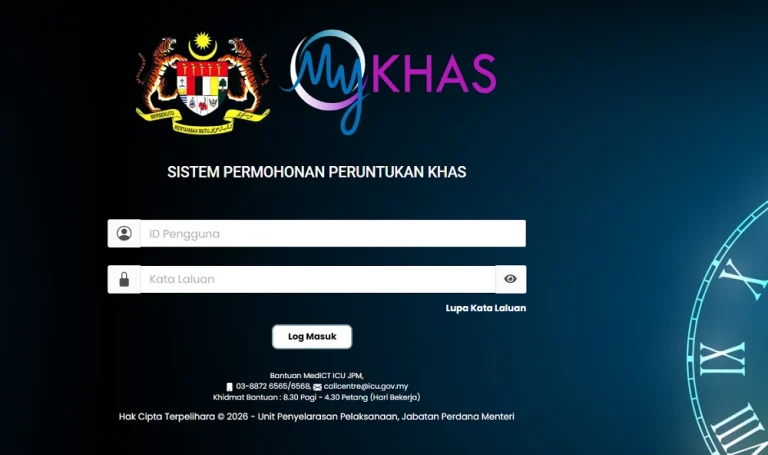
The ongoing commentary surrounding the restriction of access to the MyKhas portal – the government platform managed by the Implementation Coordination Unit (ICU) under the Prime Minister’s Department for Projek Mesra Rakyat (PMR) allocations – requires a firm grounding in administrative truth.
Disgruntled lawmakers and self-styled critics have attempted to frame the restriction of an online executive portal as an attack on ordinary citizens.
This narrative is fundamentally false. Taking a discretionary digital portal away from a politician does not stop government aid from reaching the rakyat. Prime Minister Datuk Seri Anwar Ibrahim’s decision to lock out renegade lawmakers who engage in political double-agency is not only legally and administratively sound, but morally necessary.
Firstly, public funds belong to the state. During the early days of the first Pakatan Harapan administration, a strict, principled standard was established: constituency development funds belong strictly to the government and Malaysian taxpayers. The funds do not belong to individual members of parliament. Elected representatives were expected to remind recipients that public assistance comes from the nation, not personal benevolence.
Unfortunately, that culture of humility has eroded among certain lawmakers. In recent years, some representatives have begun treating state development funds as their personal political war chests. The practice of printing oversized mock cheques for media photo-ops to claim personal credit for taxpayer-funded aid is a distortion of public service. Restricting portal access strips away this manufactured patronage and restores institutional honesty.
The core argument propagated by affected lawmakers is that restricted access halts community development. The reality is that the funds have not been cut, but the politicians’ personal control over them has.
The ICU continues to directly process, evaluate and disburse funding for local schools, places of worship and community infrastructure. Routing applications directly through the ICU ensures that public resources reach the community without being hijacked by compromised lawmakers as political leverage.
When administrative boundaries are drawn or internal political disagreements arise, mature leadership demands that issues be addressed through proper, orderly channels. Instead, these renegade lawmakers have repeatedly bypassed internal dispute mechanisms to run straight to the press and social media, aiming to farm cheap public sympathy.
This calculated grandstanding demonstrates their true priorities. They seek the freedom to subvert the governing coalition from within while weaponising public empathy the moment executive boundaries are enforced. If their primary concern were truly the swift delivery of aid, they would engage with the administration through proper administrative channels rather than staging media spectacles.
Governance relies on basic organisational trust, discipline and collective responsibility. It is politically absurd and morally untenable for lawmakers to repeatedly defy party leadership, support rival splinter movements and actively undermine the governing coalition while simultaneously demanding that the same government hand them the keys to state executive resources.
No government or sovereign institution permits internal dissidents to operate financial conduits that could be redirected to build alternative political power bases. Expecting unconditional executive privileges while actively subverting the administration is pure entitlement.
Any seasoned politician who has served in the opposition trenches knows that true wakil rakyat leadership is forged through sweat, grit and direct community engagement. It is not done by clicking buttons on a software portal.
Opposition representatives have served their constituencies effectively for decades without receiving a single ringgit in government allocations. If an elected MP claims their ability to serve their voters drops to zero simply because a discretionary online tool is locked, it exposes a sobering reality: they were relying on administrative shortcuts and patronage, not actual grassroots leadership.
The uproar over MyKhas restrictions is not about protecting constituents, who continue to receive their allocations directly through the ICU. It is about politicians mourning the loss of personal administrative clout and photo-op props.
By ensuring aid flows directly to the people while cutting off double-dealing middlemen, the administration has drawn a necessary line: public funds belong strictly to the rakyat, and state tools will never be used to finance internal political games.
The views expressed here are the personal opinion of the writer and do not represent those of Twentytwo13.