
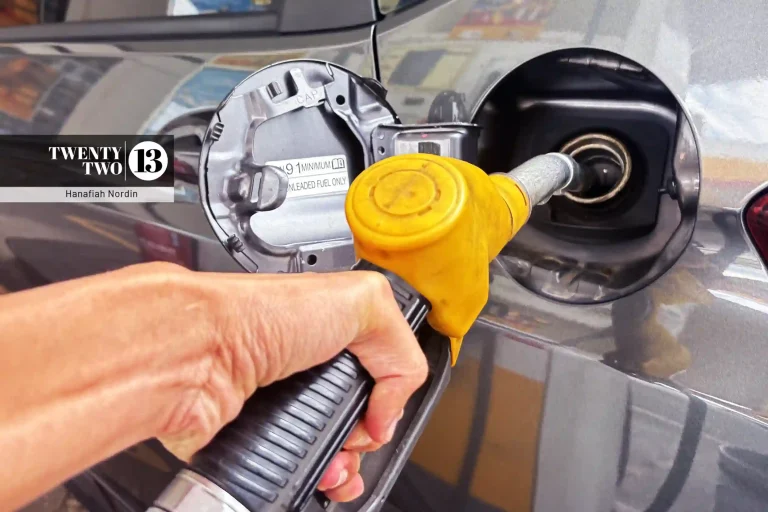
Every Malaysian who filled up at the petrol station this year felt the impact of a conflict many could barely locate on a map.
When Israel and the United States launched strikes against Iran, crude oil surged past US$100 a barrel within days. Although the government maintained RON95 at RM1.99 per litre, diesel prices climbed sharply, the ringgit weakened with every escalation and industries faced mounting costs. One estimate put the construction sector’s additional diesel bill alone at RM1.1 billion.
The source of the disruption lay in the Strait of Hormuz, a narrow waterway through which about one-fifth of the world’s oil passes. There is no meaningful alternative. Existing pipelines can accommodate only a fraction of normal oil flows, while almost none can replace liquefied natural gas shipments. When Iran disrupted tanker movements, the effects rippled quickly through global markets and reached Malaysian fuel pumps, ports and household budgets.
Malaysia’s decision to remain neutral drew criticism from those who dismissed it as fence-sitting. Yet the events that followed suggest Putrajaya made the right call.
The conflict demonstrated that military superiority alone cannot guarantee political success. Despite two rounds of fighting, strikes on nuclear facilities, the deaths of senior commanders and scientists, and even the killing of Iran’s supreme leader, the war ended without surrender. Geography ultimately mattered more than firepower.
Iran’s size, mountainous terrain and strategic depth meant that air strikes alone could inflict damage but not achieve decisive victory. More importantly, Tehran retained leverage over the Strait of Hormuz. Rather than closing it entirely, it restricted shipping linked to its adversaries while allowing neutral vessels to continue operating, later imposing transit charges. In doing so, Iran overturned the long-held assumption that it would never risk disrupting its own oil exports.
The conflict widened further when Yemen’s Houthis threatened shipping through the Bab el-Mandeb, reminding the world that global trade depends on multiple maritime chokepoints. Malaysia’s economy is closely connected to both.
Against this backdrop, Malaysia’s diplomatic approach proved significant. Putrajaya condemned the attacks on Iran while also condemning Iran’s retaliatory strikes against Kuwait, Bahrain and other neighbouring states. It worked through the United Nations and the Organisation of Islamic Cooperation rather than aligning itself with any major power.
That neutrality produced tangible benefits. As shipping resumed, Malaysian vessels continued passing through Hormuz, while a post-truce sanctions waiver on Iranian crude created opportunities for discussions involving Petronas. Whether those talks eventually produce commercial agreements is secondary. The invitation itself illustrates the strategic value of maintaining balanced diplomatic relations.
Neutrality, however, should never be mistaken for moral indifference. Iran’s missile strikes on Gulf states that had not directly participated in the conflict deserve condemnation, just as Iran’s own military and political losses cannot be ignored. Nevertheless, the first responsibility of any Malaysian government is to protect its people’s security and cost of living. Choosing sides would neither have reopened the Strait of Hormuz sooner nor reduced fuel prices.
The conflict should also end the misconception that developments in West Asia are distant problems. Strategists increasingly view the Strait of Hormuz and the Strait of Malacca as interconnected strategic corridors. A disruption in one inevitably affects the other through higher shipping costs, insurance premiums and energy prices.
Malaysia should now focus on three priorities.
First, fuel and food reserves should be treated as strategic national assets, funded and managed with the same seriousness as military capabilities. Robust stockpiles strengthen resilience during prolonged crises.
Second, supplier diversification must become permanent policy rather than an emergency response. The scramble for alternative energy supplies this year highlighted vulnerabilities that should not be repeated.
Third, Asean should strengthen its collective voice on freedom of navigation. As countries bordering one of the world’s busiest maritime routes, its members have both the credibility and the responsibility to uphold the security of global trade.
The ceasefire around Hormuz may endure, or it may not. Geography, however, will remain unchanged. The strait that influences global oil prices today will continue to shape energy markets tomorrow, just as the Strait of Malacca will remain central to regional commerce.
Malaysia cannot choose its geography. What it can choose is a foreign policy that safeguards national interests, strengthens economic resilience and ensures that other people’s wars have as little influence as possible over the price Malaysians pay at the pump.
Colonel Hazmi Zainol RMAF is a course member of the National Resilience Course at the National Centre for Defence Studies (PUSPAHANAS). These are his personal views.



