Throughout my school years, the term ‘communication’ referred to language competency, including vocabulary, pronunciation, spelling, morphology (word parts, prefixes and suffixes) and syntax.
As we leave the safety and comfort of school and enter the working world, ‘communication skills’ take on a broader meaning, referring to interpersonal communication – the exchange of information, ideas, feelings and meaning between two or more people through verbal and non-verbal means. Yet, no specific subject in school teaches us how to do this.
Interpersonal communication is largely a learned behaviour that we are expected to develop through our upbringing and social interactions, beginning in kindergarten. In my experience, those with high emotional intelligence (EQ) tend to have better interpersonal skills. But what happens to those who do not? Are they simply expected to muddle through life, learning by trial and error?
It is no wonder that violence appears so prevalent in society today. Too often, when things do not go our way, the response seems to be rage and destruction. We read almost daily about road rage, school bullying and even murders involving students over unrequited love.
Even when dealing with animals, the response to a problem sometimes seems to be to kill them, often in the cruellest and most inhumane ways. Have Malaysians come to this? For all the intelligence we are supposed to possess, are we unable to devise more humane and sustainable solutions?
People also seem to struggle with polite discussion and differences of opinion. In many cases, the ability to disagree respectfully appears to have been lost.
Recent surveys suggest that Gen Z employees lack key soft skills, including interpersonal communication, critical thinking and problem-solving.
I believe we have a duty to equip people with the tools to communicate effectively and articulate their thoughts and feelings from an early age. Enrolling them in interpersonal skills training only when they enter the workforce is too late – take it from someone who conducts such training.
It is easier to instil good habits in children than to unlearn bad ones later in life. The Malay proverb, ‘Melentur buluh biarlah dari rebungnya’ (bend the bamboo while it is still a shoot), comes to mind.
Communication skills are not just for working professionals; they are essential life skills used in every aspect of human interaction. In personal relationships, clear and empathetic communication builds trust, reduces misunderstandings and helps resolve conflicts with family, partners and friends.
In education, students rely on communication skills to ask questions, collaborate on group projects, present ideas and respond to feedback from teachers.
In everyday life and the community, simple tasks – such as talking to a neighbour, explaining a health concern to a healthcare professional, negotiating a purchase or joining a community action group – depend on effective listening and speaking.
Better communication skills can also improve mental health and well-being by reducing stress, strengthening social support and helping to ease anxiety and unhappiness.
I propose that communication skills be taught in schools from as early as Primary One, either as a dedicated subject or integrated across the curriculum.
Doing so would go a long way towards uplifting society, improving workplace productivity and making everyday life more pleasant.
The views expressed here are the personal opinion of the writer and do not necessarily represent that of Twentytwo13.
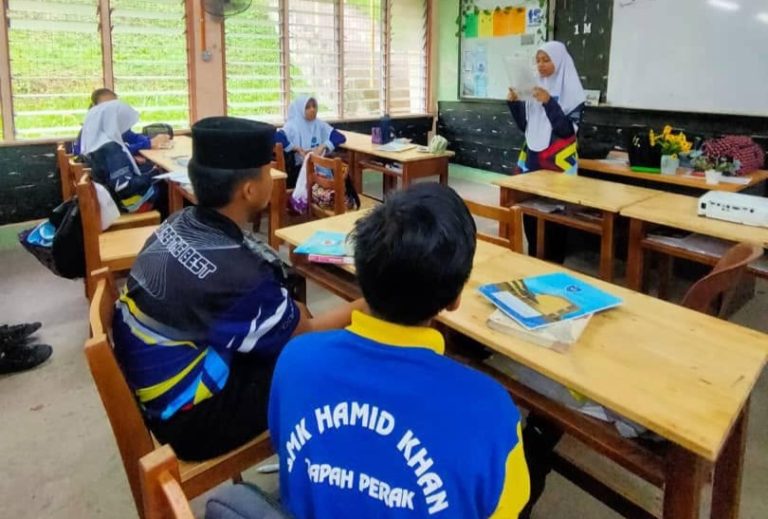
Image: SMK Hamid Khan, Tapah / Facebook