
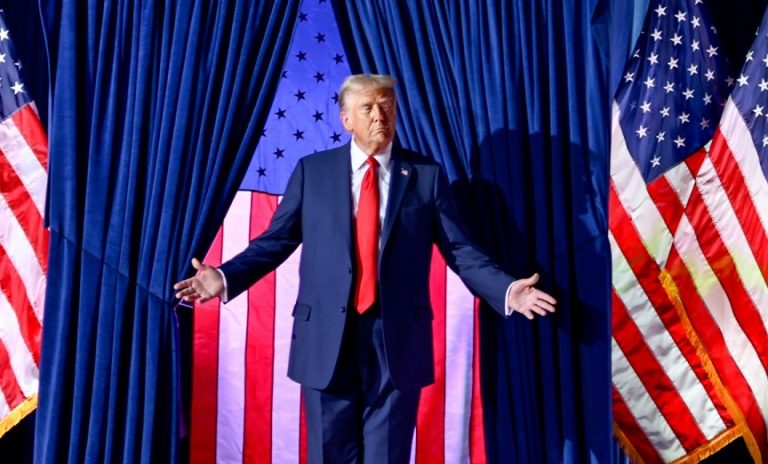
The 47th Asean Summit will witness several historic moments, with Timor-Leste’s admission as its 11th member among the main highlights. Yet, the spotlight has shifted elsewhere – the arrival of United States President Donald Trump.
Trump’s one-day visit to Kuala Lumpur, his first appearance in Southeast Asia since returning to the White House after his victory last November, has sparked mixed emotions – excitement, scepticism, spectacle, and inevitably, protests.
Trump, on his Truth Social platform, posted earlier this morning: “I am on my way to Malaysia, where I will sign the great Peace Deal, which I proudly brokered between Cambodia and Thailand. Sadly, the Queen Mother of Thailand has just passed away. I send my condolences to the Great People of Thailand. I will be seeing their wonderful Prime Minister when we land. In order to accommodate everyone for this major event, we will be signing the Peace Deal immediately upon arrival. See you soon!”
While the visit may offer an opportunity to strengthen bilateral economic cooperation, Trump’s previous trips abroad – known more for headline-grabbing moments than substantive diplomacy – have led some to question whether this stop will yield tangible results.
Associate Professor Dr Azeem Fazwan Ahmad Farouk of the Centre for Policy Research, Universiti Sains Malaysia, said Malaysia finds itself balancing between welcoming a major partner and avoiding being used as a backdrop for political theatre.
“Trump is a divisive figure who is not even popular back in his own country,” said Azeem. “His presence will test Malaysia’s resolve, as China’s representatives will also be in Kuala Lumpur.”
Azeem noted that tensions remain high between China and the US – Malaysia’s two leading trading partners – following Trump’s recent threat to raise tariffs on Chinese imports to 155 per cent from Nov 1 if no agreement is reached. He is expected to meet Chinese Premier Xi Jinping in South Korea on Thursday.
“Unless a deal is reached, China will surely retaliate. That will not be good for anyone,” Azeem said.
One item on the agenda is Malaysia’s continued exemption from tariffs on chips and minerals traded with the United States. These items were excluded from the 19 per cent tariff Trump imposed on Malaysia. The US is Malaysia’s third-largest market for semiconductor exports.
For Asean leaders, the optics are familiar – a powerful outsider commanding the stage while regional issues, from the Myanmar crisis to climate cooperation and annual haze concerns, risk being sidelined.
Whether Trump’s visit ends with signed deals or simply sound bites will determine if the frenzy translates into real gains – or becomes yet another chapter in the long saga of spectacle-driven diplomacy.
Separately, as streets around the Kuala Lumpur Convention Centre were sporadically closed off, car enthusiasts eagerly debated the security features of ‘The Beast’ – the US president’s custom-built Cadillac, a rolling fortress designed for maximum protection.
During Barack Obama’s visit to the 2015 Asean Summit, then Malaysian Prime Minister Datuk Seri Najib Razak reportedly cast envious glances at the car, describing it as not only beautiful but also spacious and equipped with advanced safety features.
‘The Beast’ is bulletproof and can withstand explosives up to a certain intensity. US presidents have been riding in Cadillacs since 1919, and Trump’s current version, modelled on the Cadillac CT6, debuted in 2018 during a trip to New York City.
The term ‘The Beast’ was first used in 2001 to describe President George W. Bush’s vehicle, which was custom-built, designed, and engineered by a research and development team at General Motors to the exacting standards of the US Secret Service, while retaining signature design cues from the Cadillac DeVille.


